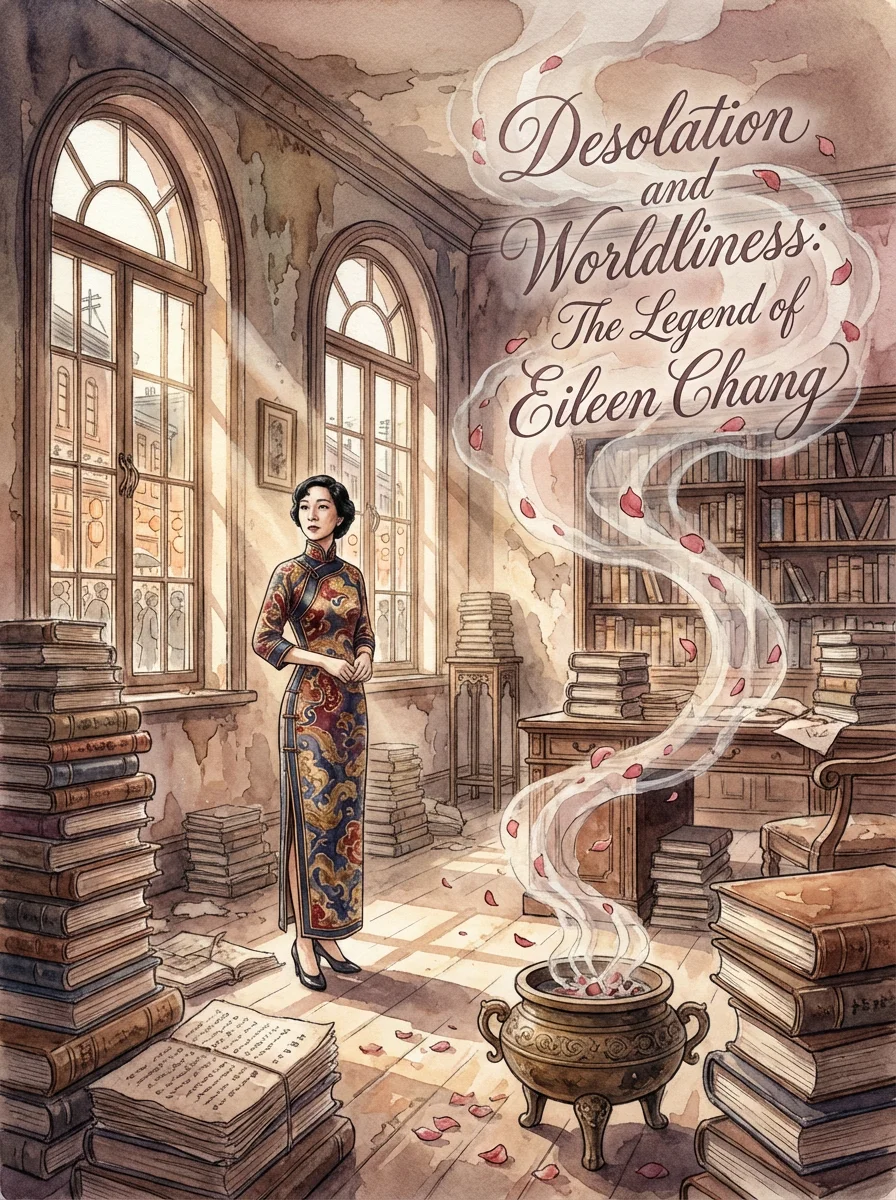
Desolation and Worldliness: The Legend of Eileen Chang

Desolation and Worldliness: The Legend of Eileen Chang

|
Author: Yan Xinyue
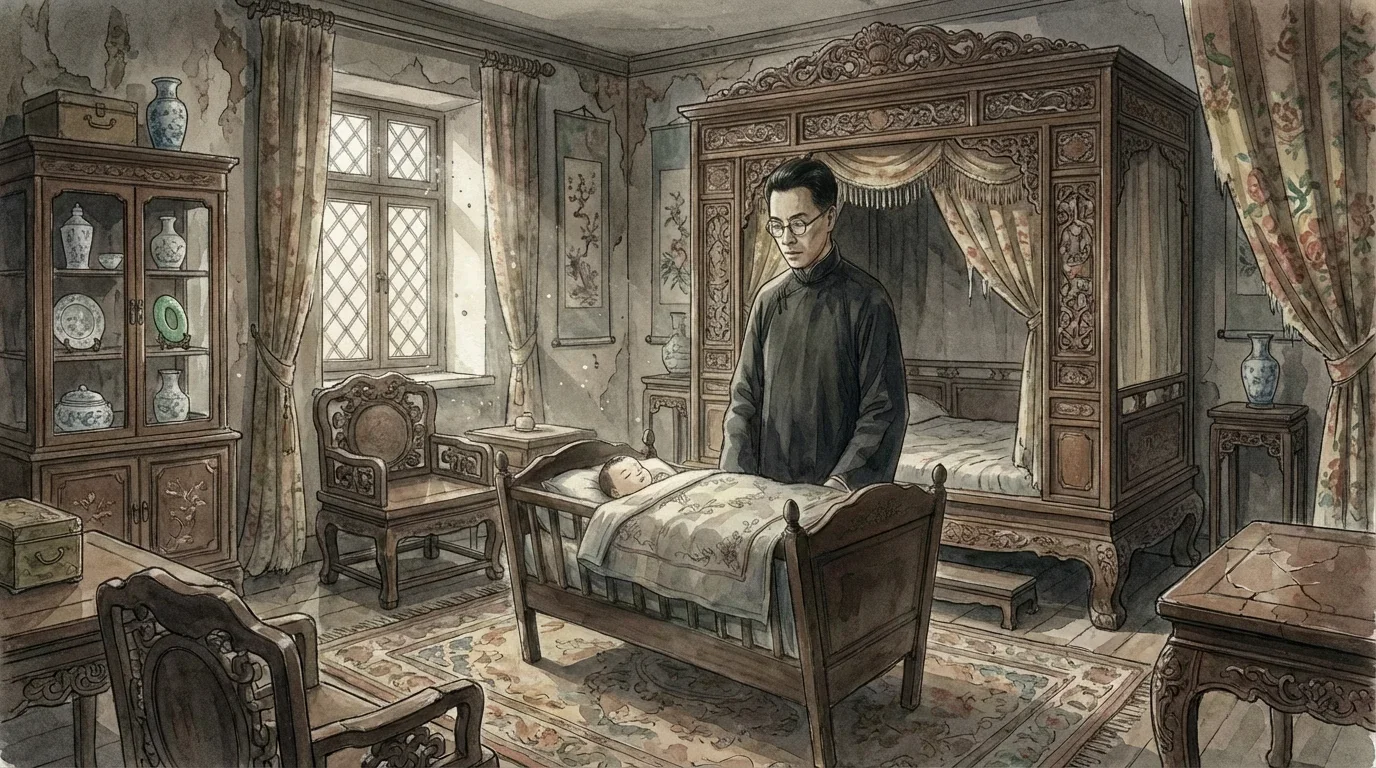
Illustration for: The Final Splendor

On September 30, 1920, a baby girl named Eileen Chang was born in a grand mansion in Shanghai. Her family was once illustrious, descending from great Qing Dynasty statesmen like Li Hongzhang. However, she arrived as the final sigh of a dying era, born into the cracks between an old world and the new. The grey walls of the mansion stood as silent witnesses to a glory that was already starting to fade.
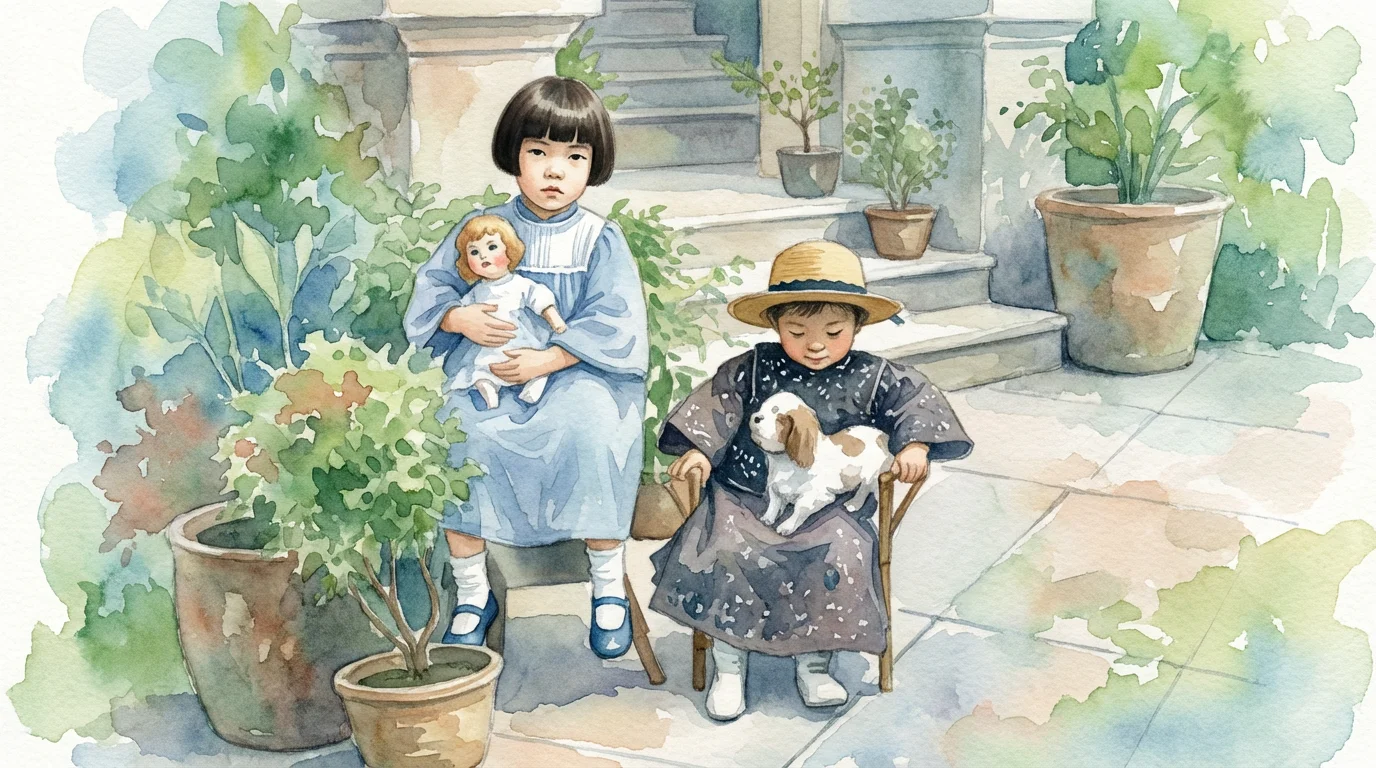
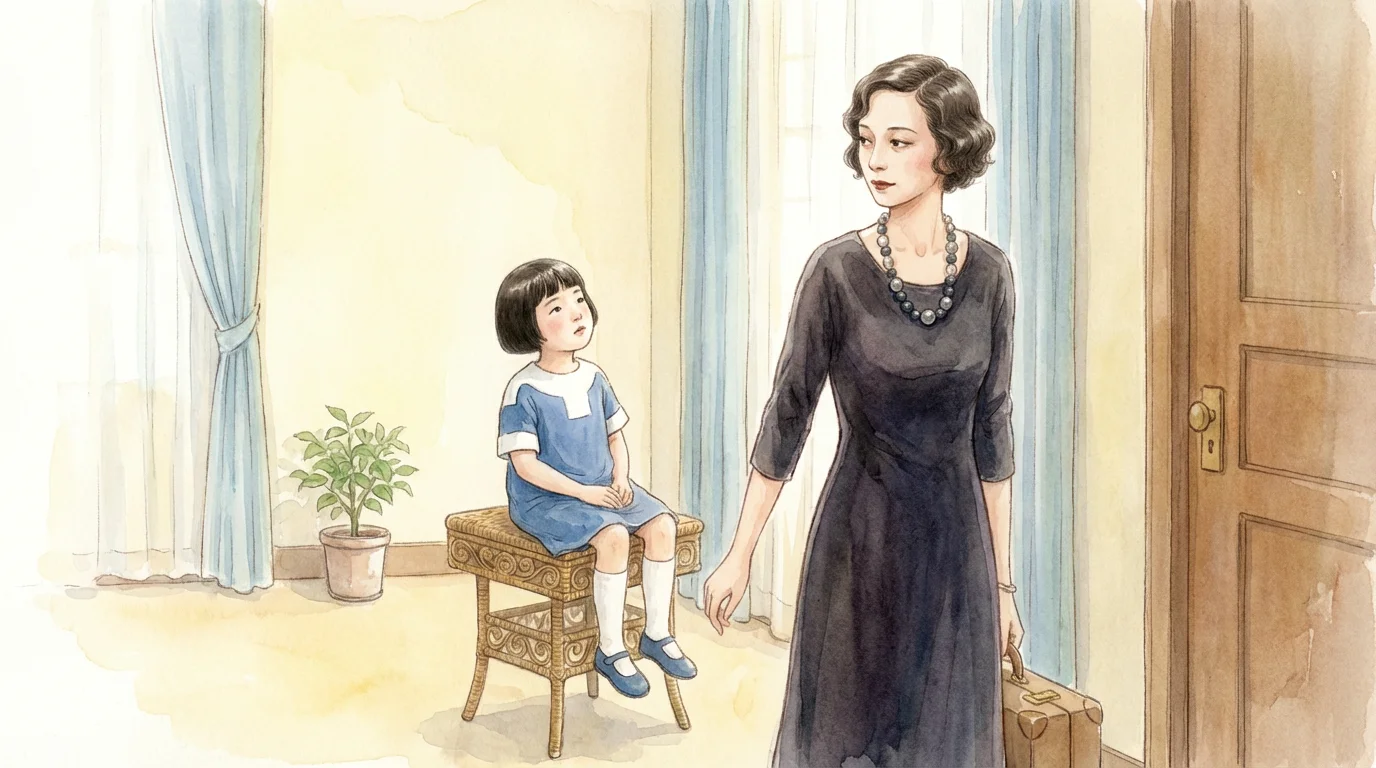
Illustration for: Joys and Sorrows of Childhood

In 1922, two-year-old Eileen moved to a garden villa in Tianjin. Her childhood was a tapestry of quiet hours spent learning poetry and playing in the lush garden with her younger brother, Zijing. While the scholarly blood of her ancestors flowed in the family, the house was also filled with the hazy smoke of her father's opium. It was a world of beauty shadowed by the rot of old habits.

Illustration for: A Mother's Departure

Eileen's mother, Huang Yifan, was a modern woman who sought independence far from the traditional rot of the family. In 1924, she left for Europe, leaving Eileen behind in the care of her father. Though she returned years later to teach Eileen painting and English, the peace did not last. After a bitter divorce, her mother left once more, leaving a cold void in the young girl's heart.

Illustration for: A Dream of Genius

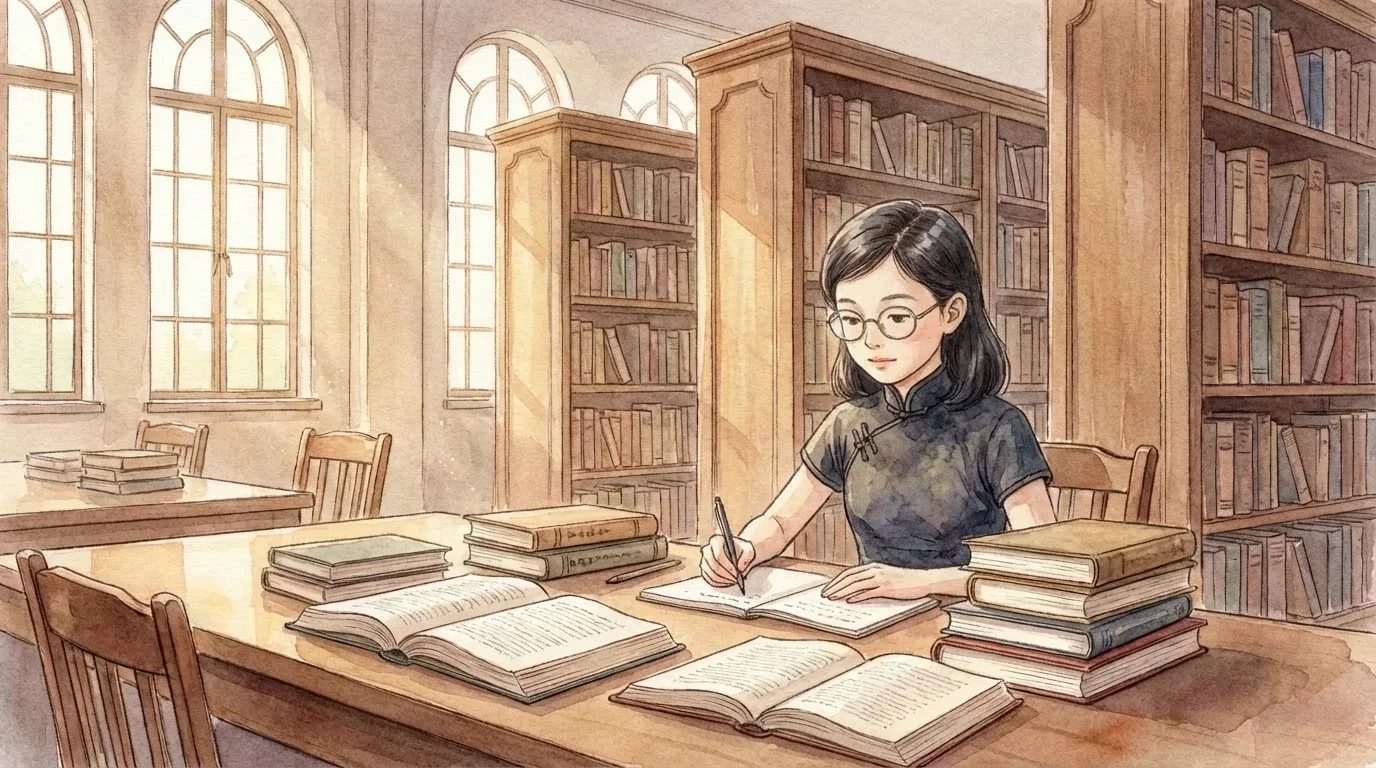
At eleven, Eileen entered St. Mary’s Hall, where she began to reveal her startling literary gift. She was a solitary figure, often found reading 'Dream of the Red Chamber' in the library while others played. At twelve, she published her first story and received five dollars for a cartoon. She was a ghost among her peers, carrying the heavy secret of her talent within her quiet thoughts.

Illustration for: Shadows in the House

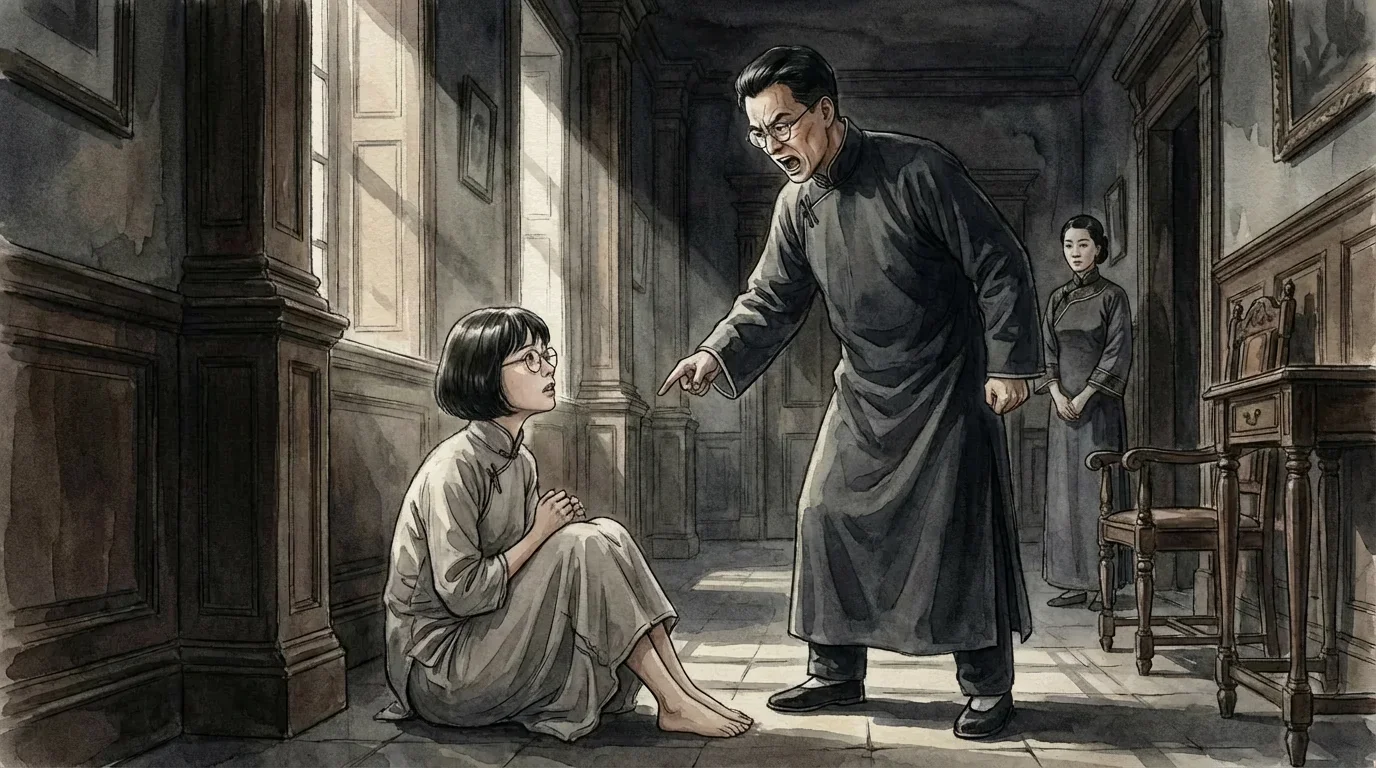
The arrival of a new stepmother cast a deeper shadow over Eileen's life. In 1937, a violent conflict erupted over Eileen's wish to study abroad, leading to a brutal confrontation. Her father, consumed by rage, beat her mercilessly in a frenzy of anger. This was no longer a home, but a place of fear where her dreams were being crushed by the hands of those who should have protected her.

Illustration for: House Arrest and Illness

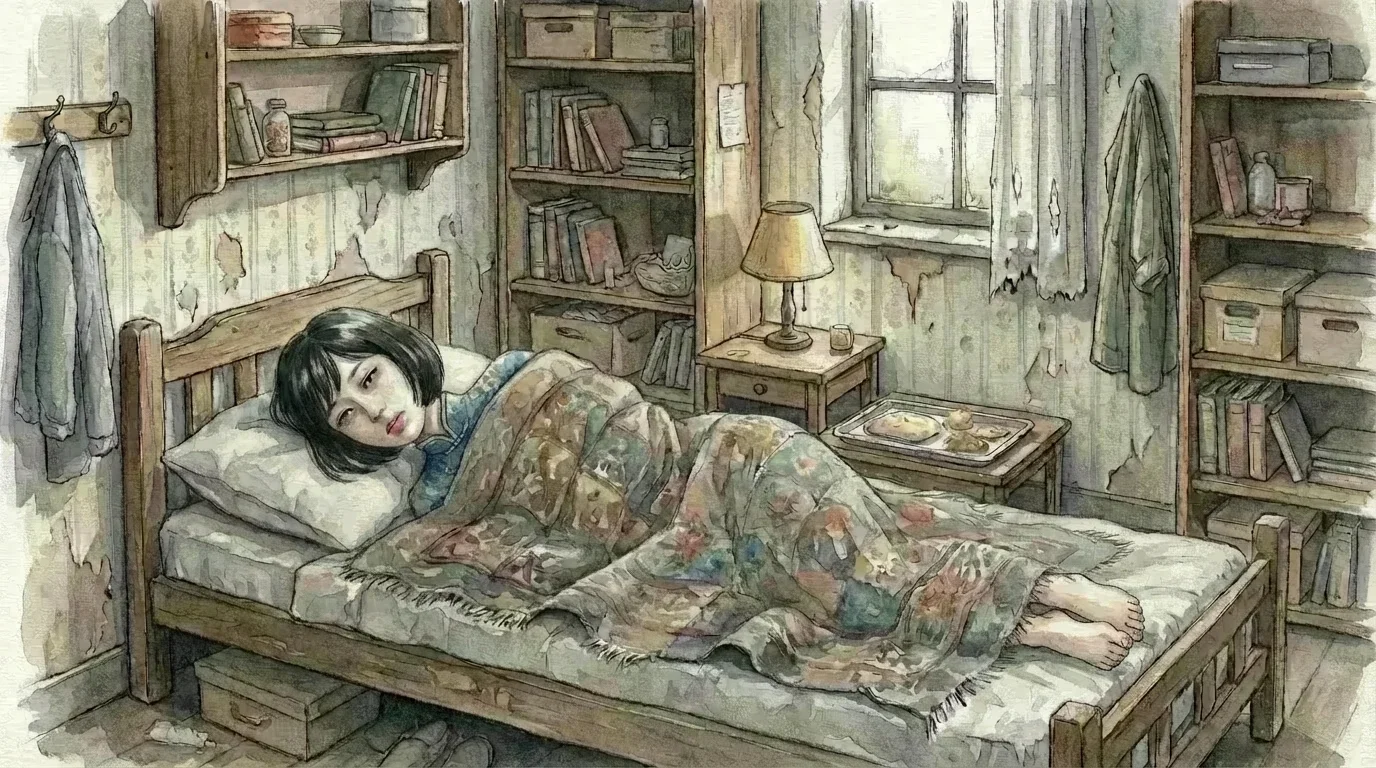
For half a year, Eileen was locked away in an empty room by her father. During this time, she contracted severe dysentery, her fever raging in the silence of her prison. No doctor was called, and she lay there nearly dying, abandoned by the family she once knew. The war outside mirrored the cruelty within the walls of her own home as she fought for every breath.

Illustration for: The Great Escape

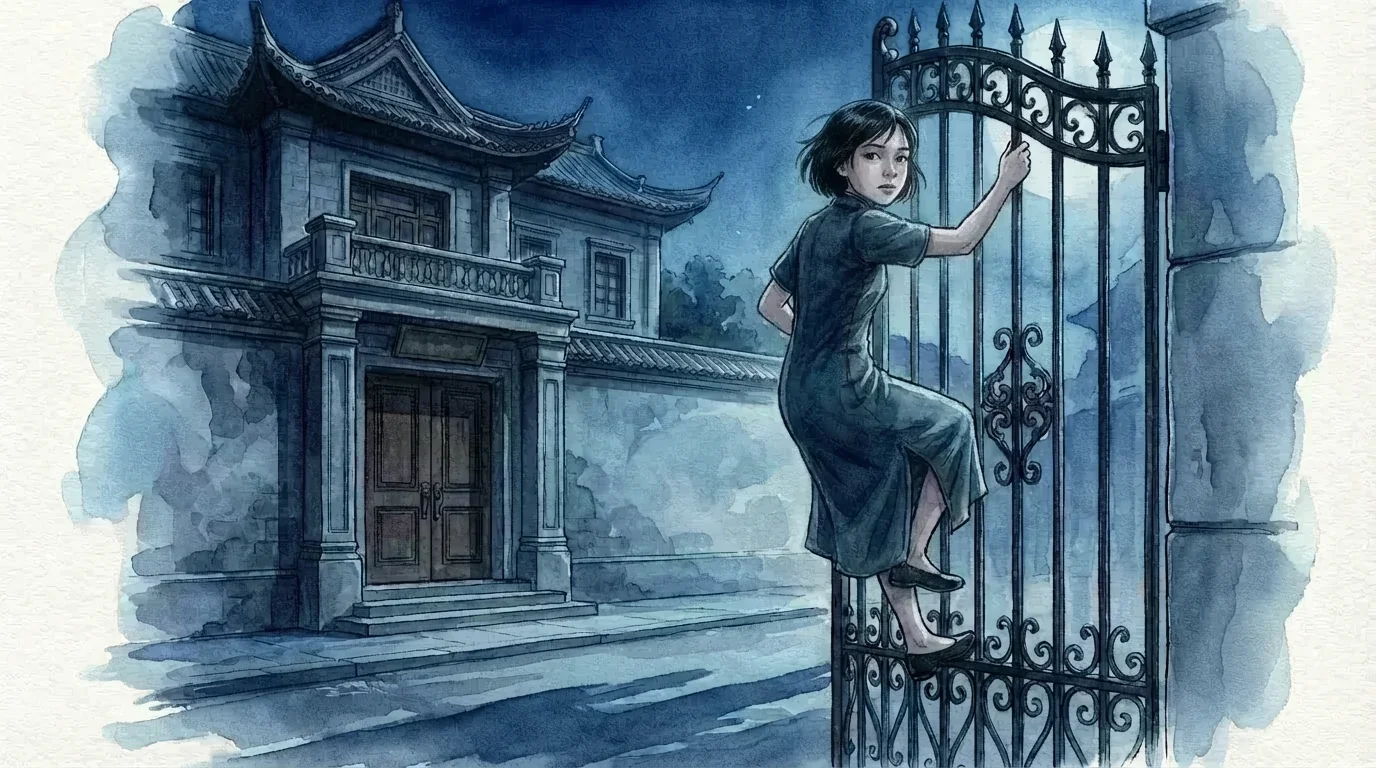
On a bitter winter night, Eileen finally found her chance to flee. She slipped out of her room, scaled the iron gate of the ancestral house, and ran into the darkness. The joy of survival was maddening as she reached her mother's home, escaping the decaying household forever. But her escape came with a cost, as her brother Zijing was left behind in the shadows she had just fled.

Illustration for: The Path of Scholarship

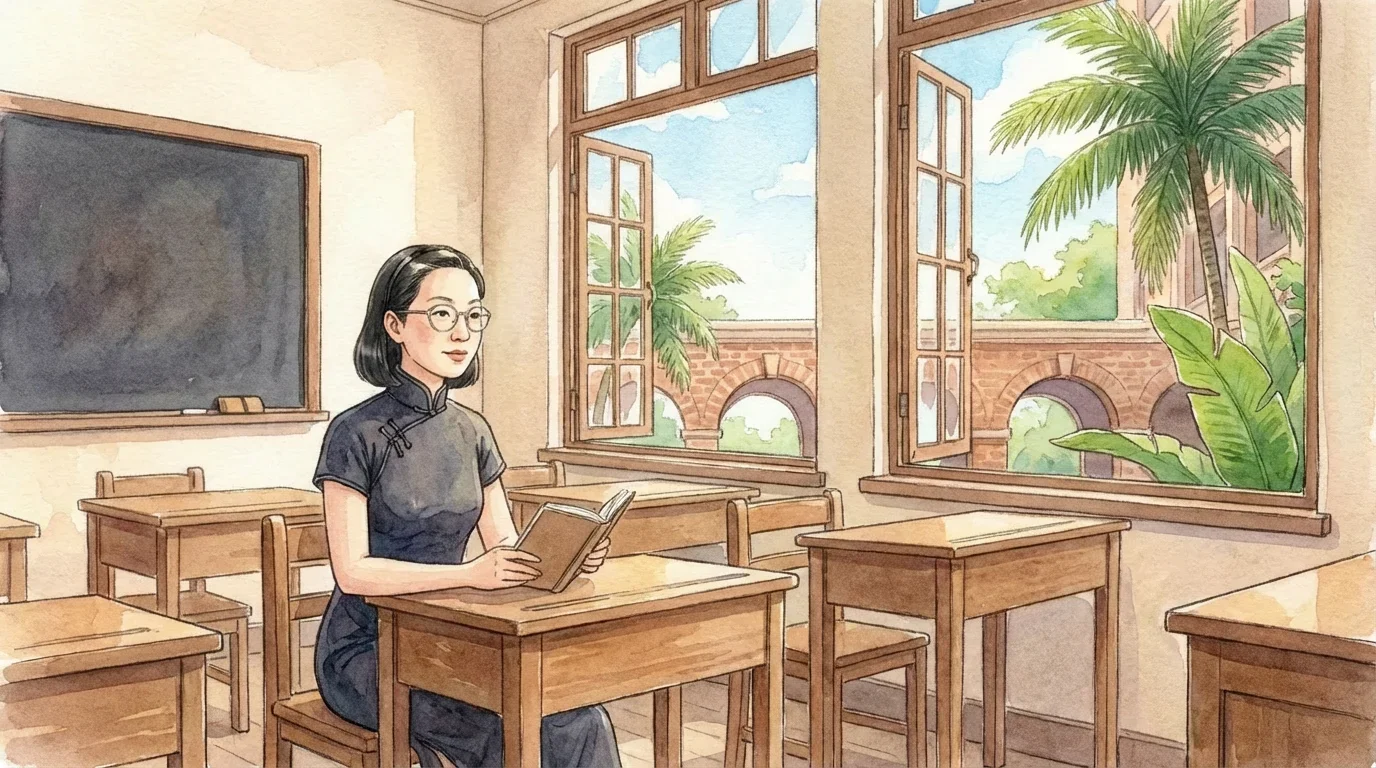
In 1939, Eileen arrived at the University of Hong Kong, tasting true freedom for the first time. She met her lifelong friend Fatima Bak, and together they thrived in the vibrant academic atmosphere. Eileen won scholarships and the praise of her professors, filled with hope for the future. However, a coldness grew between her and her mother, a door slamming shut between them forever.

Illustration for: The Fall of Hong Kong

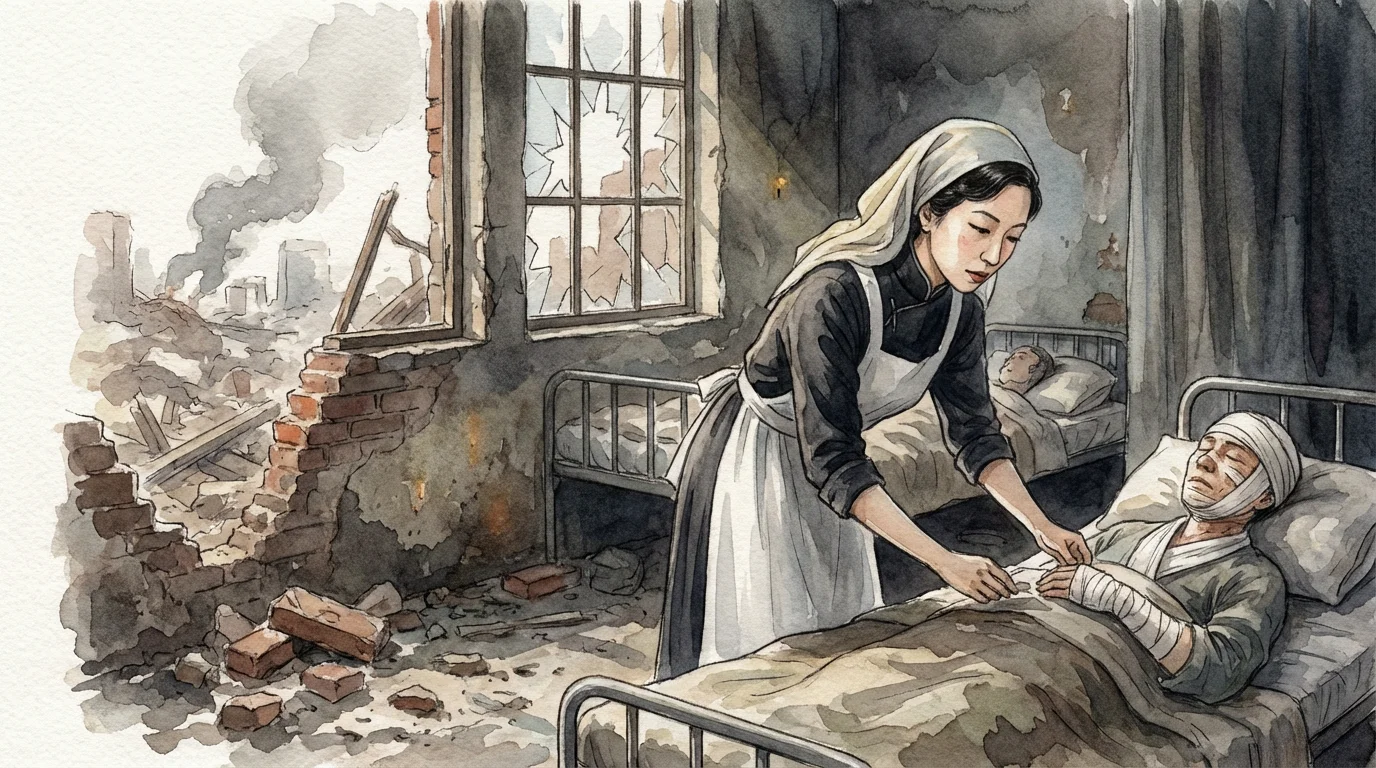
The peace was shattered in 1941 when Japanese forces invaded Hong Kong. Eileen served as a volunteer air-raid warden and nurse, witnessing the terror of war firsthand. All her academic records were destroyed in the conflict, three years of hard work vanishing into ash. With no degree and no job, she turned to her pen to survive, writing essays that captured the essence of Chinese life.

Illustration for: Rise in the Literary World

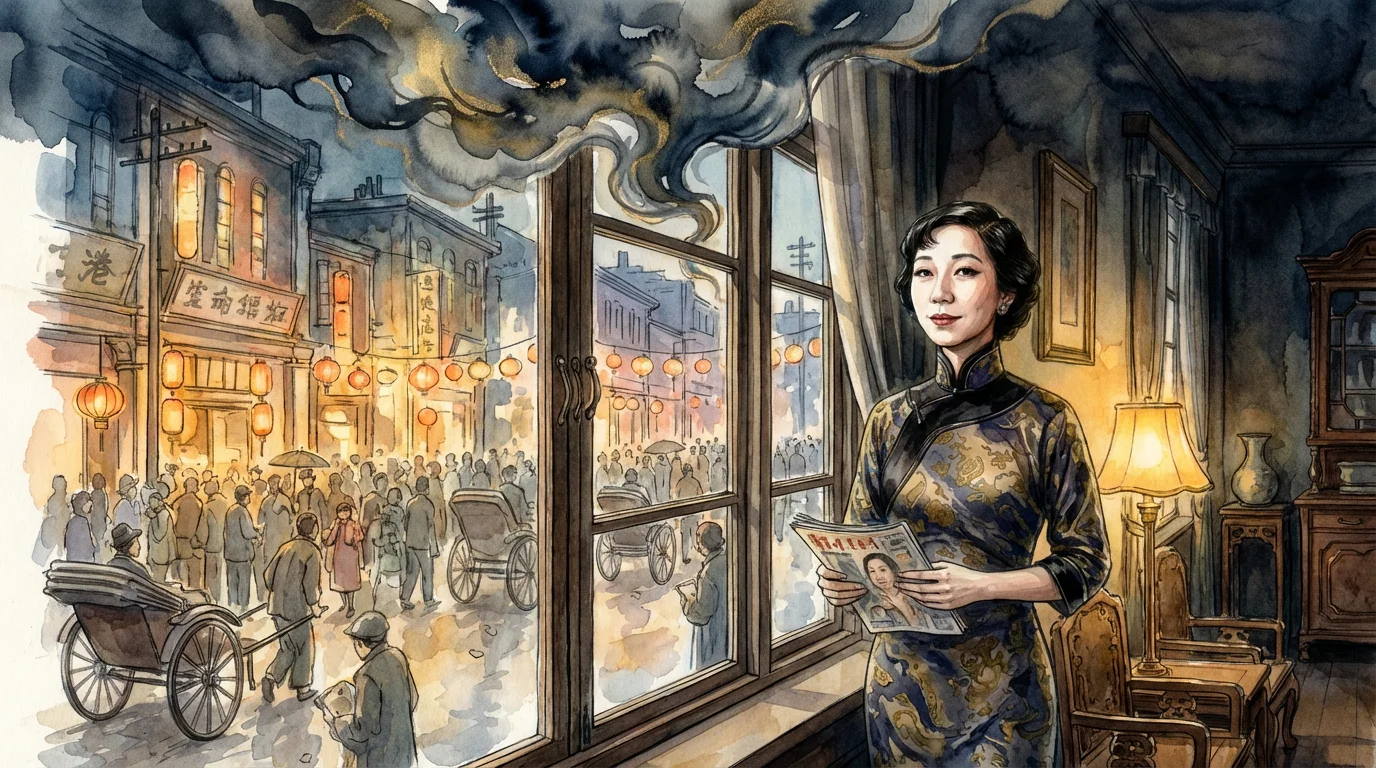
In 1943, Eileen returned to Shanghai and became an overnight sensation with her masterpiece 'The First Brazier.' Her name echoed through the city as she wrote with staggering speed, securing her place in Chinese literary history. She became the most illustrious brand in Shanghai, her stories of love and desolation capturing the hearts of a generation living in a fallen city.

Illustration for: Love in a Fallen City

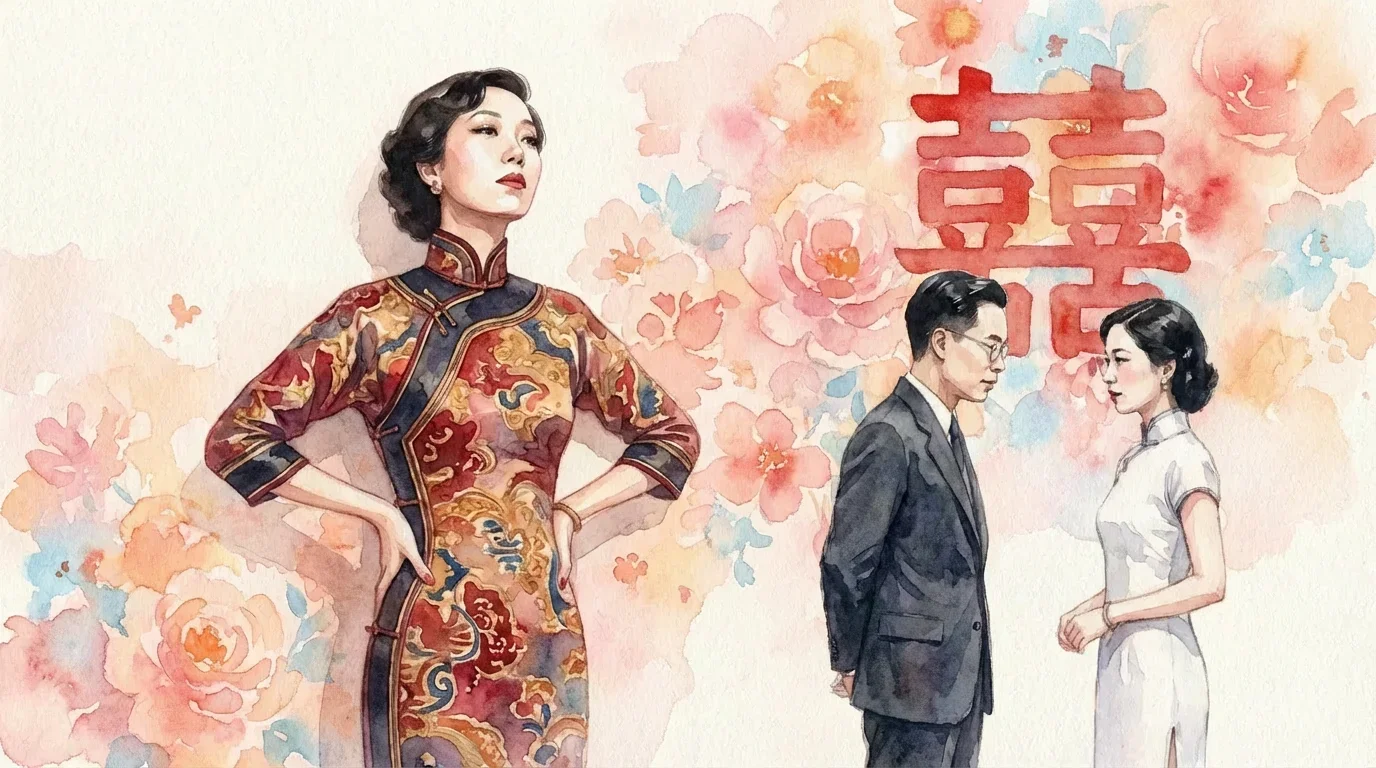
In the spring of 1944, Eileen met Hu Lancheng, a man of talent but questionable morals. Despite the controversy surrounding him, she fell deeply in love, writing that she became 'very, very low, down into the dust.' They married in secret, committing to each other for life with a simple contract. For a brief moment, Eileen believed she had found her anchor in a world torn apart by war.

Illustration for: A Thousand Miles to Find a Husband

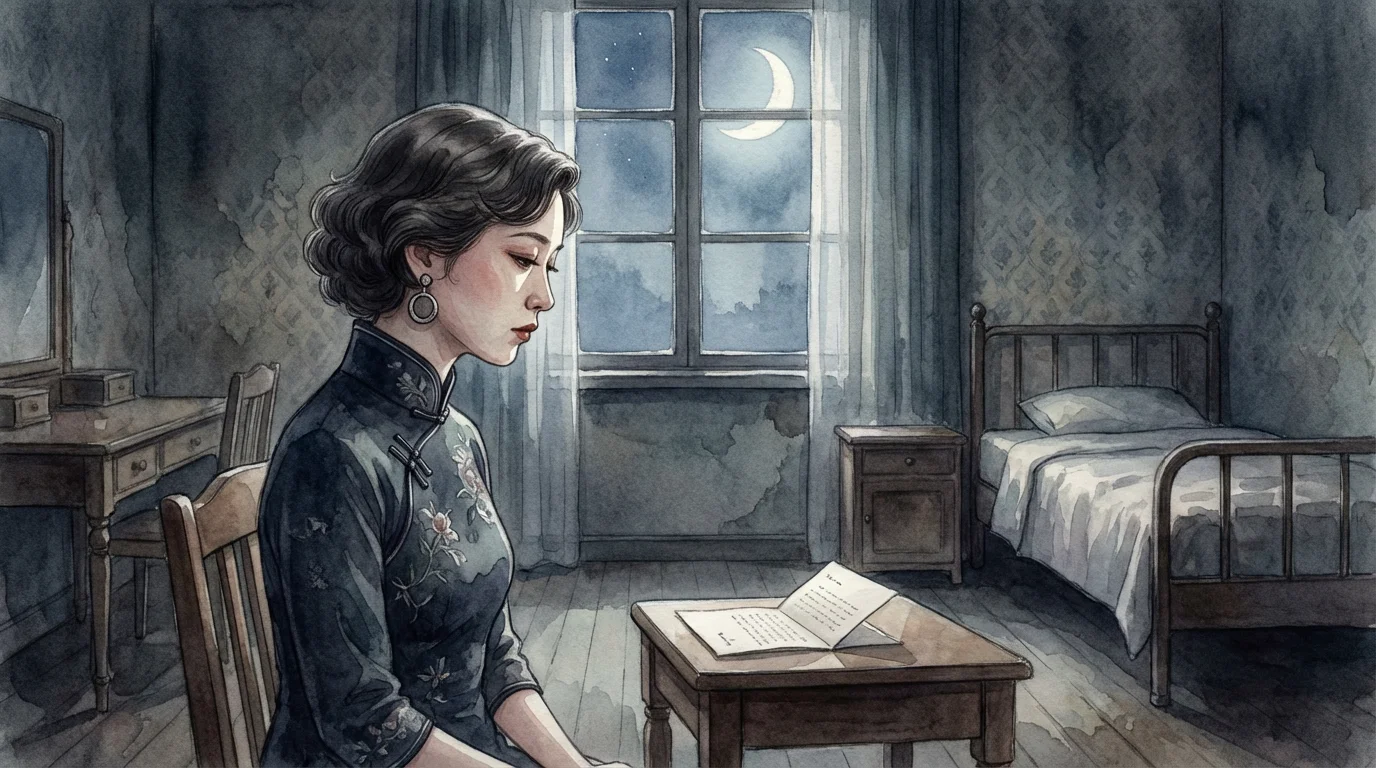
When the war ended, Hu Lancheng fled as a wanted man. Eileen traveled a thousand miles to find him in Wenzhou, only to discover he had taken another lover. That night, she sat awake until dawn, realizing his betrayal. She resolved to end the affair, sending him a final letter and money from her royalties, drawing a definitive curtain on the romance that had once been her anchor.

Illustration for: No Turning Back

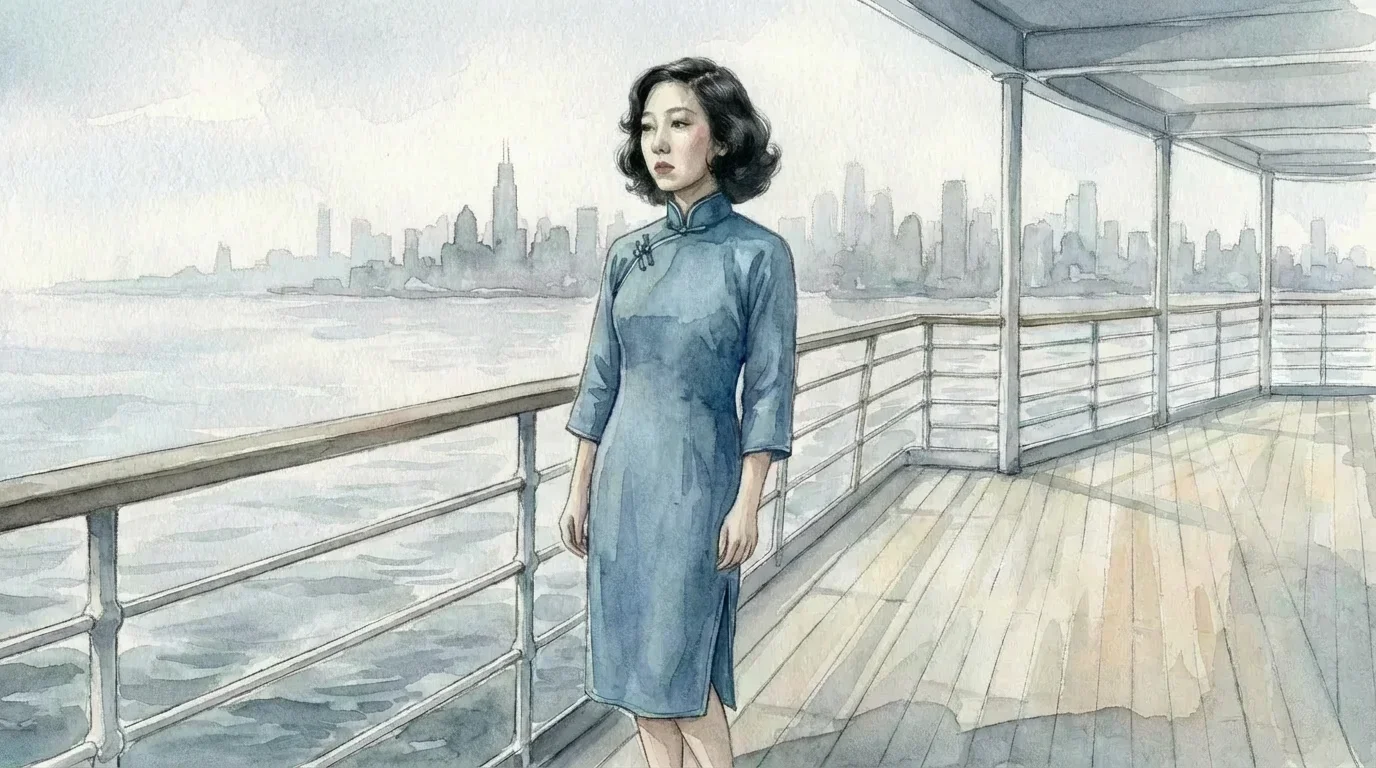
As the political tides turned in China, Eileen made the pivotal decision to leave Shanghai for Hong Kong in 1952. She left behind the silhouette of an era, carrying only a few bags and her unfinished dreams. It was a final departure from her homeland, as she realized she could never fit into the new environment. She was a traveler once more, seeking a place where her voice could still be heard.

Illustration for: Drifting in America

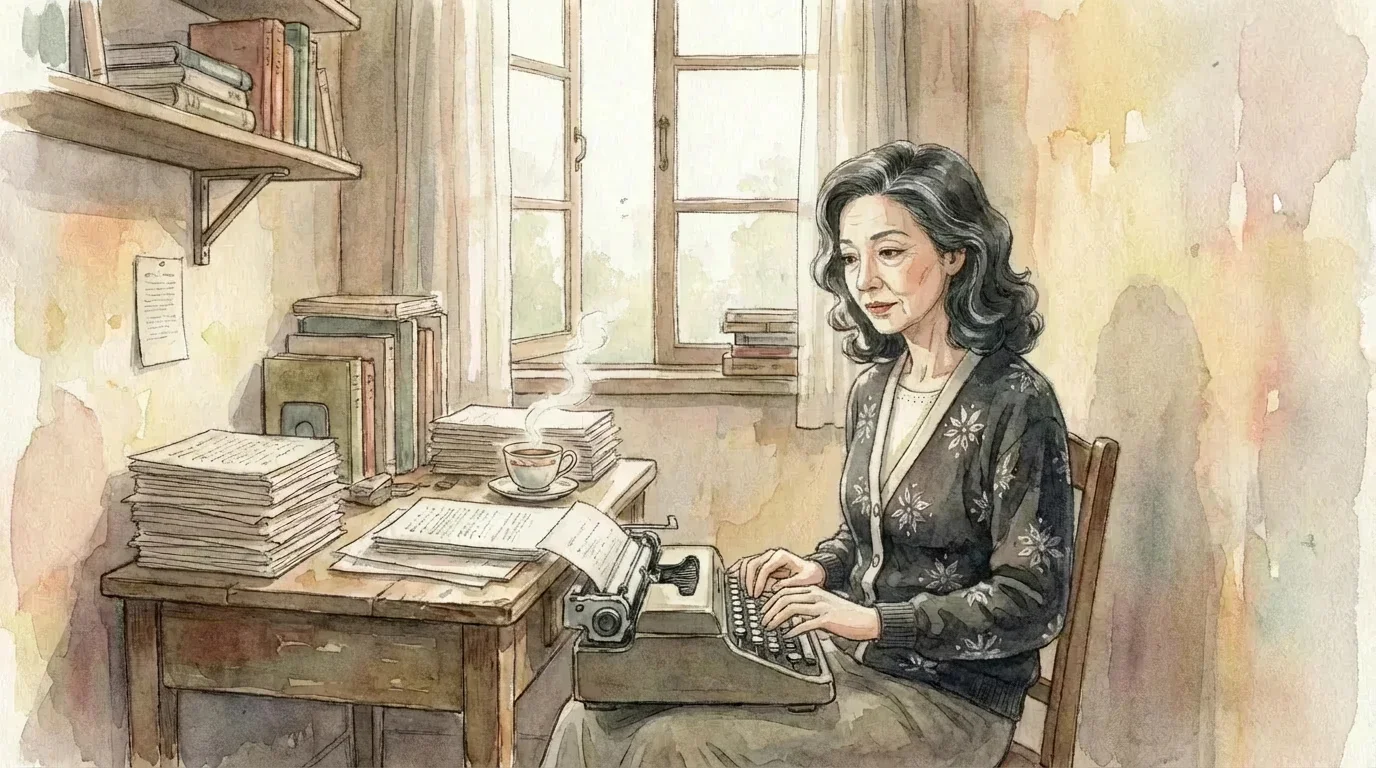
In America, Eileen struggled to survive, writing screenplays and translating books. She married Ferdinand Reyher, an American screenwriter, and though they lived in poverty, she found a companion in him. After his death in 1967, she was left alone once more, beginning a long period of solitary living. Life in a new land was a constant struggle, yet she continued to write, her spirit unbroken by the hardships.

Illustration for: Gone with the Wind

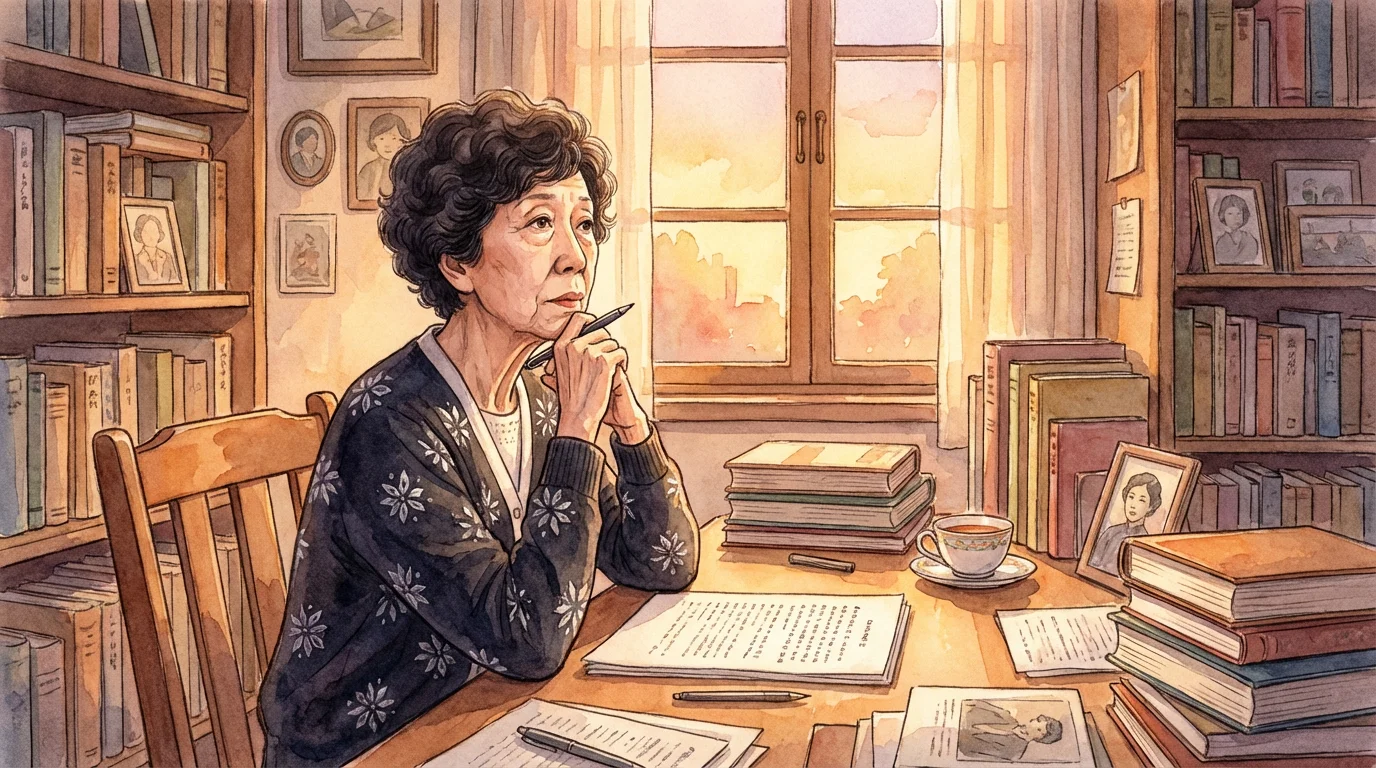
In her final years in Los Angeles, Eileen lived in complete seclusion, immersing herself in the study of 'Dream of the Red Chamber.' She became a ghost of her former self, rarely seen by the outside world. On September 8, 1995, she was found dead in her apartment, having departed as quietly as she had lived. Her legacy remains like a flower in the dust, a testament to a life of genius and desolation.

En infant Literary ClassicsLearning Values Dreams AspirationPerseverance DeterminationSelf Acceptance

Create Your Own TaleBook

0 views • 0 shares