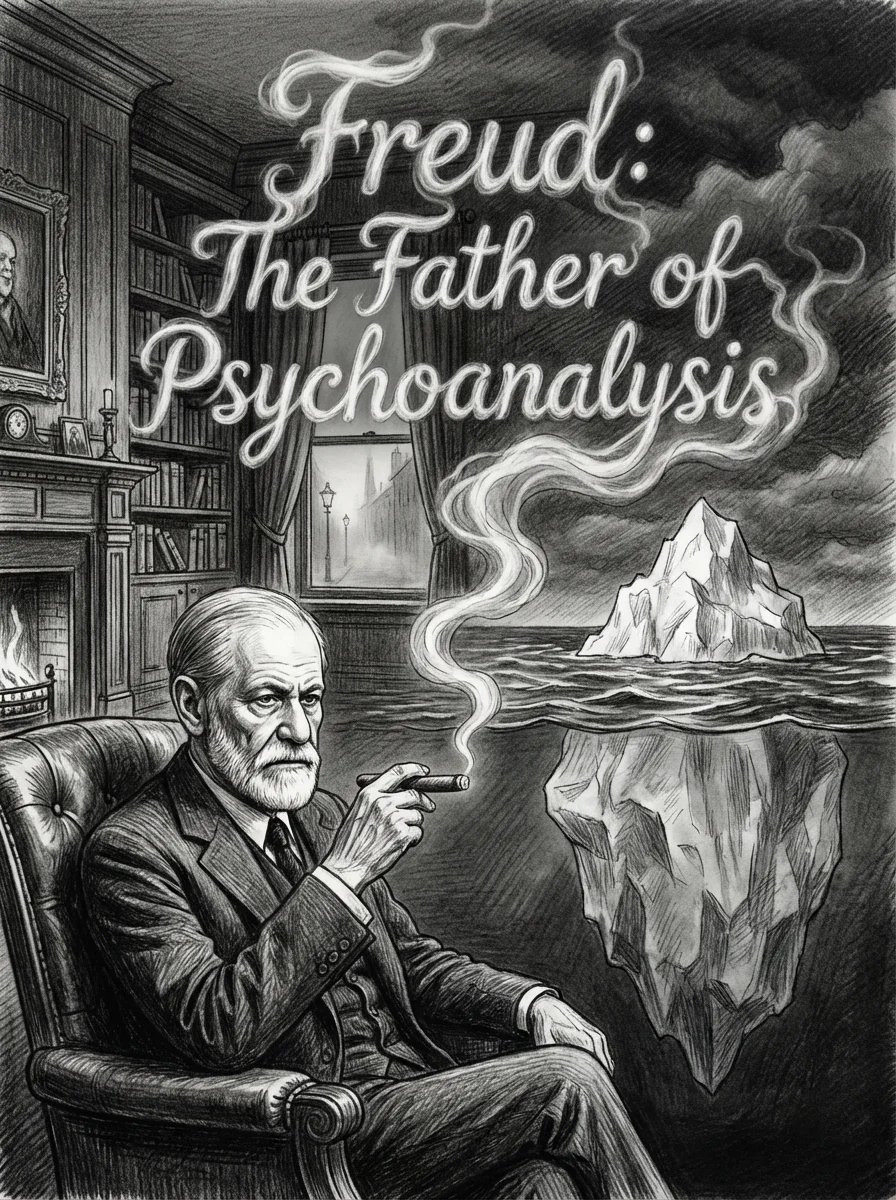
Freud: The Father of Psychoanalysis

Freud: The Father of Psychoanalysis

|
Author: Yan Xinyue
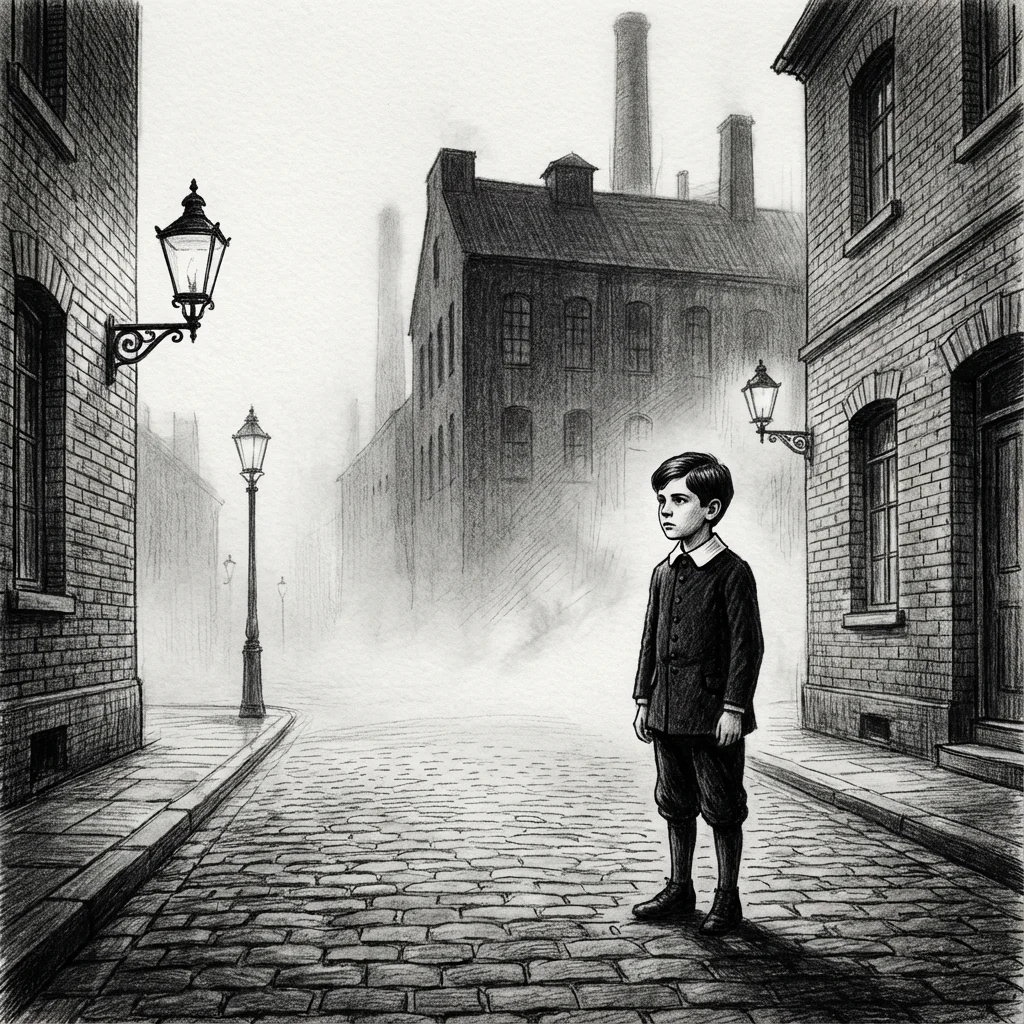
Illustration for: The Industrial Fog of Freiberg

The air in Freiberg, Moravia, on May 6, 1856, was thick with the scent of coal dust and raw wool. This grey industrial fog seemed to presage the murky depths of the human psyche that Sigmund Freud would one day explore. Born into a complex household, young Sigmund was a silent observer, a sensitive and suspicious child who would later dissect the very dynamics he witnessed in his formative years. His father, Jakob, a wool merchant, was twenty years his mother Amalia’s senior. The presence of two adult half-brothers from Jakob’s previous marriage added layers of unspoken tension to the family tapestry. It was a crucible of subtle anxieties and veiled desires, a microcosm of the world Freud would later seek to unravel.
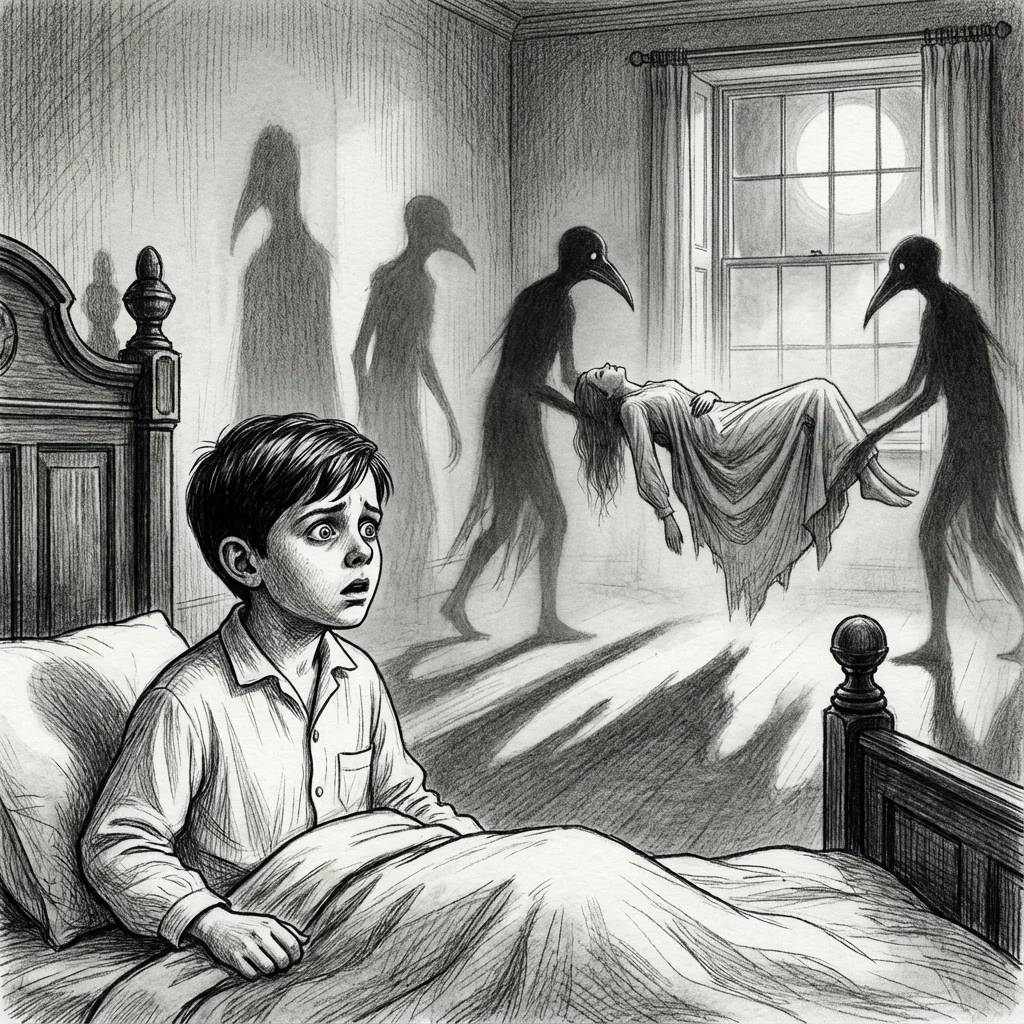
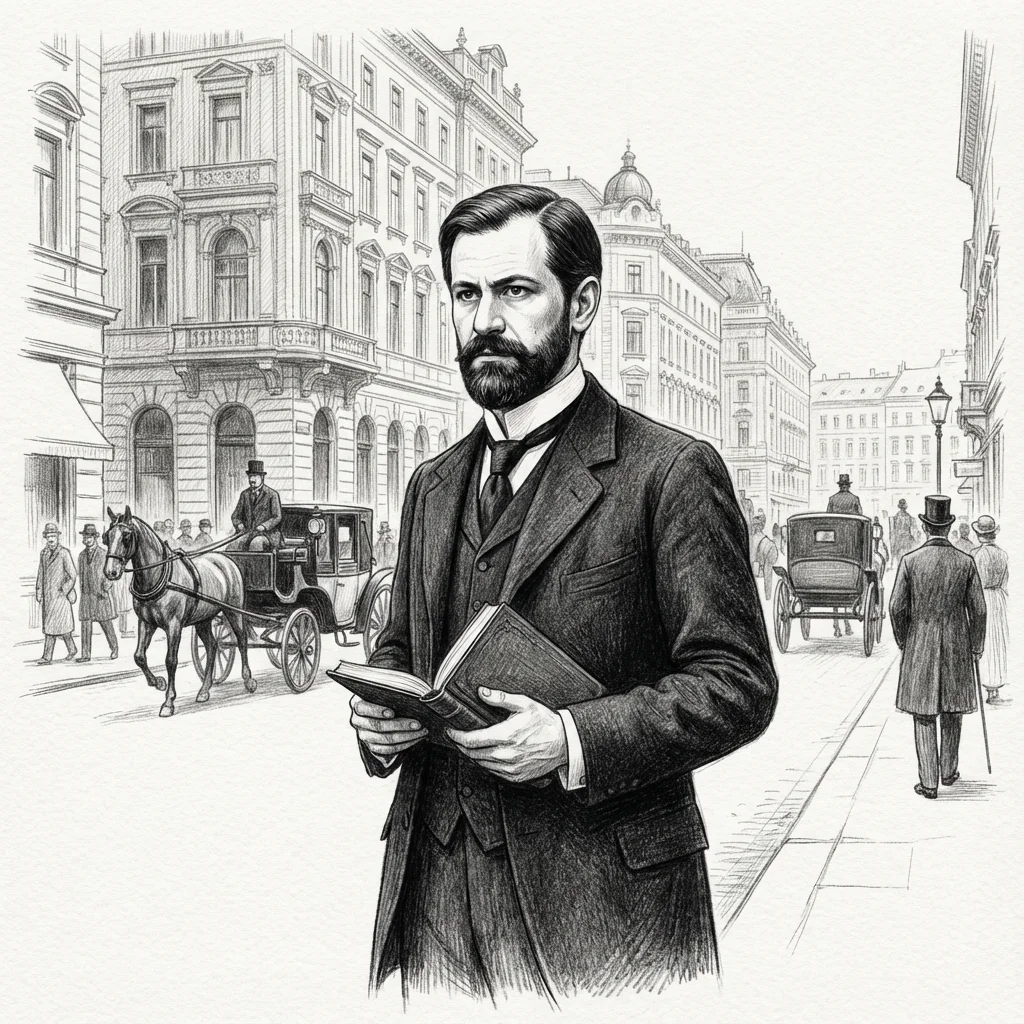
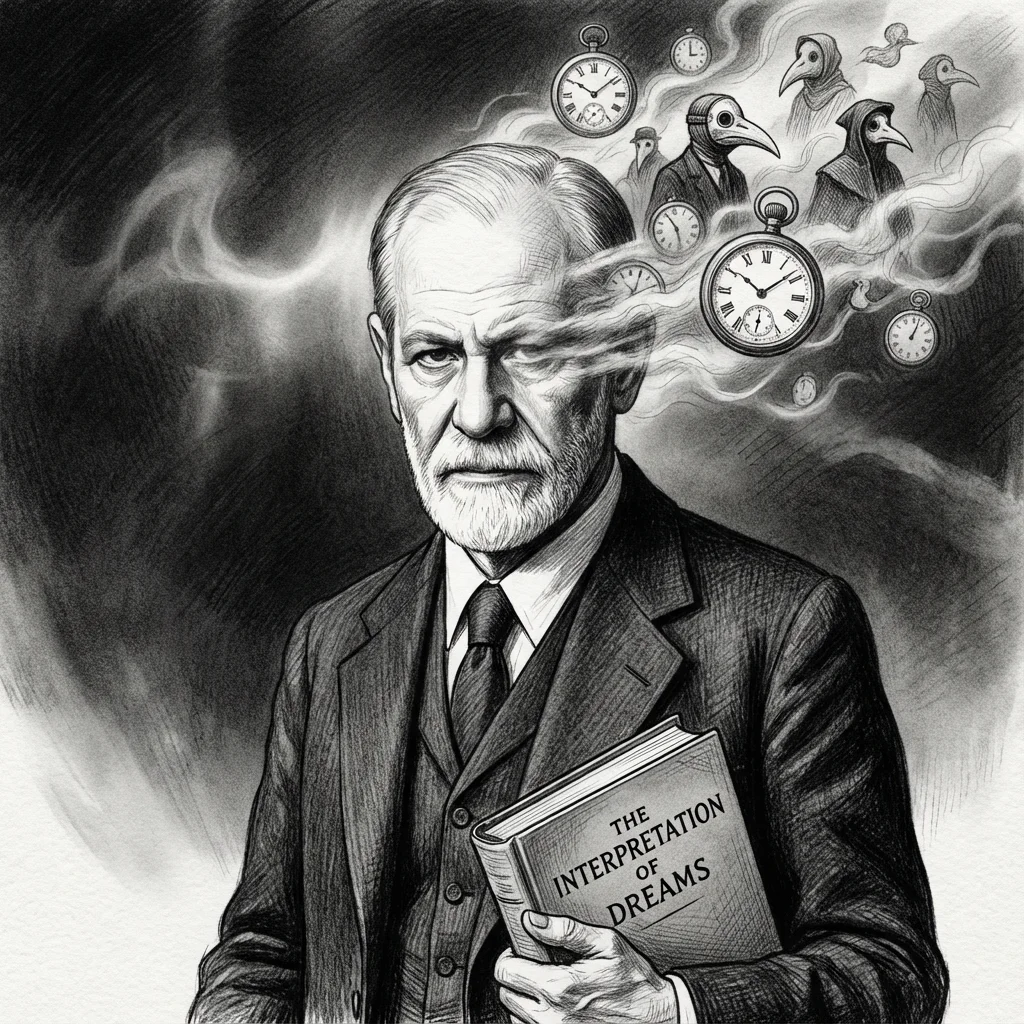
Illustration for: The Bird-Beaked Harbingers

At the tender age of seven, a dream etched itself into his nascent consciousness, a haunting tableau that would recur and perplex him for decades. He saw his mother, still and pale, being carried into a room by bird-beaked figures, while a chorus of wailing echoed from outside the window. This vivid, unsettling vision was the first tremor of what he would eventually name the Oedipus Complex—the dark, subterranean desire for the mother and the primal jealousy toward the father. It was his first unwitting brush with the raw, untamed forces of the unconscious, a realm he would dedicate his life to mapping.

Illustration for: The Outsider in Vienna

In 1860, the Freud family moved to Vienna, the glittering capital of the Austro-Hungarian Empire. Here, young Sigmund blossomed academically, devouring Shakespeare and mastering Greek and Latin. Yet, he remained an outsider, a solitary figure who observed the human comedy with an almost clinical detachment. Why did people act against their own reason? Why did memories vanish only to resurface in strange, distorted forms? These were the questions that gnawed at him, the seeds of a revolution that would shake the world four decades later.

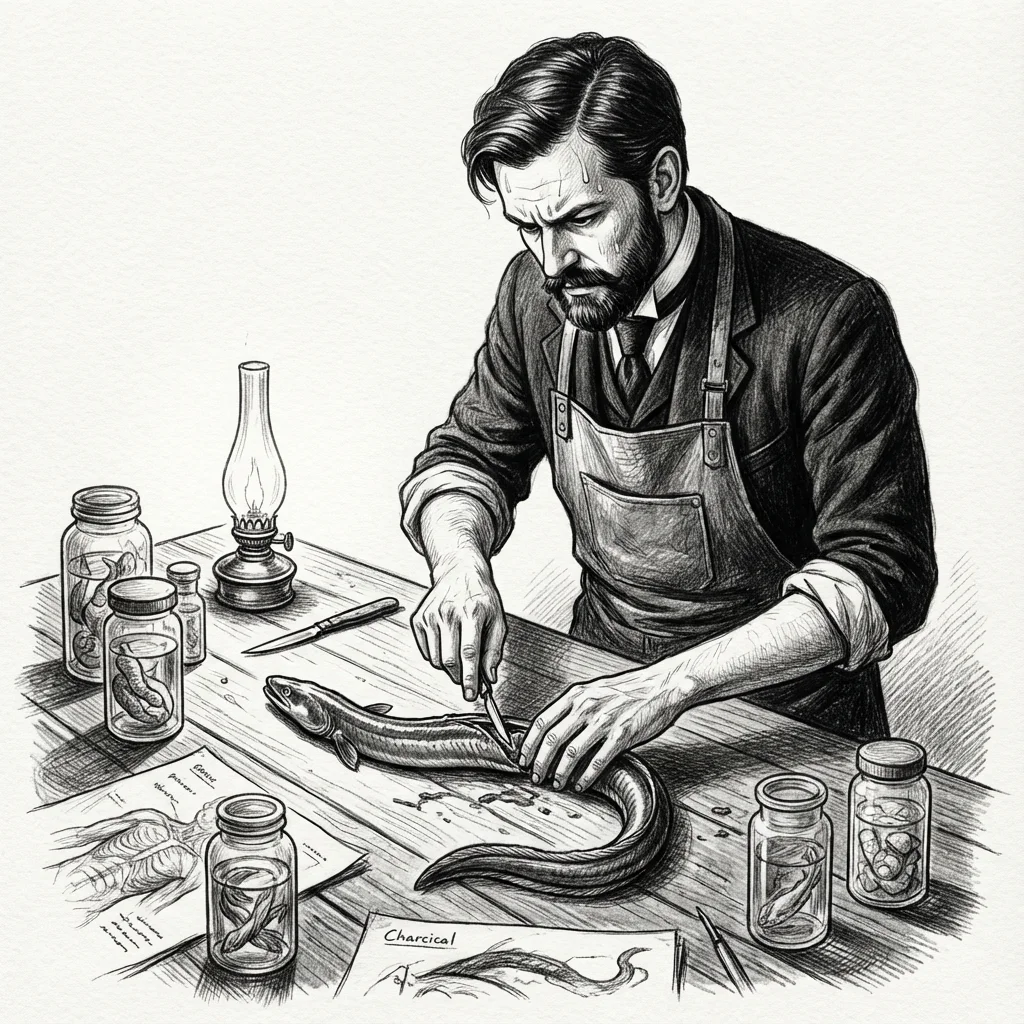
Illustration for: The Anatomy of Eels

His path to medicine, chosen in 1873, was a pragmatic necessity for a Jewish man in an era of limited professional opportunities. At the University of Vienna, he found a mentor in Ernst Brücke, a physiologist who taught him the rigorous scientific method. Freud spent six years meticulously dissecting the nervous systems of eels. Yet, he soon realized that anatomy alone could not explain the most complex human phenomena: consciousness, emotion, desire. His infamous, and ultimately unsuccessful, quest to find the reproductive organs of eels in Trieste in 1876 foreshadowed his lifelong obsession with sexuality.

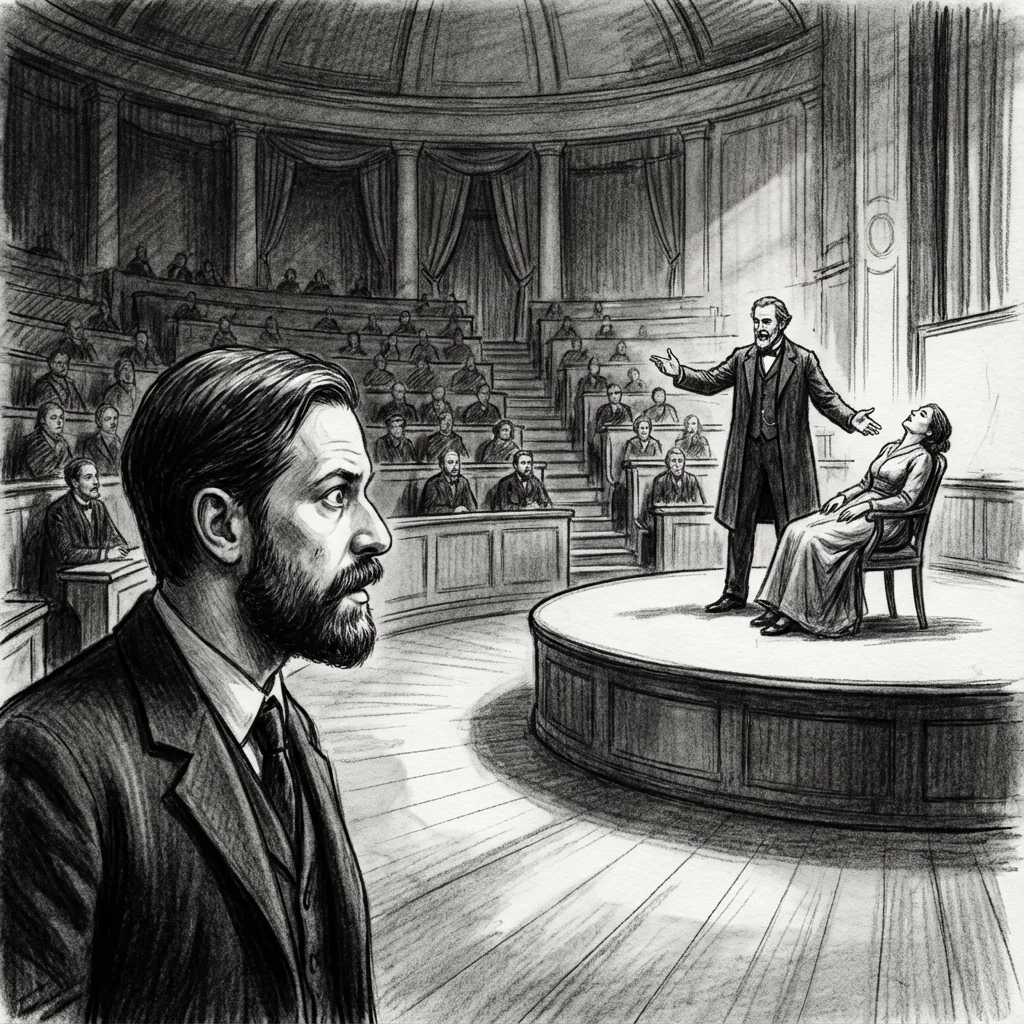
Illustration for: The Parisian Lightning Bolt

The true awakening came in 1885, when Freud studied in Paris under the legendary neurologist Jean-Martin Charcot. In the wards of the Salpêtrière Hospital, Charcot demonstrated the dramatic manifestations of hysteria—paralysis, convulsions, blindness—under hypnosis. Crucially, Charcot declared, "It is always a matter of sex." This pronouncement shattered Freud’s Victorian sensibilities. In Paris, Charcot placed sex center stage, and Freud, electrified, brought this revolutionary idea back to conservative Vienna.

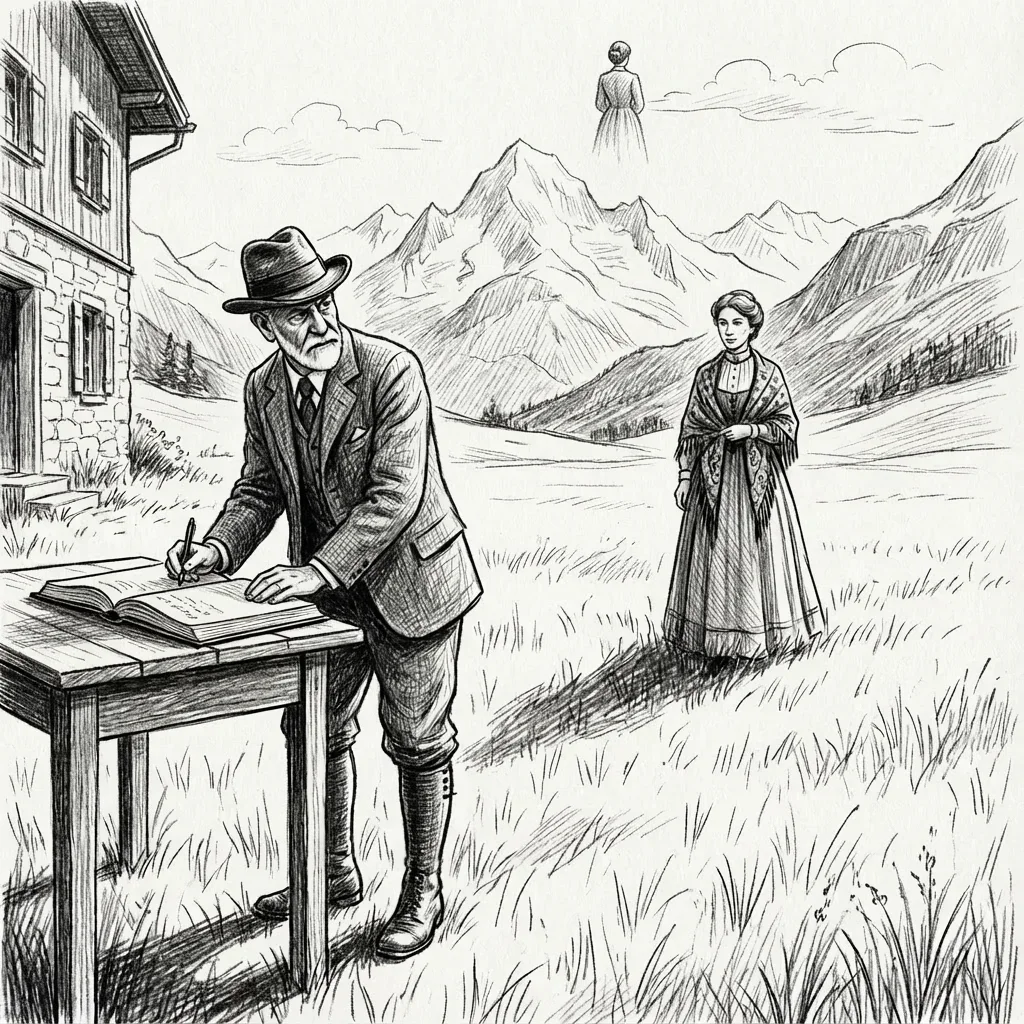
Illustration for: The Secret of Maloja

By the summer of 1898, the intellectual isolation in Vienna was palpable. Freud sought respite in the Swiss Alps, but he was not alone. It was not Martha, his wife, who accompanied him, but her younger sister, Minna Bernays. Brighter and more intellectually ambitious than Martha, Minna had become Freud’s confidante. At the Schweizerhaus hotel in Maloja, Freud picked up the pen and signed the registry: "Dr. Sigmund Freud and wife." That night, the boundaries between the moral doctor and the man of repressed desire blurred. While he wrote postcards to Martha praising the mountain air, he shared a room—and a secret—with her sister. This betrayal was the ultimate "hook," a real-life enactment of the very impulses he was beginning to document.

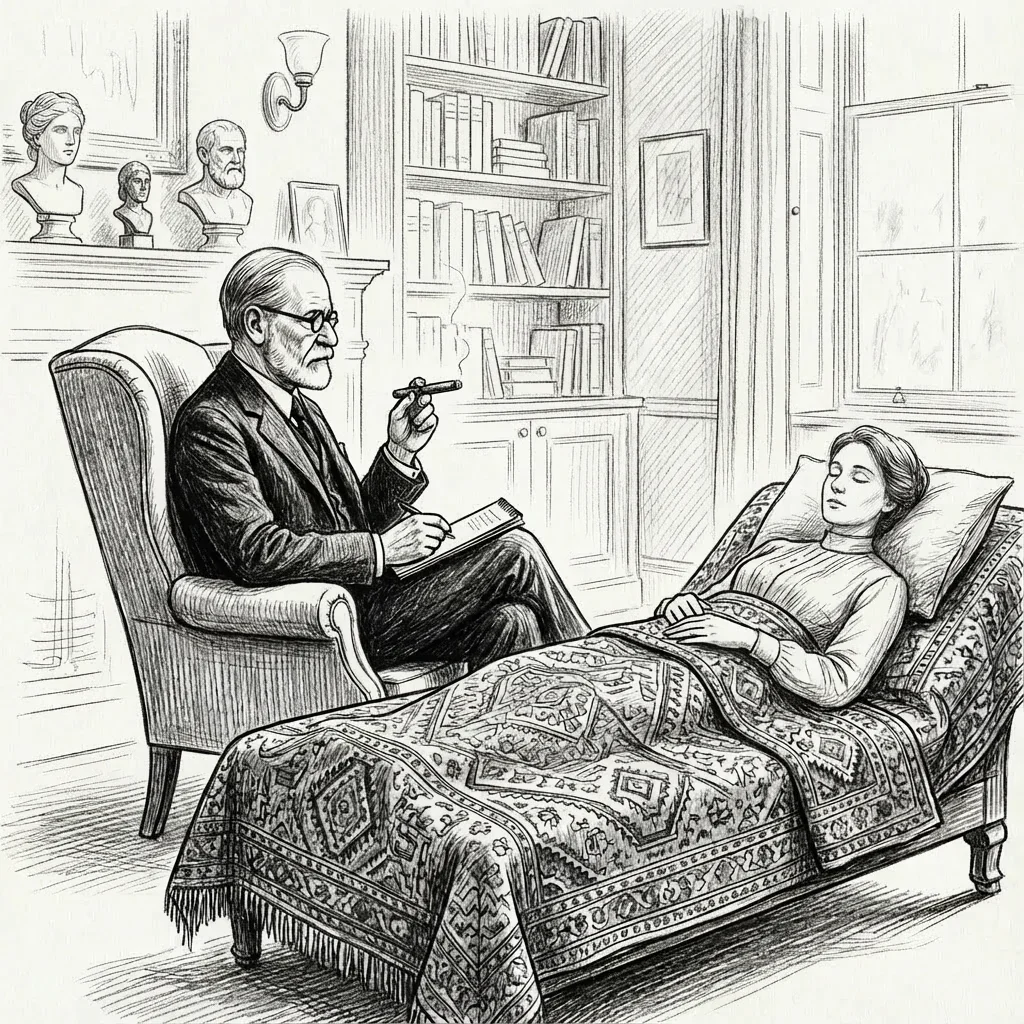
Illustration for: The Birth of the Talking Cure

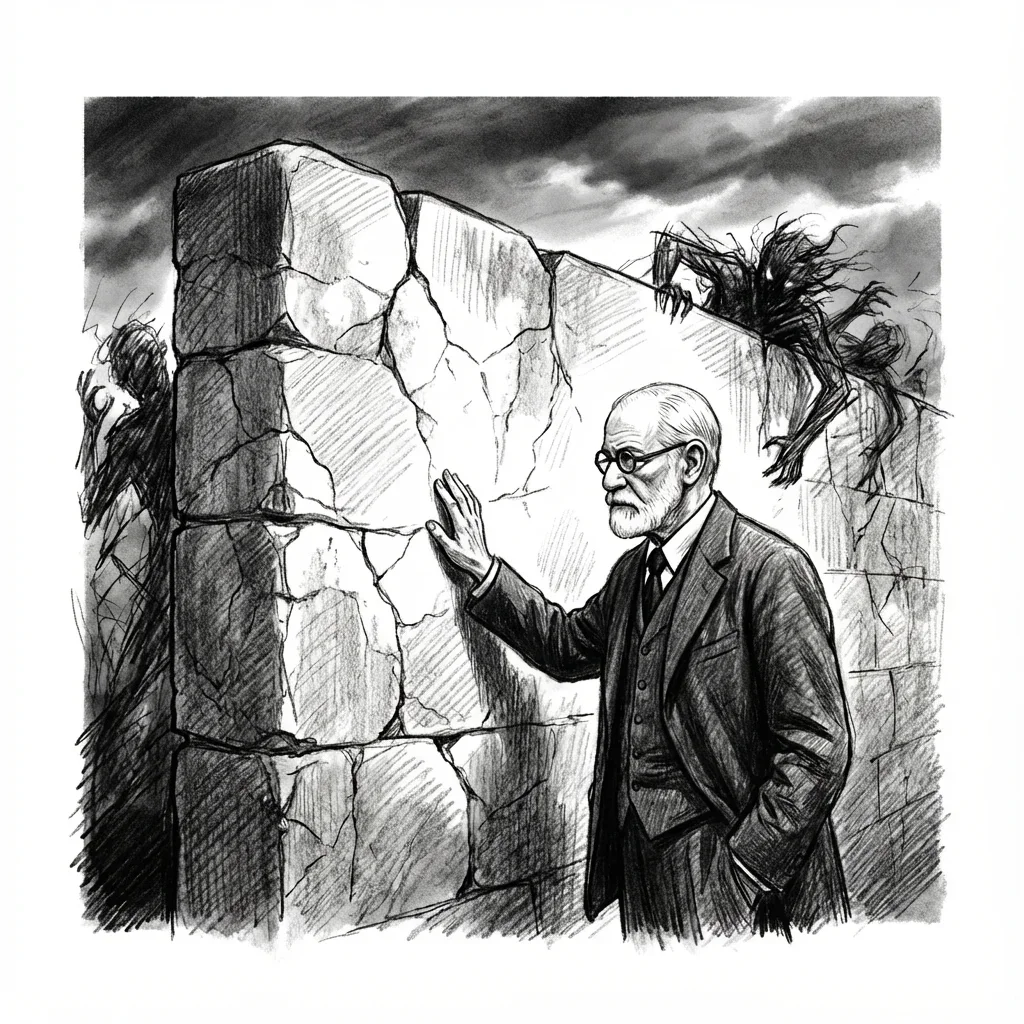
During his study,Freud realized that the human mind was like an iceberg, with the conscious realm merely the visible tip. Beneath lay the vast, dark ocean of the Unconscious. He began to develop the "talking cure," allowing patients to engage in Free Association. By letting thoughts flow without censorship, the "repressed" material of the unconscious could finally surface.

Illustration for: The Royal Road to Dreams

In 1900, Freud published The Interpretation of Dreams. He proposed that dreams were not random but were the "royal road" to the unconscious. Every dream, he argued, was a Wish Fulfillment, albeit disguised by the "dream-work" to protect the sleeper from the harshness of their own desires. He introduced the concepts of Manifest Content (what we remember) and Latent Content (the true, hidden meaning). This book was his declaration of war on the rational world, proving that even in sleep, our minds are busy negotiating our deepest conflicts.

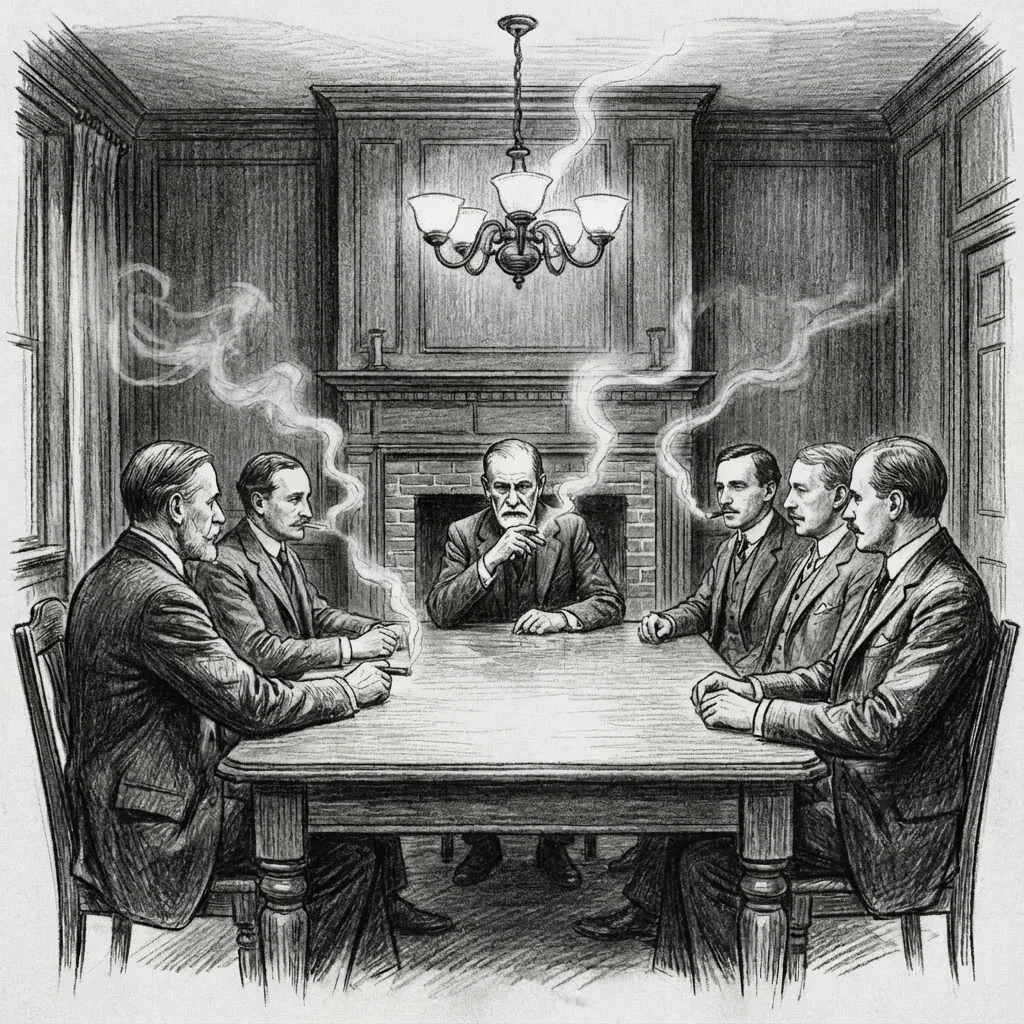
Illustration for: Wednesday Psychological Society

By 1902, a clandestine gathering began to form in Freud's apartment at Berggasse 19 every Wednesday evening. Amidst the thick haze of Freud’s ubiquitous cigars, the "Wednesday Psychological Society" debated the nascent ideas of psychoanalysis. Here, Freud was the undisputed patriarch, mapping the interplay of the Id (instinct), Ego (reality), and Superego (morality). However, the smoke also masked the growing dissent among his disciples, who began to chafe under his rigid insistence on the sexual roots of every neurosis.

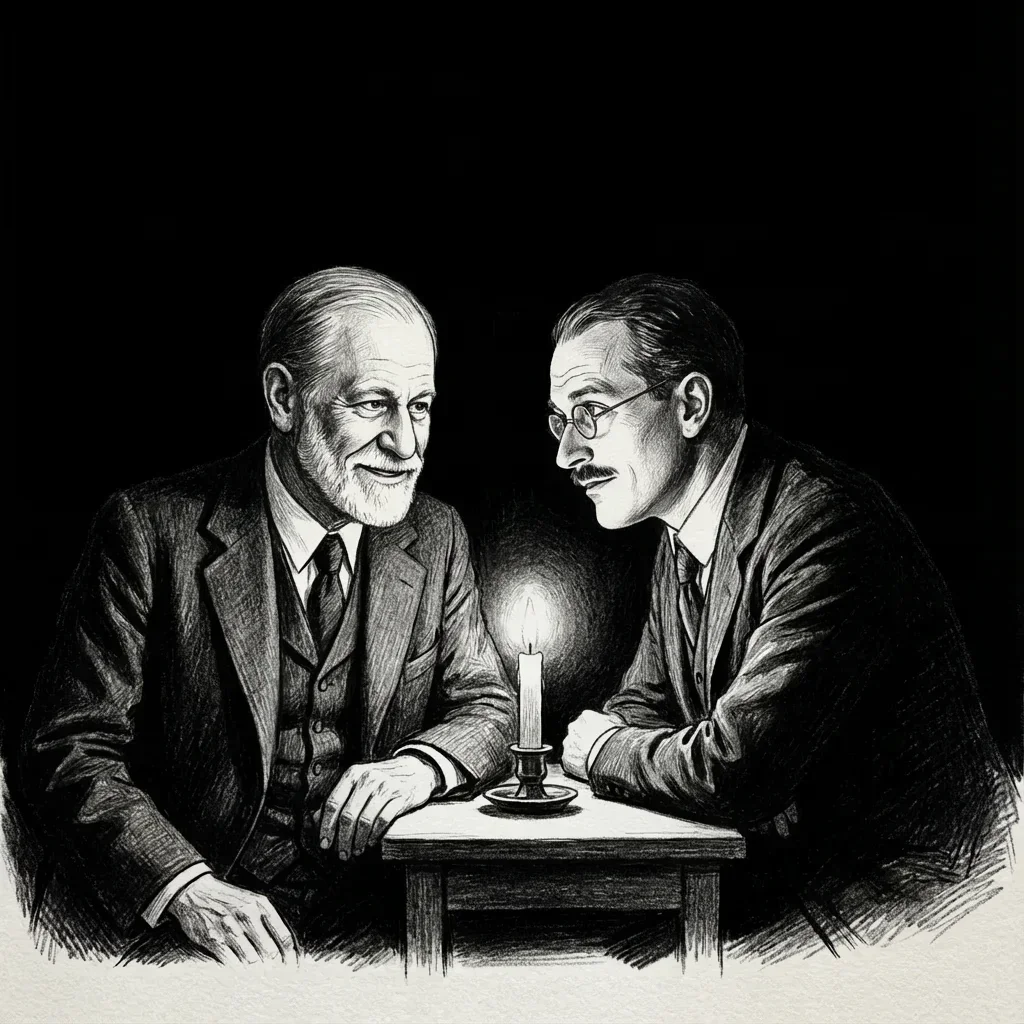
Illustration for: The Crown Prince Arrives

In 1906, a young, charismatic Swiss psychiatrist named Carl Jung sent Freud a paper on word association. When they finally met in 1907, they talked for thirteen hours straight. Freud saw in Jung his "Joshua," the non-Jewish "Crown Prince" who would save psychoanalysis from being dismissed as a "Jewish science." Jung, in turn, viewed Freud with a religious-like devotion. It was a partnership that seemed destined to conquer the intellectual world, a union of the old master and the brilliant heir.

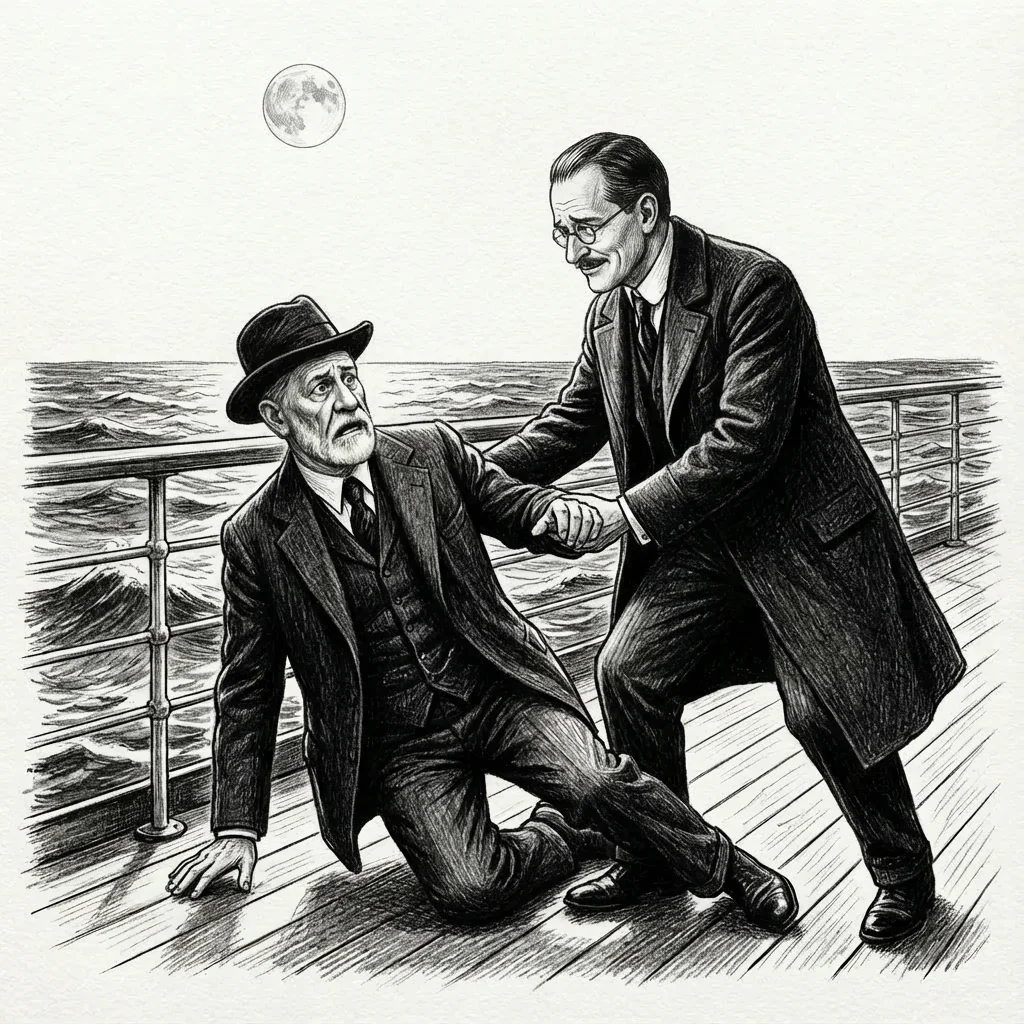
Illustration for: The American Voyage

In 1909, Freud and Jung traveled to America to lecture at Clark University. During the long sea voyage, they analyzed each other's dreams. When Jung pressed Freud for details about a dream involving his wife and sister-in-law, Freud shut him down, fearing for his authority. The tension was so great that Freud fainted in Jung's presence—the first of two such collapses. To Freud, Jung’s probing felt like a symbolic patricide; to Jung, Freud’s secrecy felt like a betrayal of the truth.

Illustration for: The Pharaoh and the Final Collapse

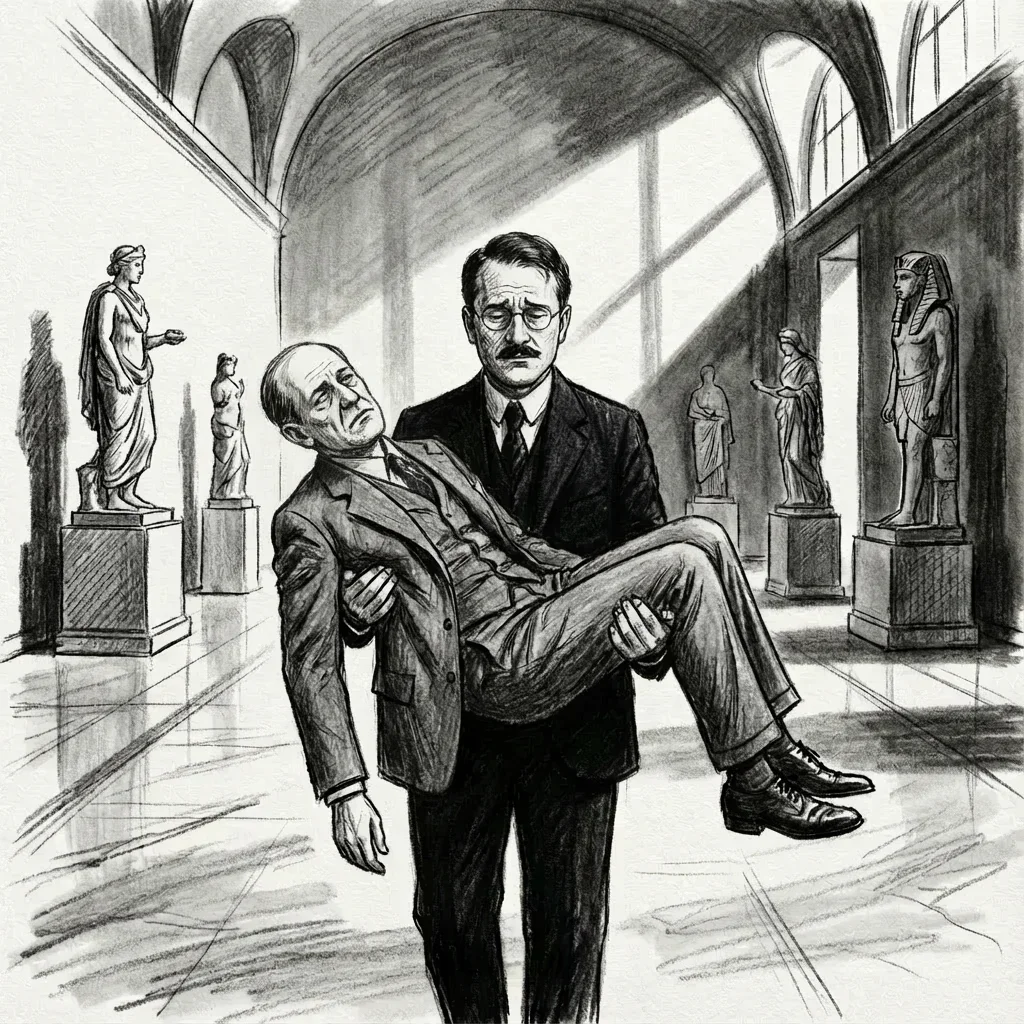
The rift widened in 1912 during a conference in Munich. As they discussed the Egyptian pharaoh Akhenaten, who had rebelled against his father's religion, Freud fainted again. Jung carried the pale, unconscious Freud to a sofa. When Freud came to, he looked at Jung with a gaze of profound vulnerability. The "father" of psychoanalysis was physically failing in the presence of the "son" who was now challenging his most sacred dogmas. The intellectual romance was turning into a bitter tragedy.

Illustration for: The Rest is Silence

By 1913, the intellectual romance had curdled into a Intense war. Freud viewed Jung’s mysticism as a "black tide of mud" threatening his scientific edifice. After a series of increasingly venomous letters, Freud delivered the final blow: "I propose that we abandon our personal relations entirely." Jung’s reply was a chilling echo of Hamlet: "The rest is silence." They never spoke again. The "father" and "son" of psychology spent the rest of their lives as bitter rivals, leaving the world with two irreconcilable maps of the soul.

Illustration for: The Shadow of the Great War

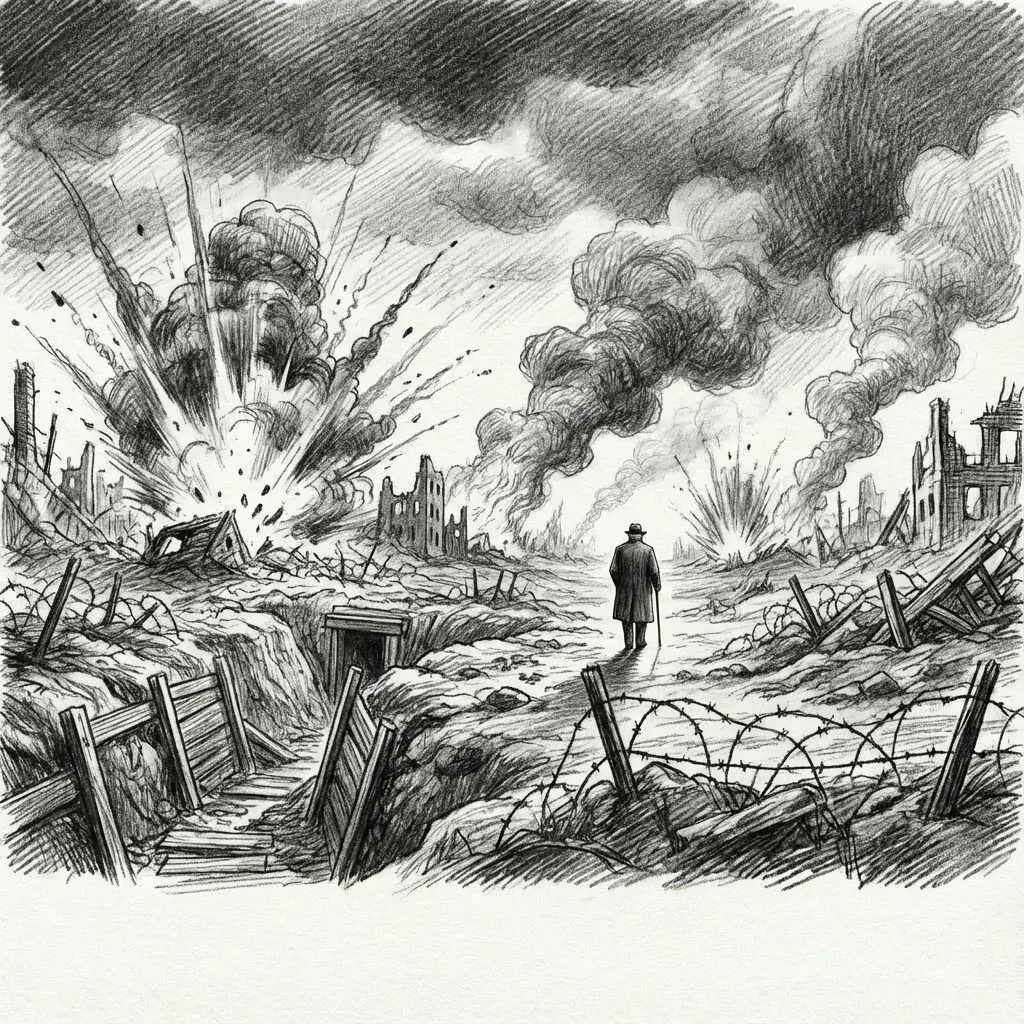
The outbreak of World War I in 1914 shattered Freud’s belief in human progress. As he watched the world descend into madness, he realized that the "Pleasure Principle" was not enough to explain human behavior. He saw a repetitive, self-destructive urge in the soldiers returning from the front. This led him to his most controversial theory: the Death Drive (Thanatos). He posited that alongside the drive for life (Eros), there exists an innate urge to return to the stillness of the inorganic state.

Illustration for: The Monster in the Mouth

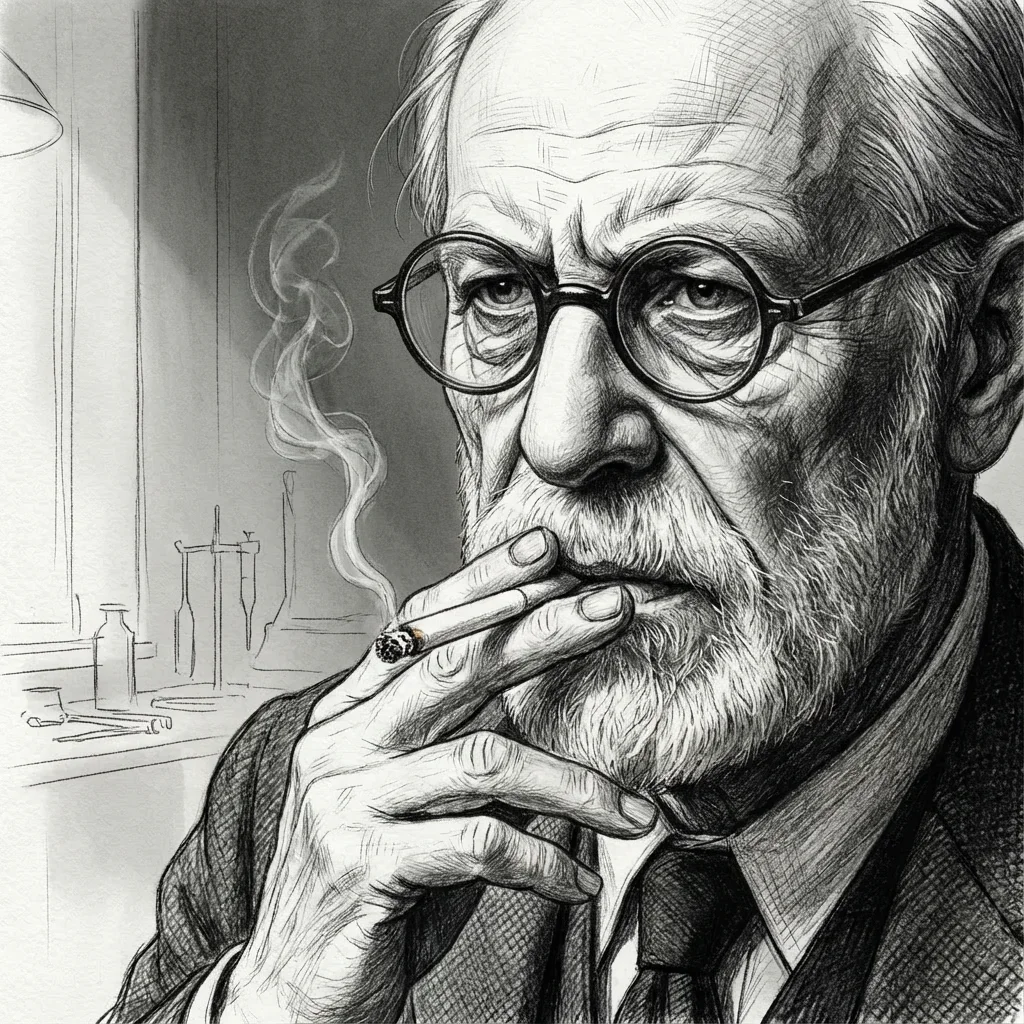
In 1923, Freud’s lifelong habit of smoking twenty cigars a day finally took its toll. He was diagnosed with jaw cancer. He underwent the first of over thirty agonizing surgeries, eventually being fitted with a clumsy prosthetic he called "The Monster." It made speaking and eating a torment, yet he refused all but the mildest painkillers. He wanted his mind to remain sharp, even as his body was being carved away. His suffering became a living testament to his theory of the struggle between life and death.

Illustration for: The Discontents of Civilization

Despite his physical agony, Freud produced one of his most influential works, Civilization and Its Discontents (1930). He argued that civilization is built upon the Repression of our primal instincts. We trade a portion of our happiness for a portion of security, but the cost is a permanent sense of unease and guilt. The "Superego" of society constantly battles the "Id" of the individual, leaving us in a state of perpetual psychological tension.

Illustration for: The Burning of the Books

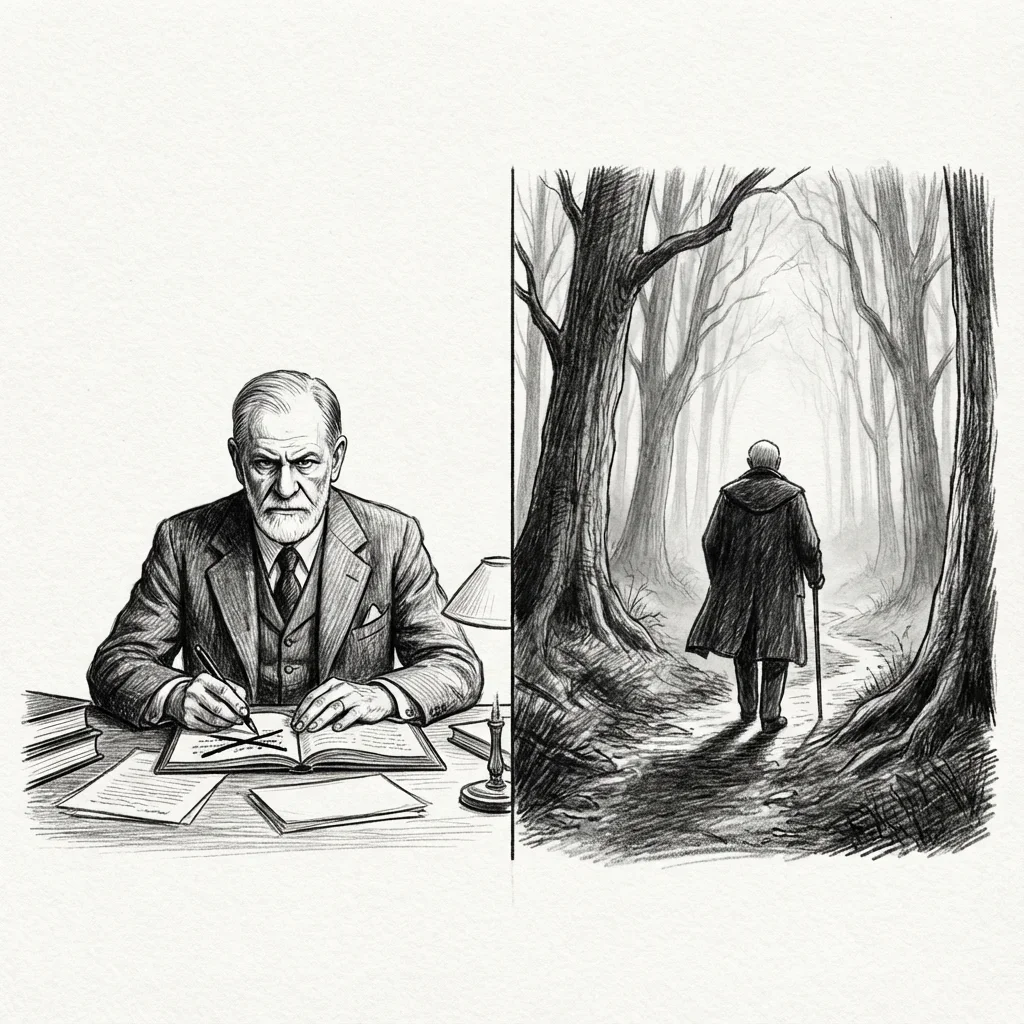
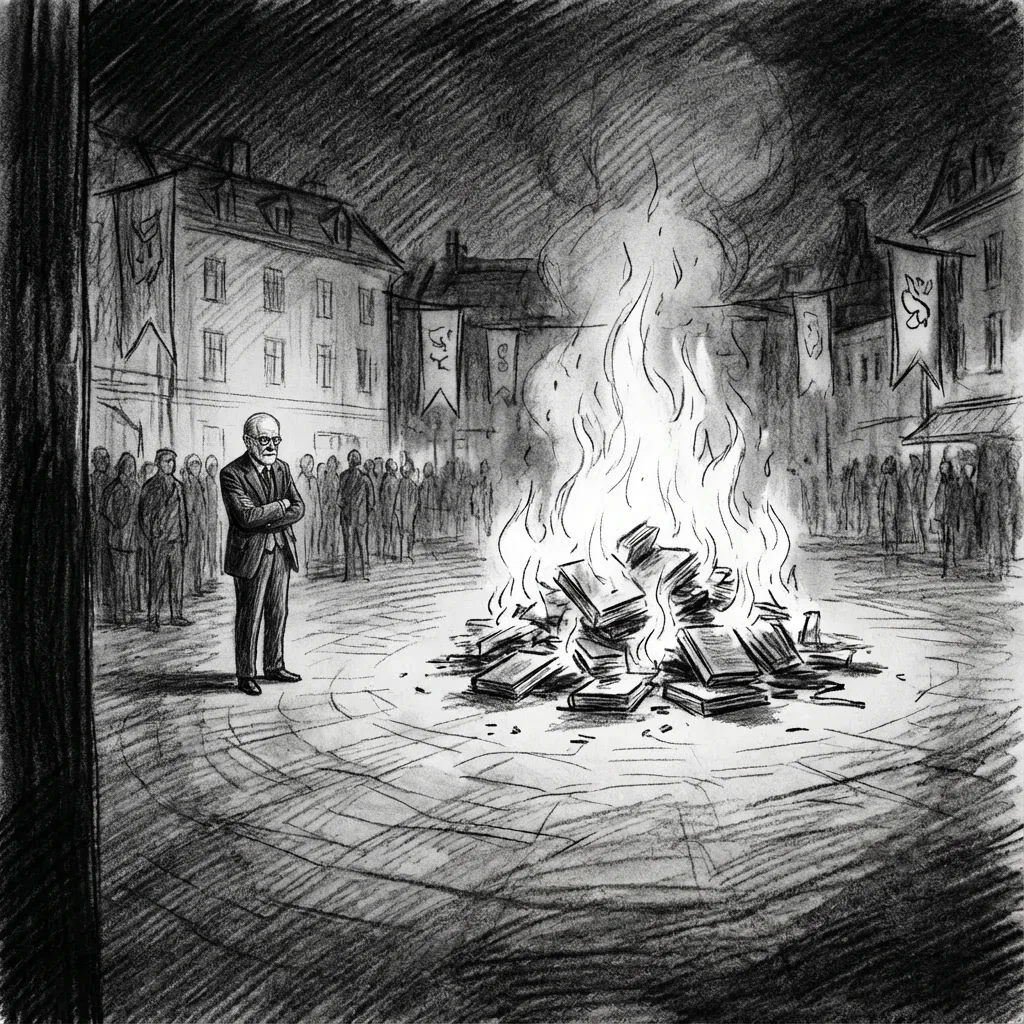
The 1930s brought a darker shadow: the rise of the Nazis. In 1933, Freud’s books were burned in Berlin. "What progress we are making," he remarked with bitter irony. "In the Middle Ages, they would have burned me; nowadays they are content with burning my books." He stubbornly refused to leave his beloved Vienna, even as his Jewish colleagues fled and the Gestapo began to circle his home at Berggasse 19.

Illustration for: The Flight to London

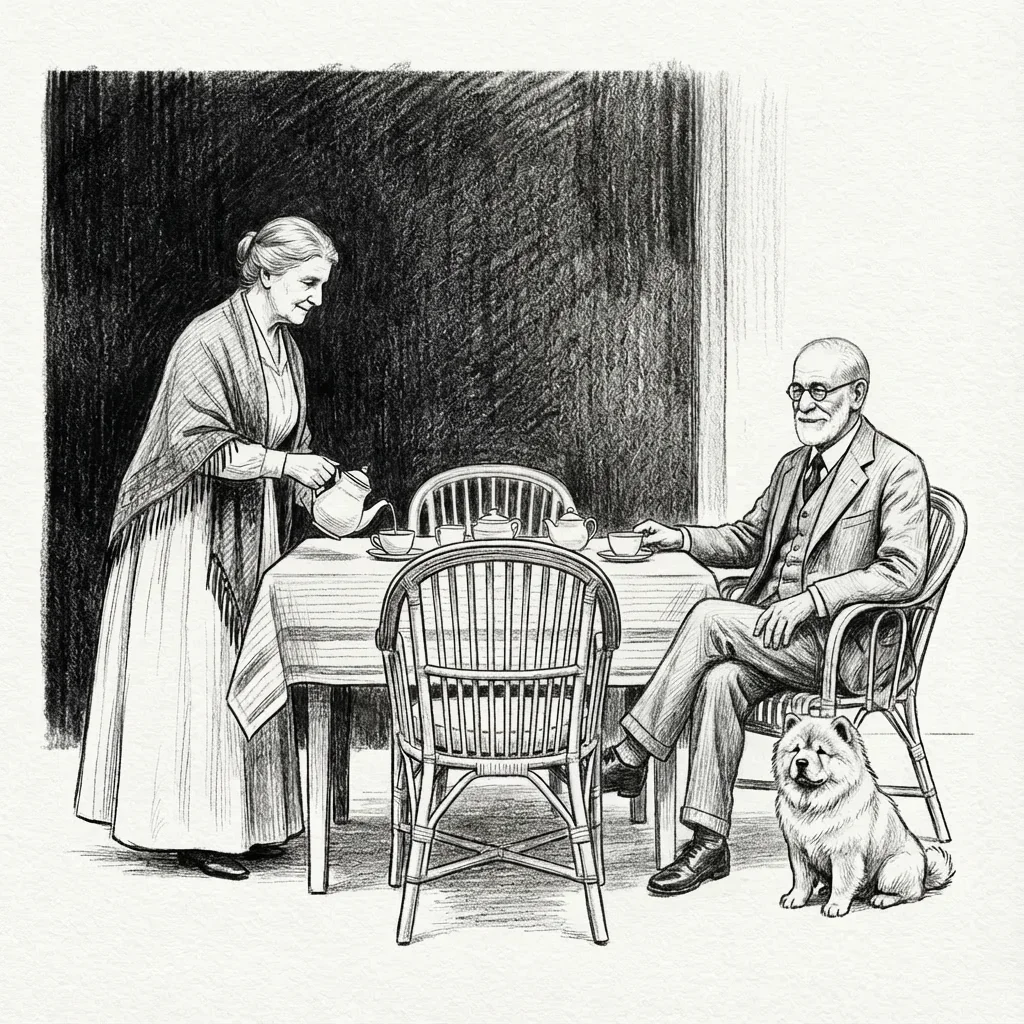
The situation became critical in 1938 when the Nazis annexed Austria. After his daughter Anna was interrogated by the Gestapo, Freud finally agreed to leave. Through the intervention of international diplomats and a large ransom, the Freud family escaped to London. Frail and dying, he arrived as a celebrated refugee, but his heart remained in the Vienna he had been forced to abandon. He spent his final months in a house in Hampstead, surrounded by his books and his loyal dogs.

Illustration for: The Pain and death

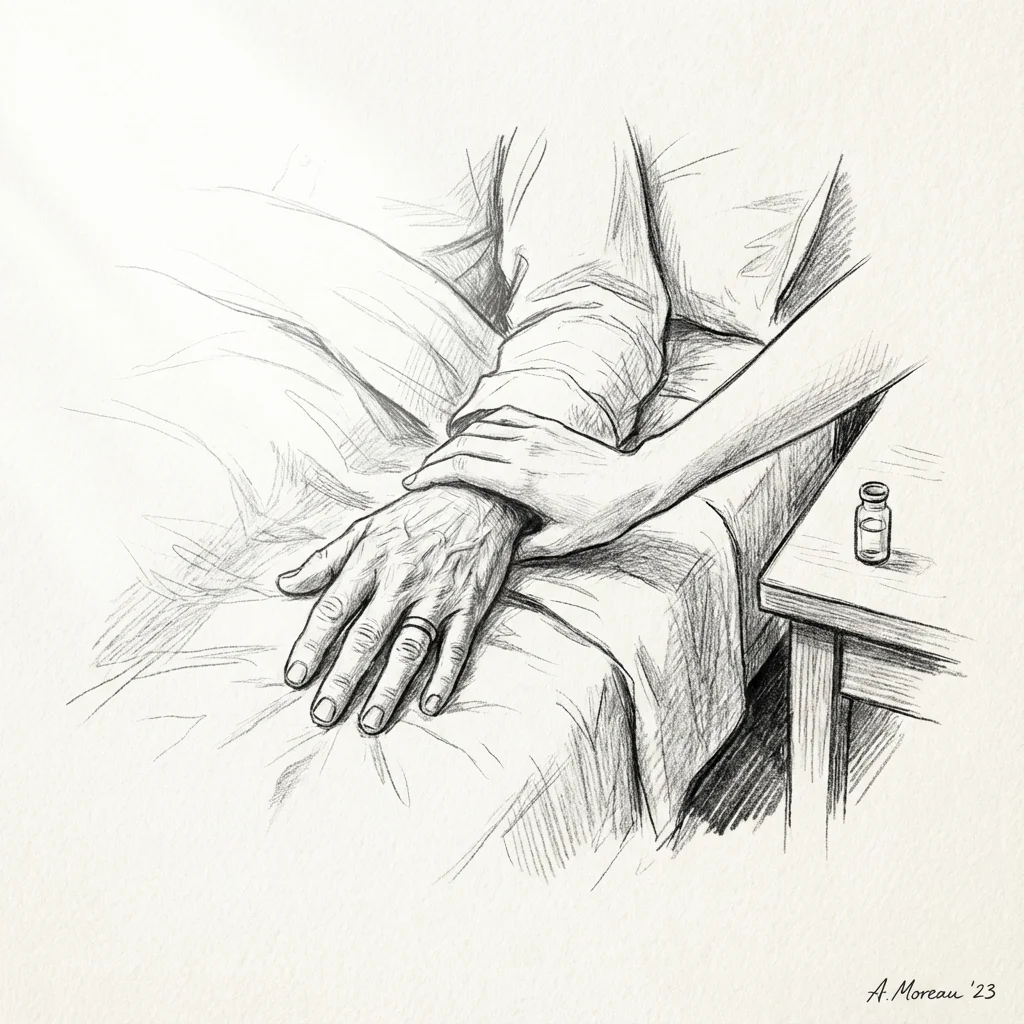
By September 1939, the cancer had become an unbearable torture. As World War II broke out, Freud called his physician, Max Schur, to his bedside. He reminded Schur of a pact they had made: that when the time came, Schur would help him end his suffering. Schur administered three lethal doses of morphine. On September 23, 1939, the man who had spent his life exploring the mysteries of death finally surrendered to it.

English 18+ BiographyHistoryLife Science

Create Your Own TaleBook

0 views • 0 shares