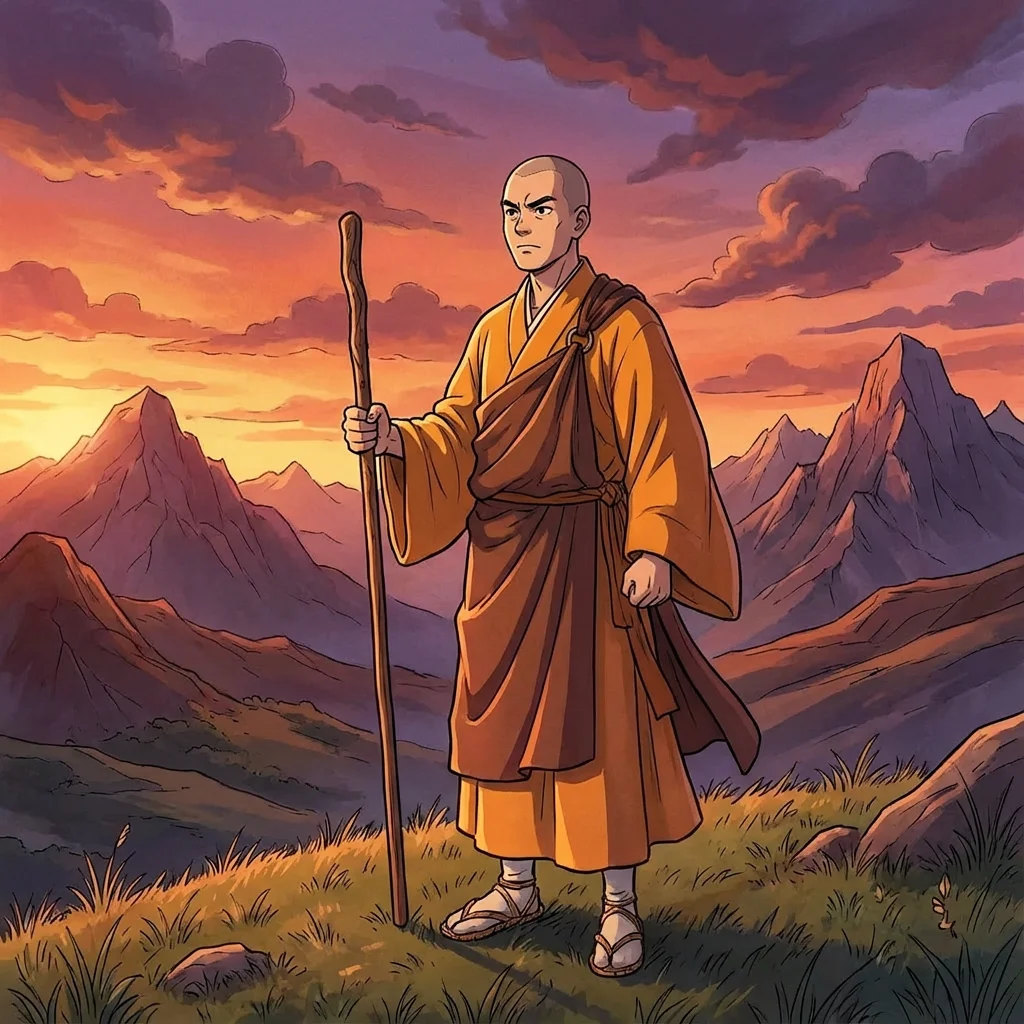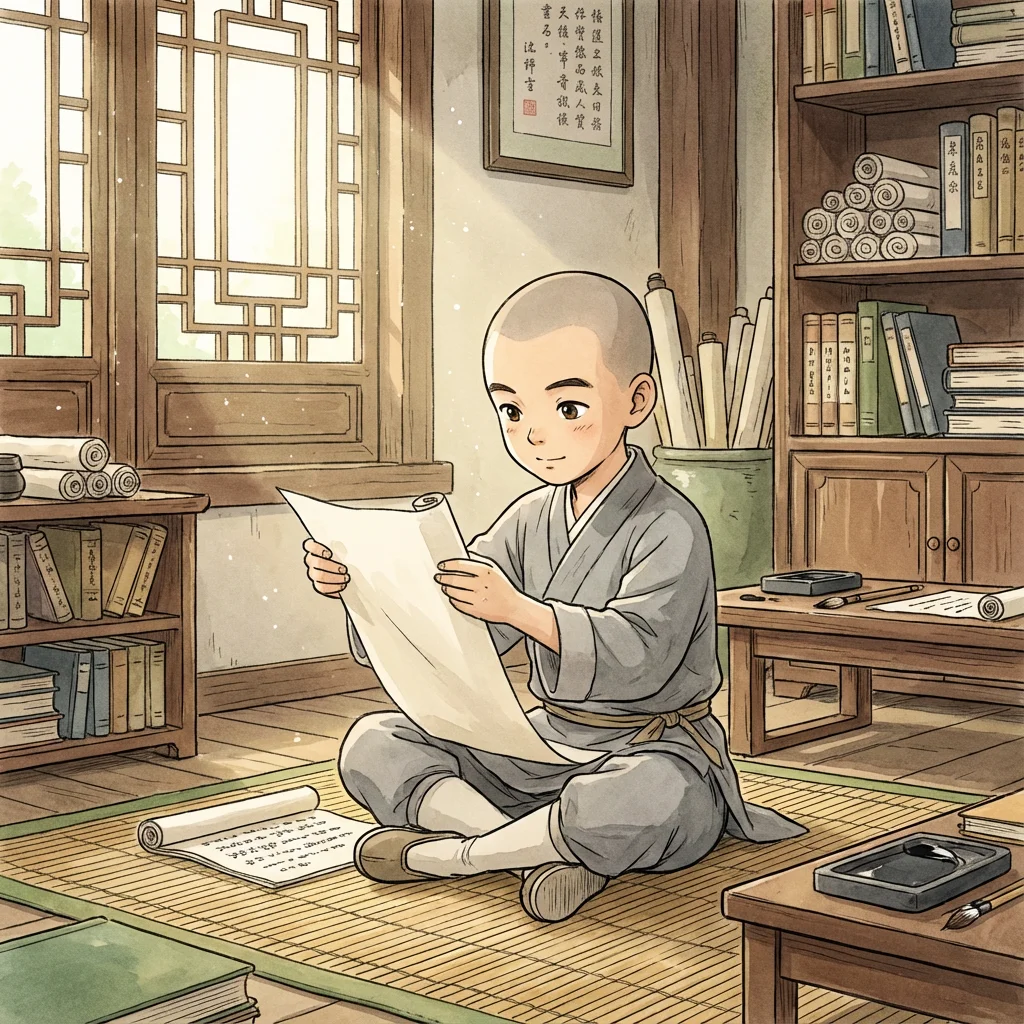
Born as Chen Hui in 602 CE, the young boy was surrounded by books and wisdom. His father, a dedicated scholar, taught him the value of truth and integrity from a very young age.
1.A Scholar's Beginning
Born as Chen Hui in 602 CE, the young boy was surrounded by books and wisdom. His father, a dedicated scholar, taught him the value of truth and integrity from a very young age.
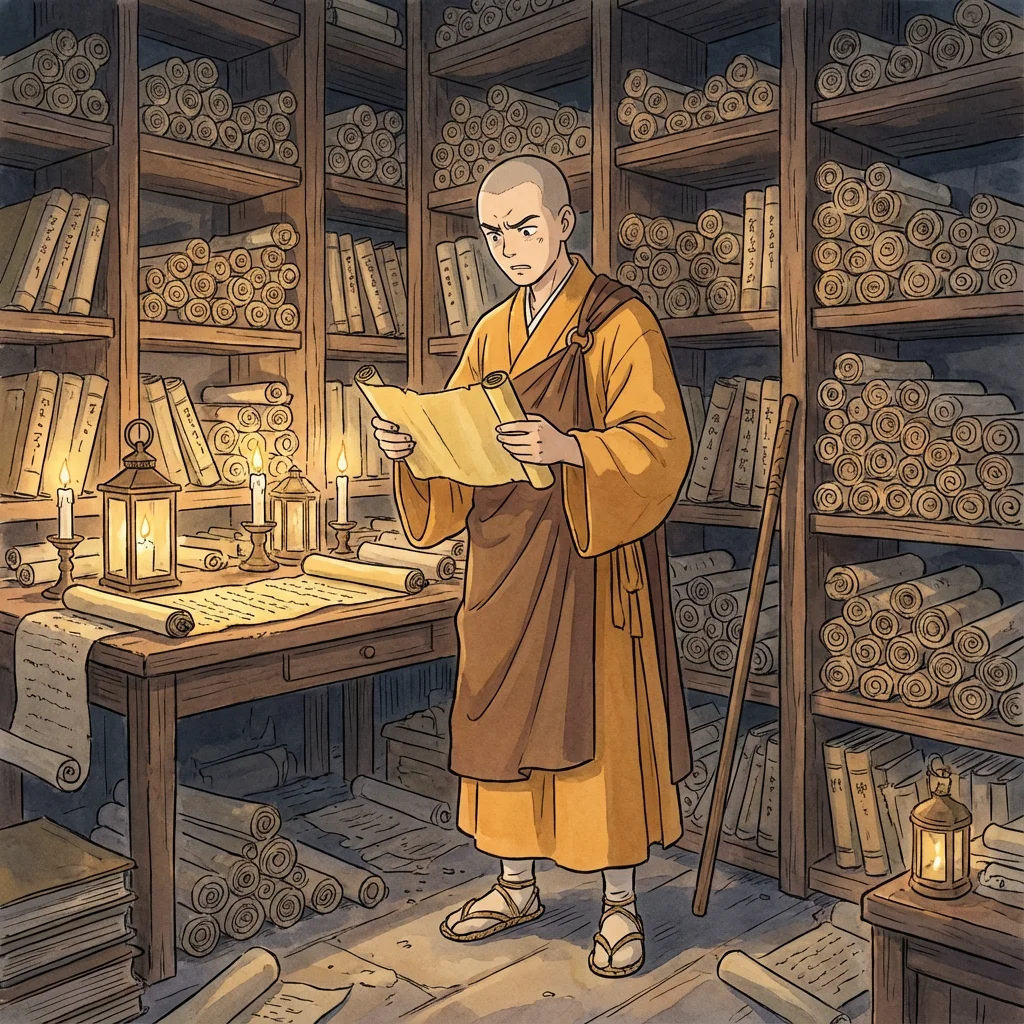
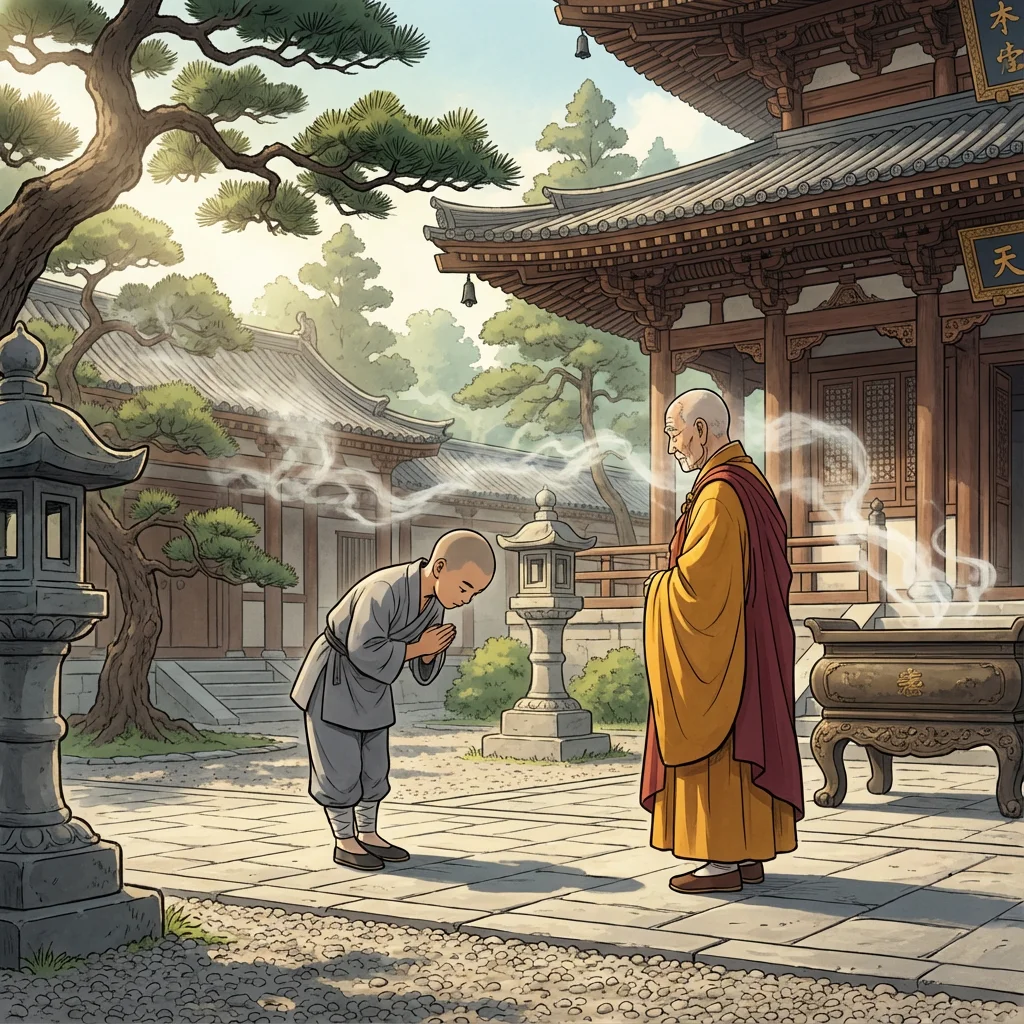
After his father passed away, young Chen Hui followed his brother to the Jingtu Monastery. At thirteen, he was admitted as a novice monk, eager to learn the sacred teachings.
As he grew, Xuanzang realized the Buddhist texts in China were incomplete and confusing. He felt like he was drinking from a muddy stream and longed for the source of truth.
Xuanzang decided he must travel to India, the birthplace of Buddhism. He vowed, 'I would rather die going west than return east alive,' even though travel was forbidden.
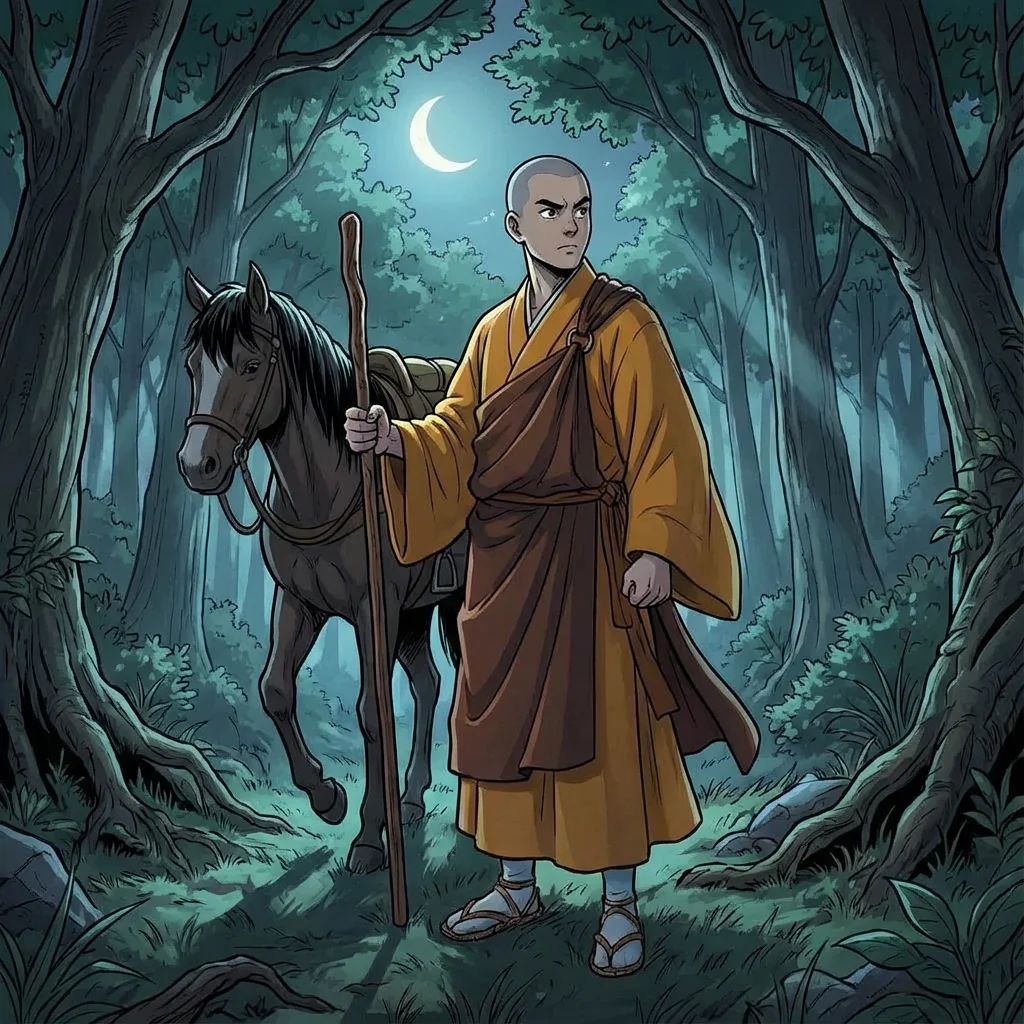
Under the cover of darkness, Xuanzang slipped out of the city of Chang'an. He was now a fugitive, traveling by night and hiding by day to avoid the Emperor's guards.
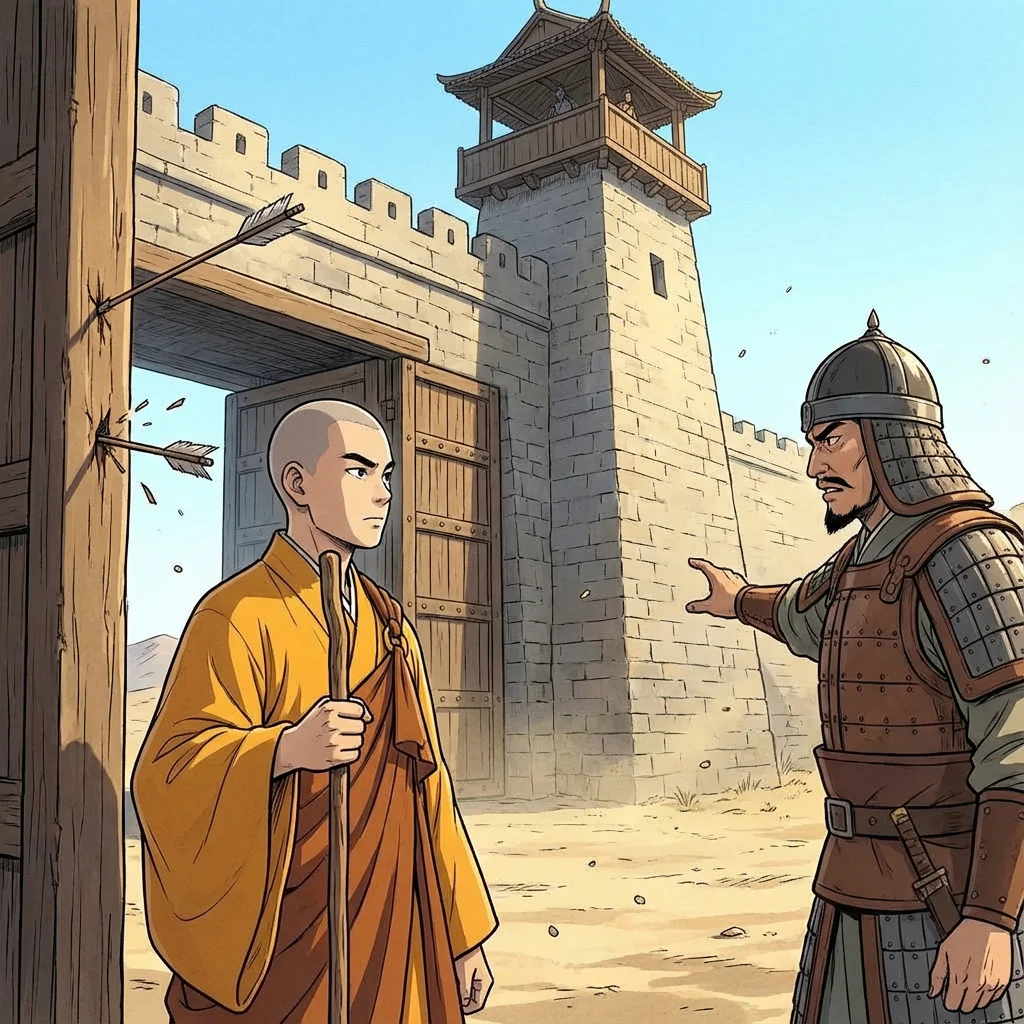
At the last outpost of civilization, a guard's arrow whizzed past his head! But Xuanzang's sincerity and wisdom convinced the captain to let him pass into the wild.
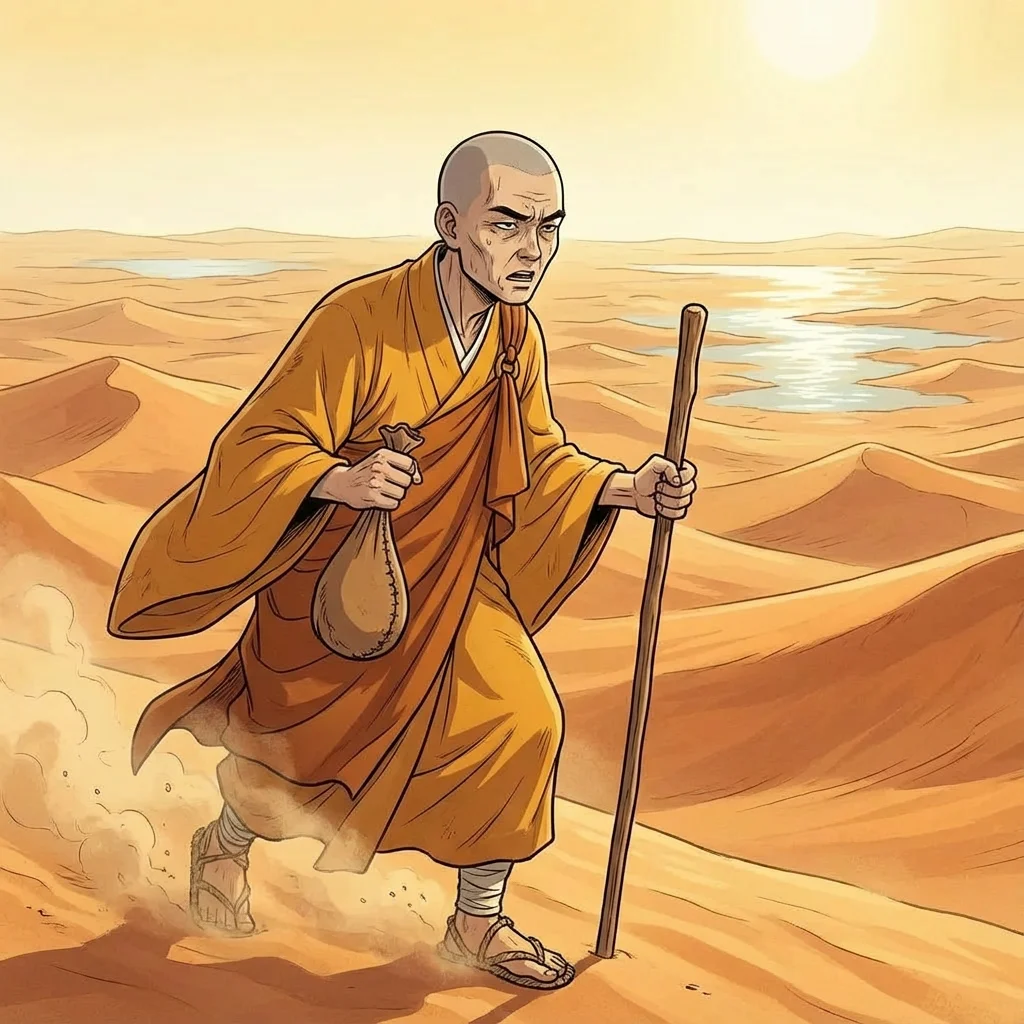
The Gobi Desert was a terrifying 'River of Sand.' For four days, Xuanzang went without water. The heat was blistering, and the wind whispered with scary voices.
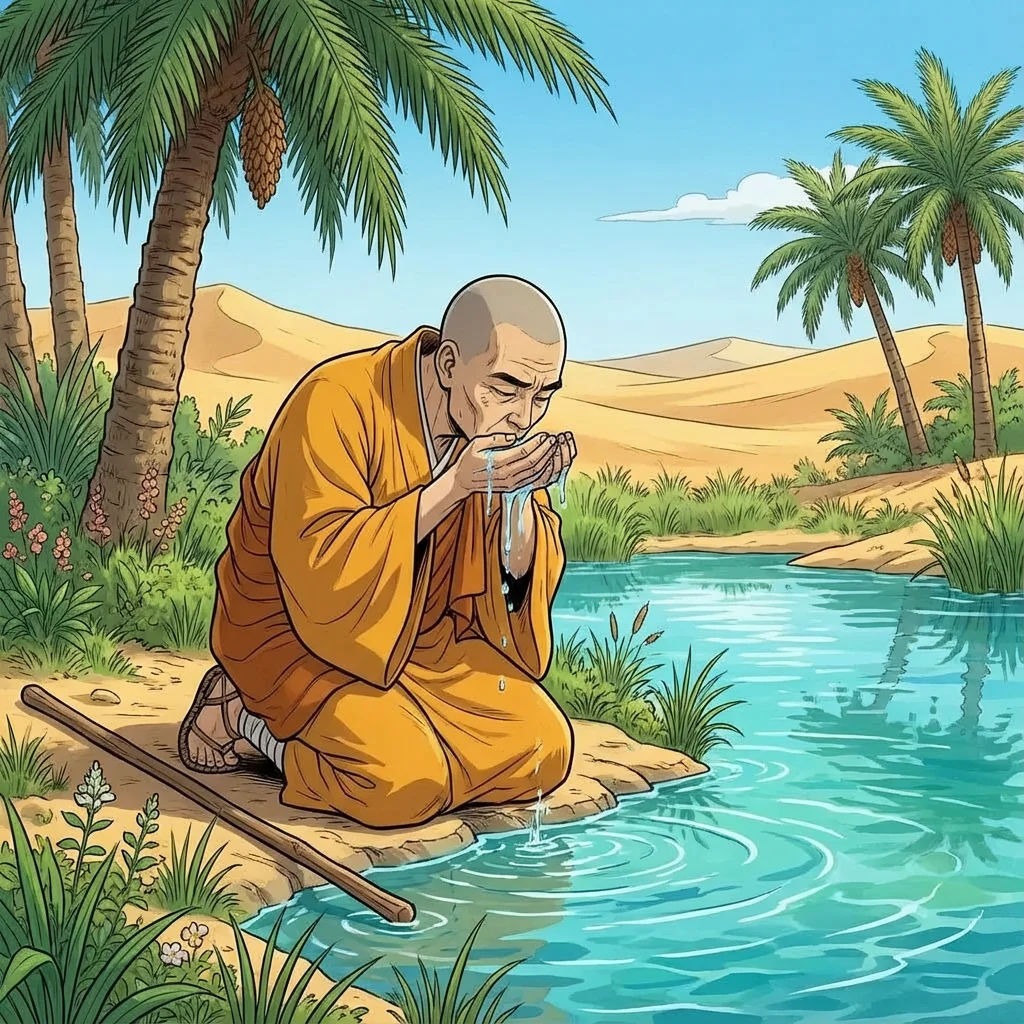
Near death, Xuanzang recited the Heart Sutra. Suddenly, the wind changed, and his horse led him to a hidden oasis. The cool water saved his life and restored his spirit.
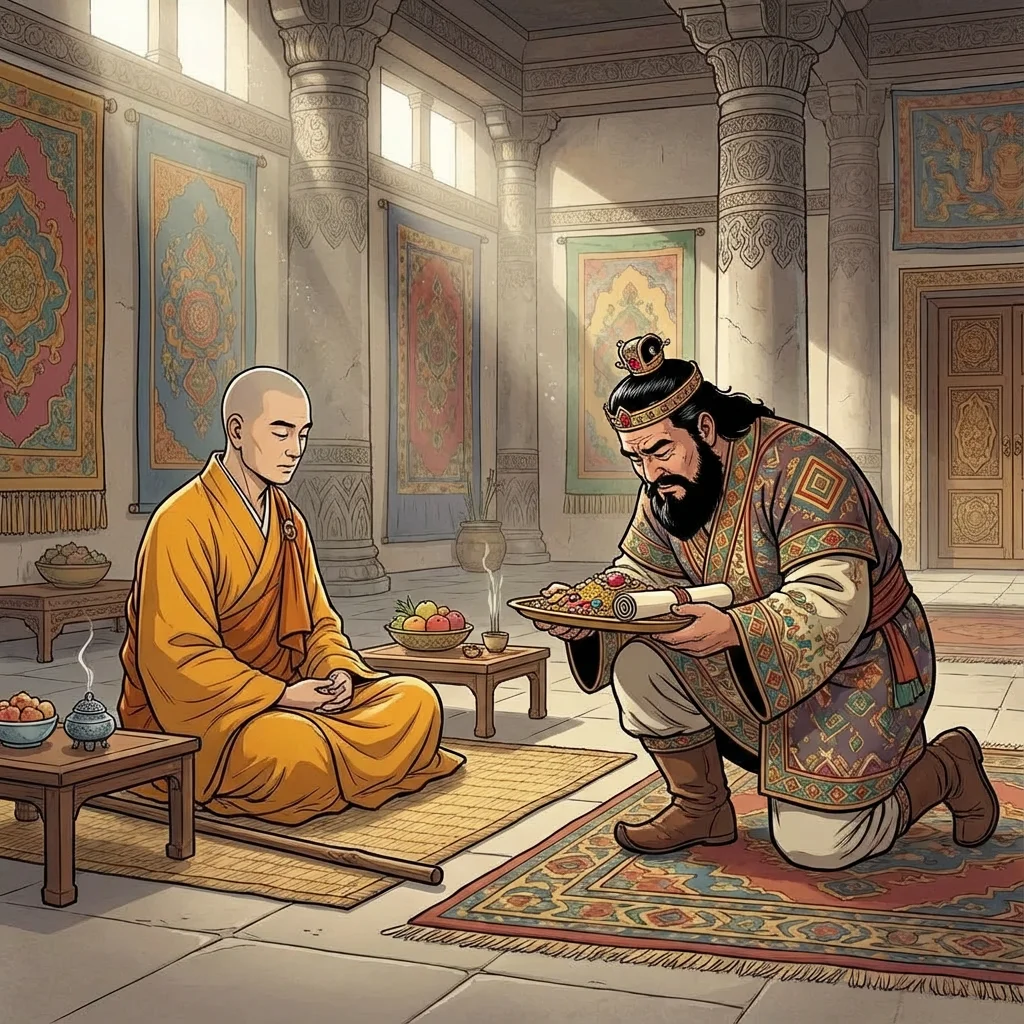
In the Kingdom of Turfan, King Qu Wentai tried to keep Xuanzang by force. Xuanzang refused food until the King relented, finally providing him with horses and servants.
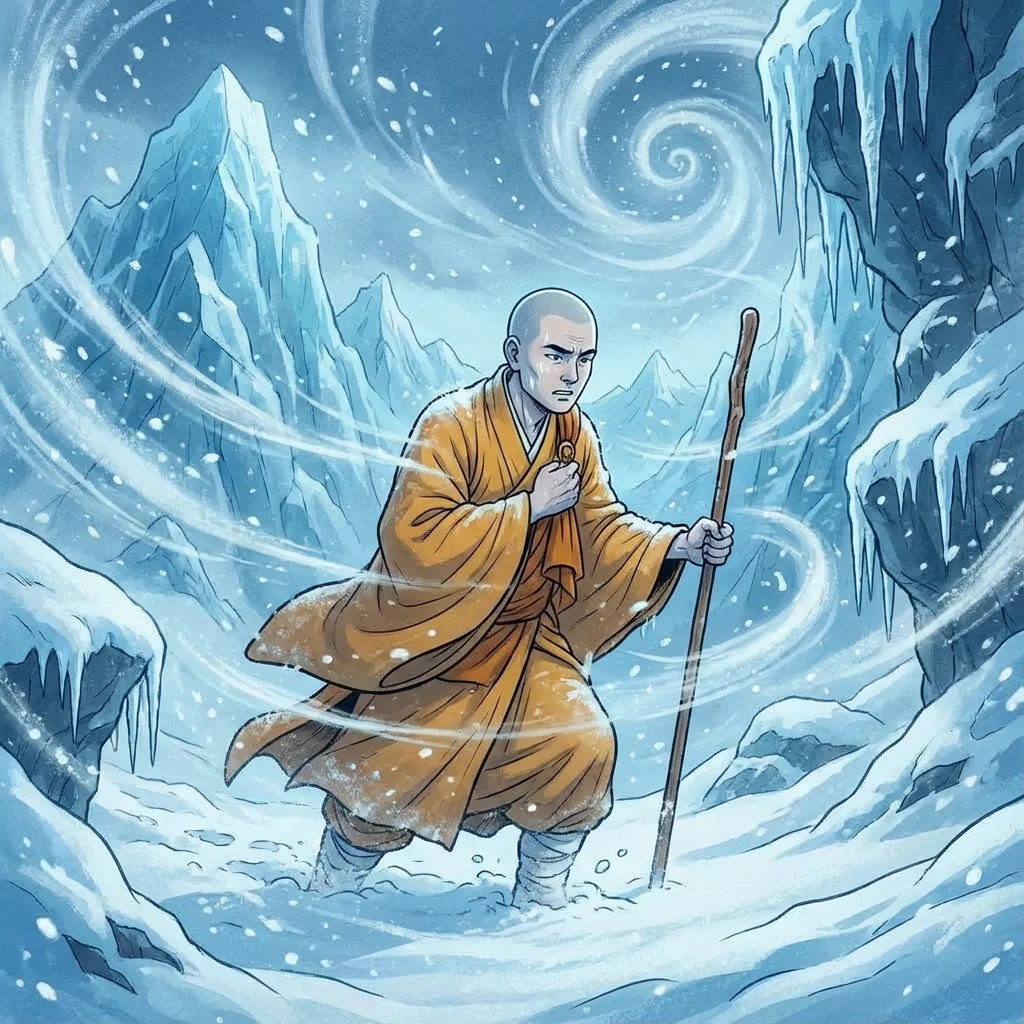
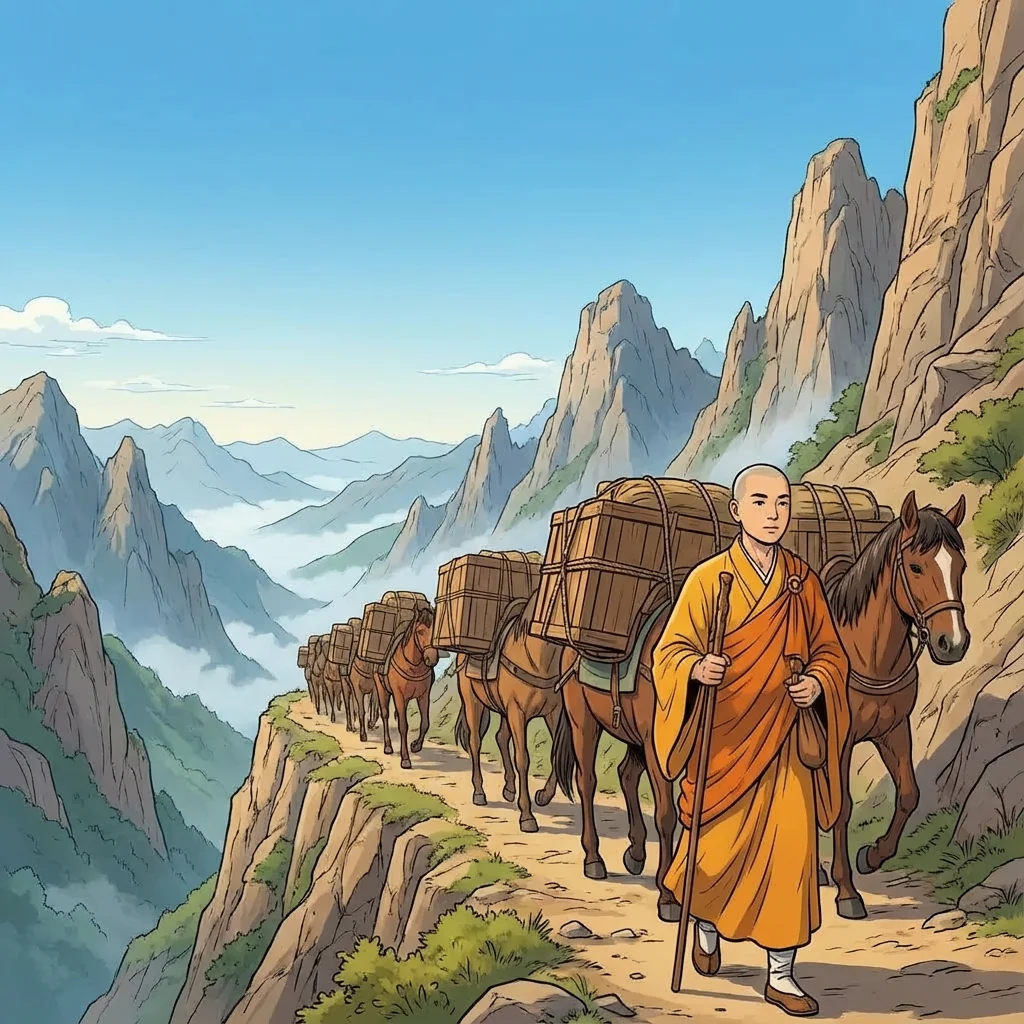
Xuanzang climbed the freezing Tianshan Mountains. The journey was brutal, and many in his party were lost to the cold, but he never stopped moving forward.
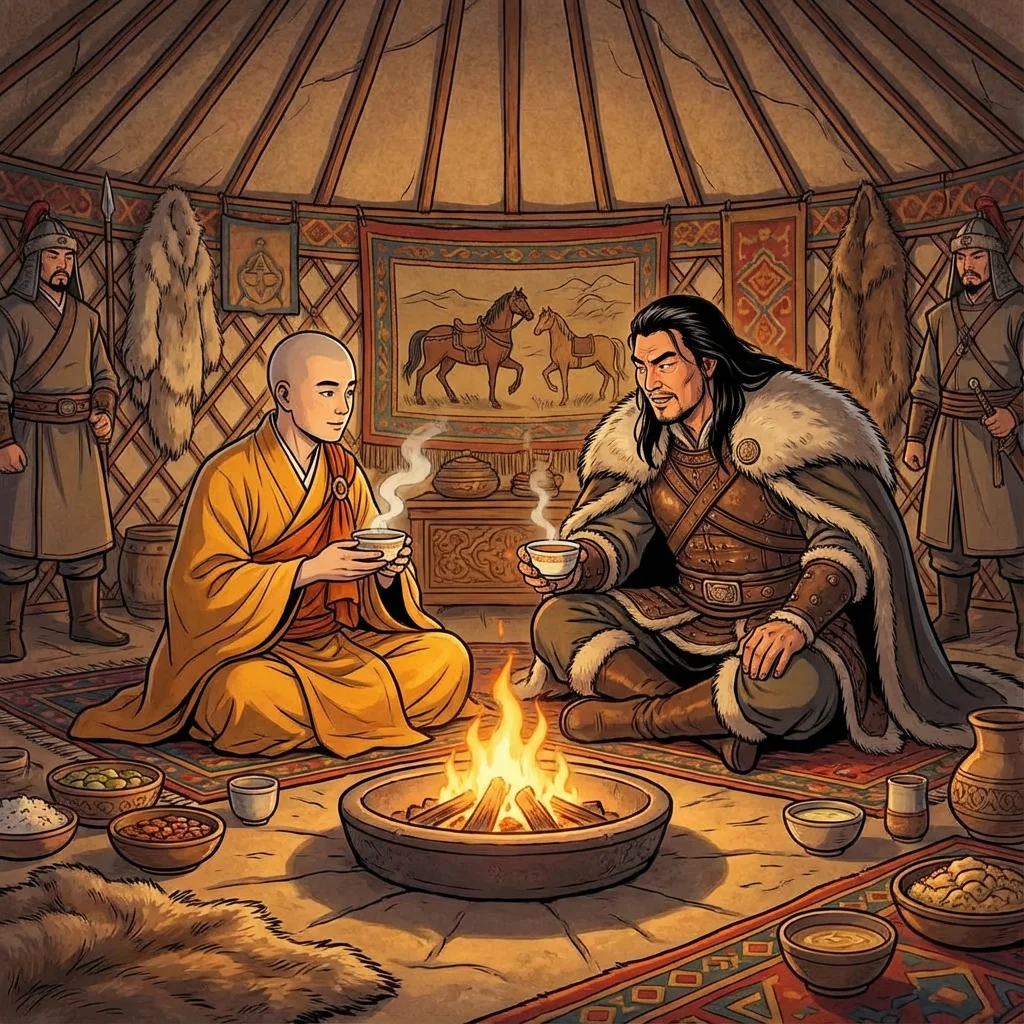
Along the Silk Road, Xuanzang met the Great Khan of the Western Turks. The powerful leader was impressed by the monk and provided him with guards for his safety.
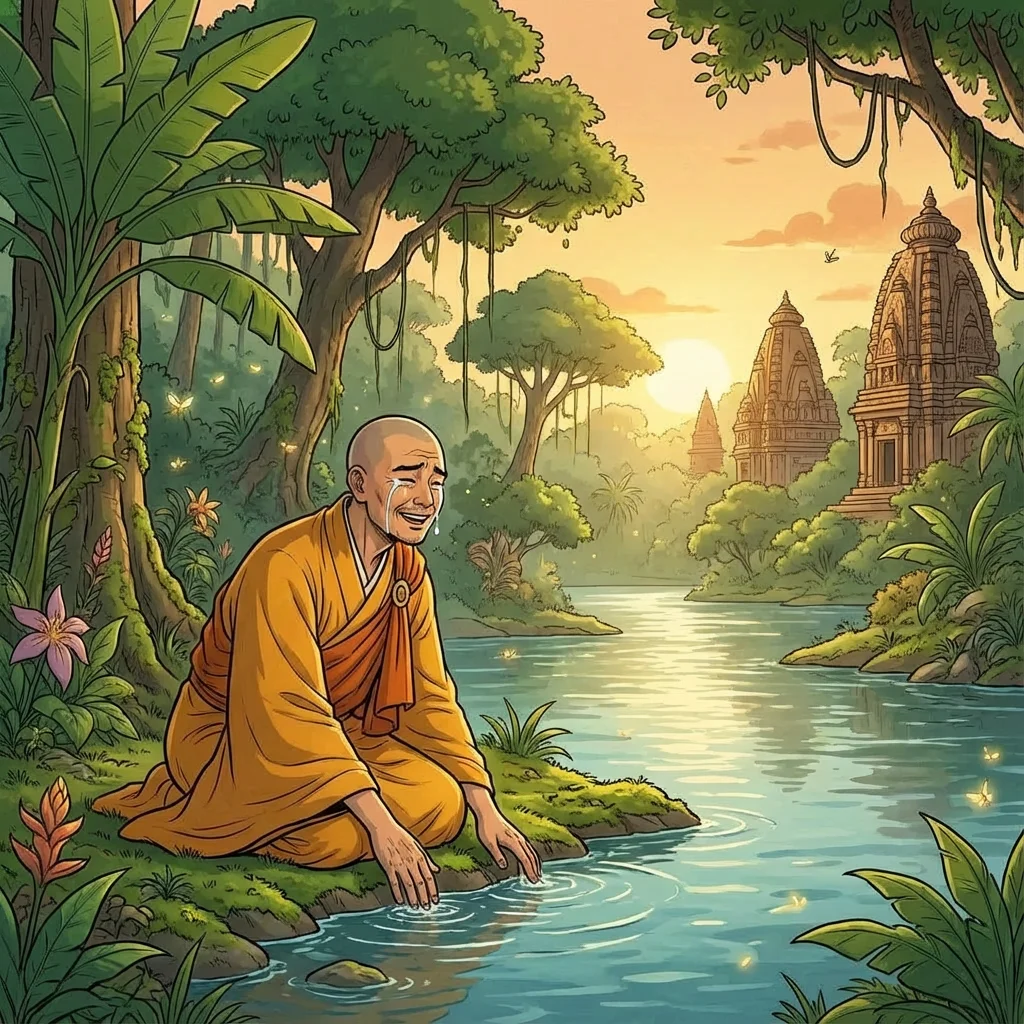
When Xuanzang finally reached India, he wept with joy. He had traveled thousands of miles across mountains and deserts to reach the holy land he had dreamed of.
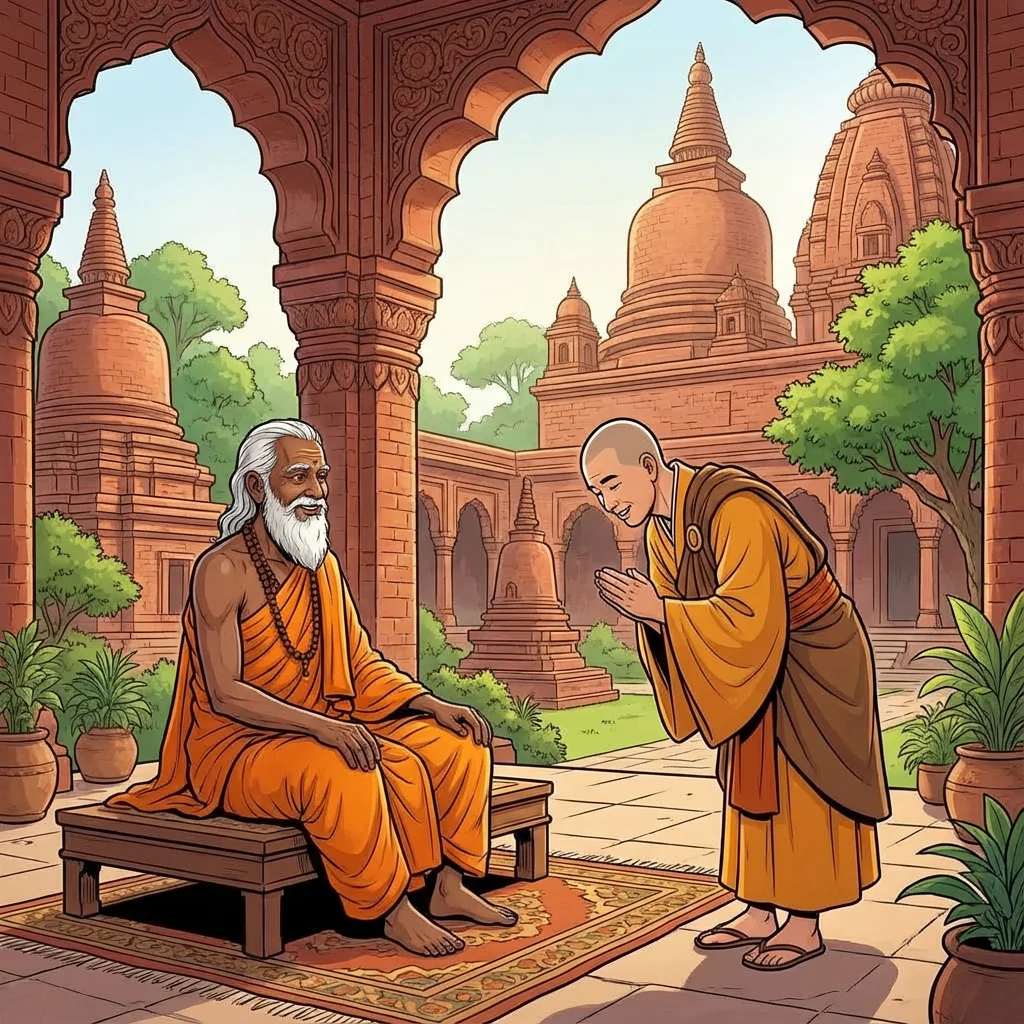
He arrived at Nalanda University, the greatest center of learning in the world. The aged abbot, Śīlabhadra, welcomed him as his special student.
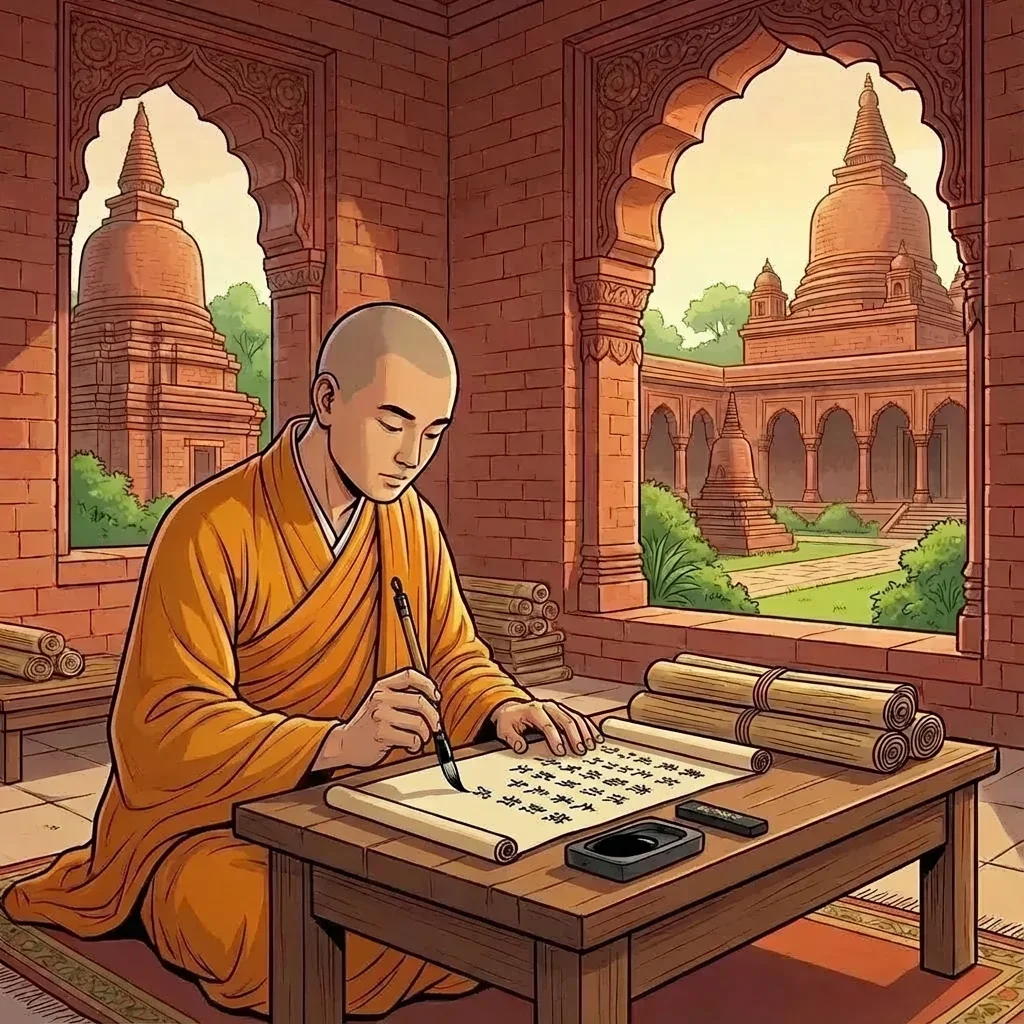
For five years, Xuanzang studied day and night. He mastered Sanskrit and the deepest logic, even writing his own books to explain the truth he found.
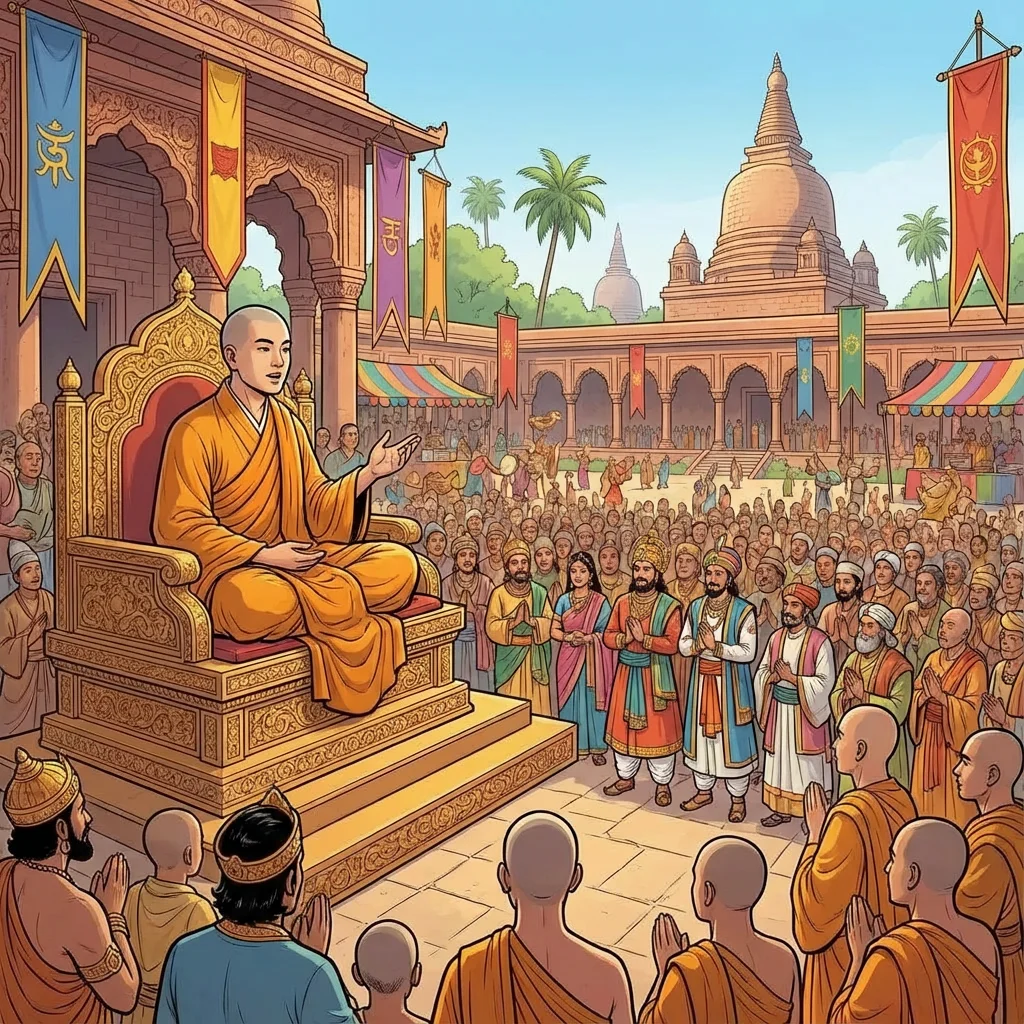
At a grand assembly in Kanauj, Xuanzang challenged anyone to find a flaw in his logic. For eighteen days, thousands of scholars listened in silent awe.
Rejecting offers to stay in India, Xuanzang began his journey home. He carried 657 sets of precious manuscripts, determined to share them with his people.
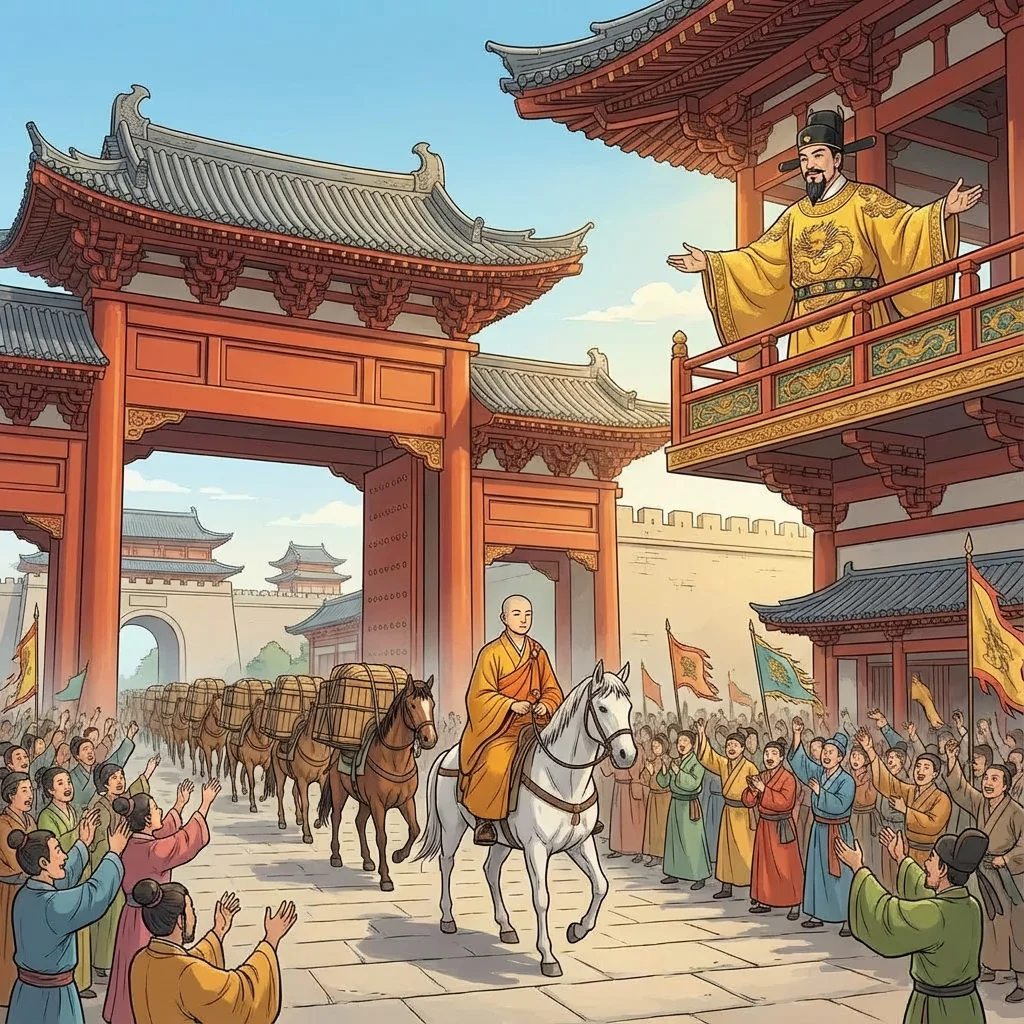
When he returned to Chang'an, the Emperor himself welcomed him. The fugitive was now a hero, and the gates of the city roared open to receive him.
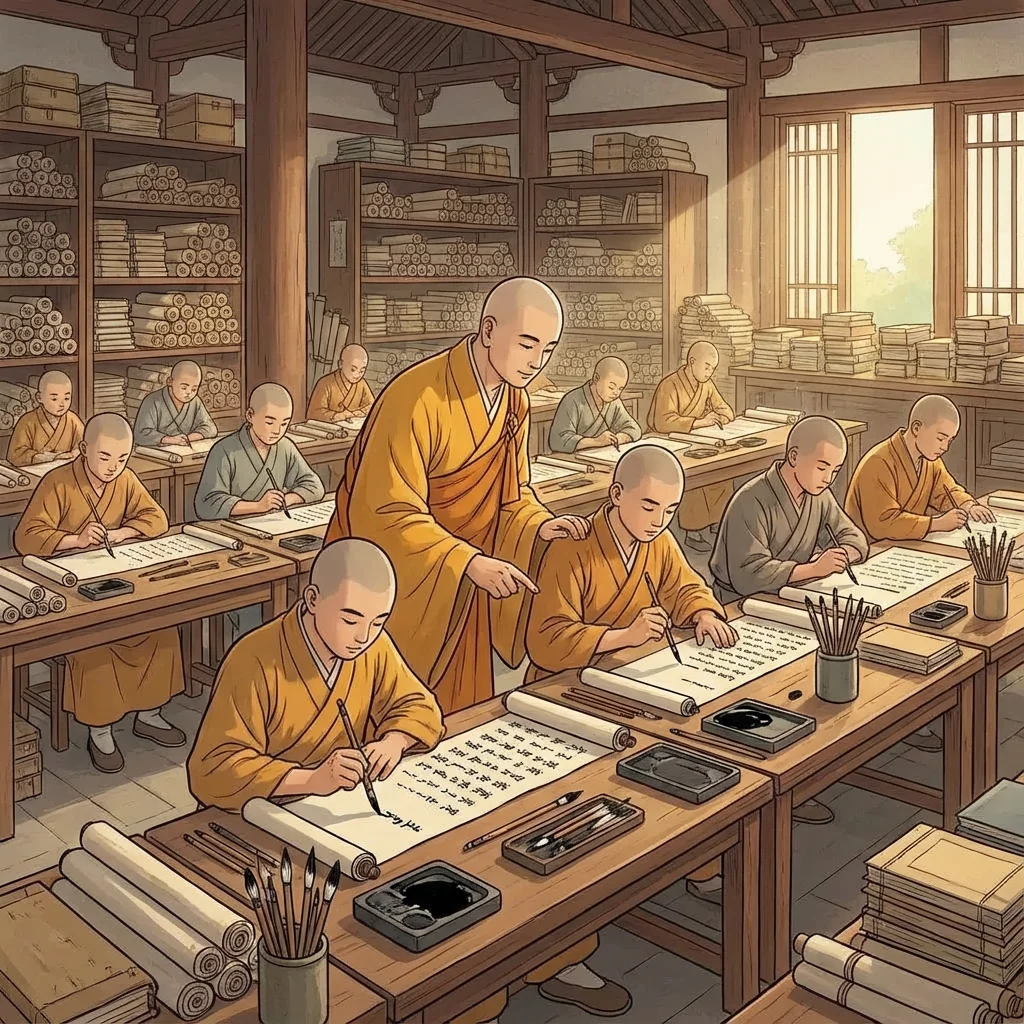
Xuanzang spent the rest of his life translating the manuscripts. He led a team of scholars, working tirelessly to bring the light of truth to China.
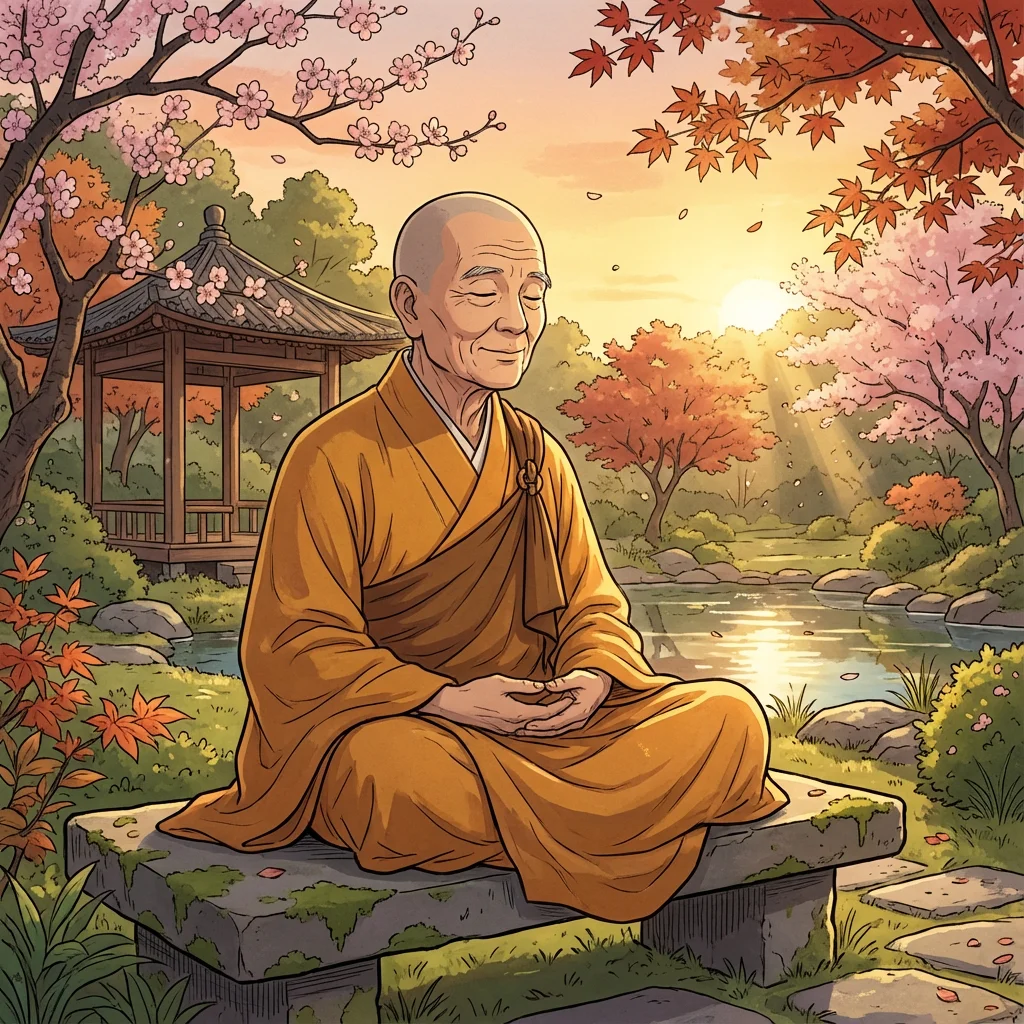
In 664 CE, after nineteen years of labor, Xuanzang's journey ended. He passed away peacefully, knowing he had fulfilled his vow and bridged two worlds.
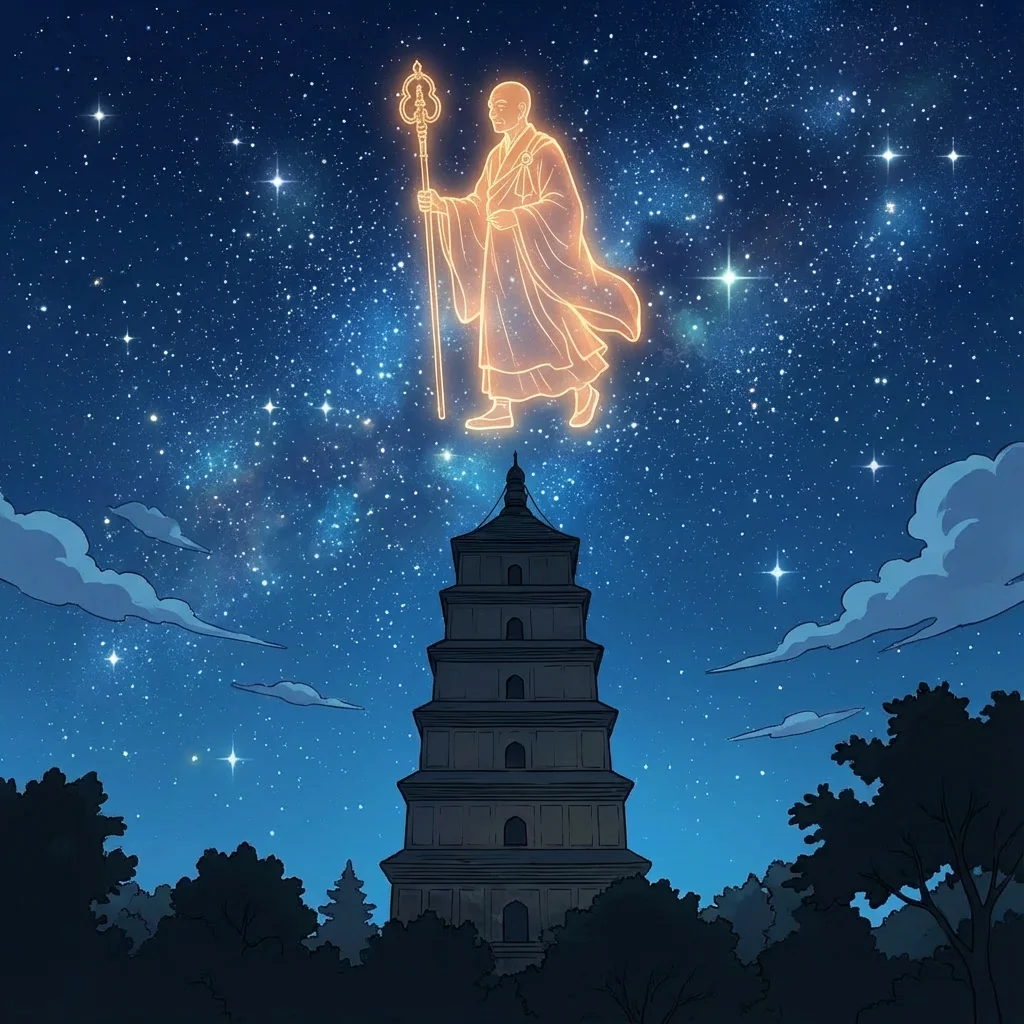
Xuanzang's legacy lives on. He was a bridge between cultures, showing that through courage and endurance, the truth can illuminate even the darkest desert.