Preparing audio…
After a narrow escape, Cao Cao returned to his home, determined to challenge the cruel tyrant Dong Zhuo. He sold his family estates to raise an army of brave soldiers.
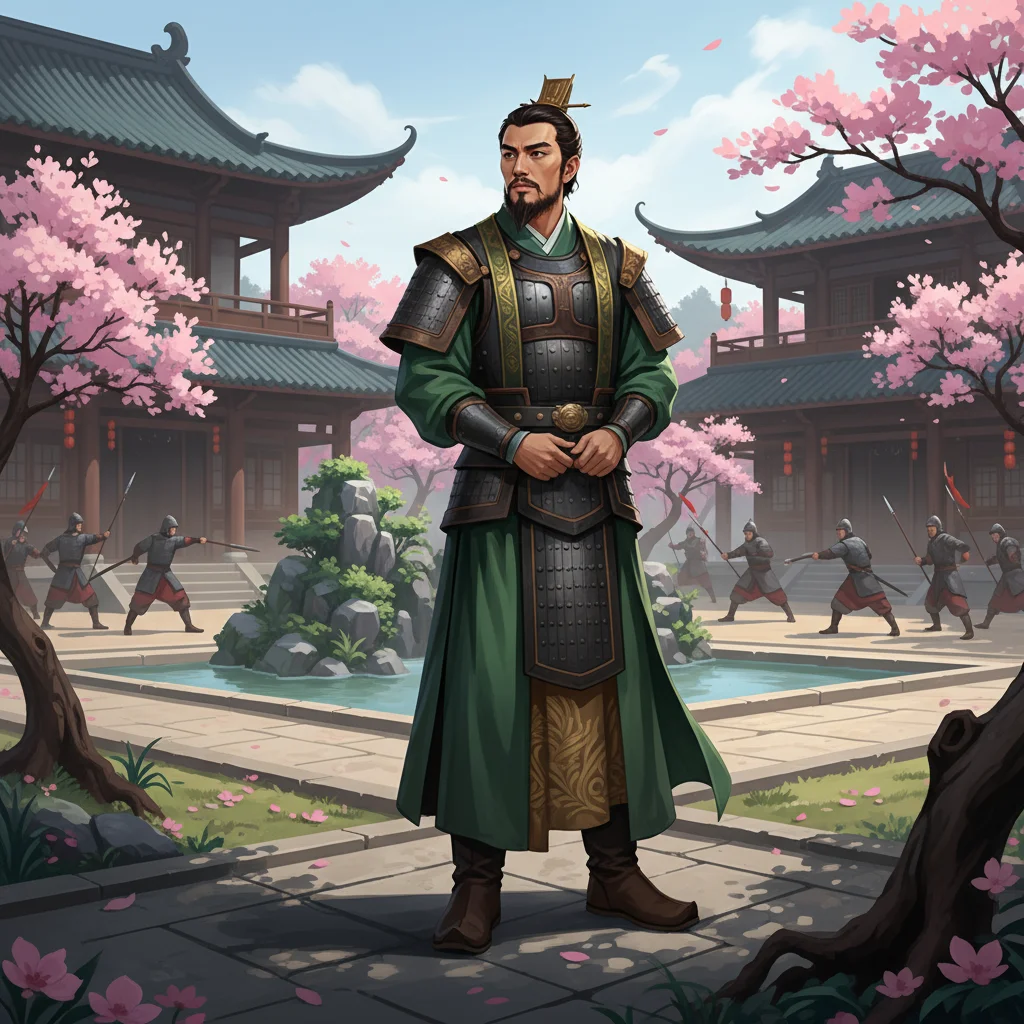
After a narrow escape, Cao Cao returned to his home, determined to challenge the cruel tyrant Dong Zhuo. He sold his family estates to raise an army of brave soldiers.
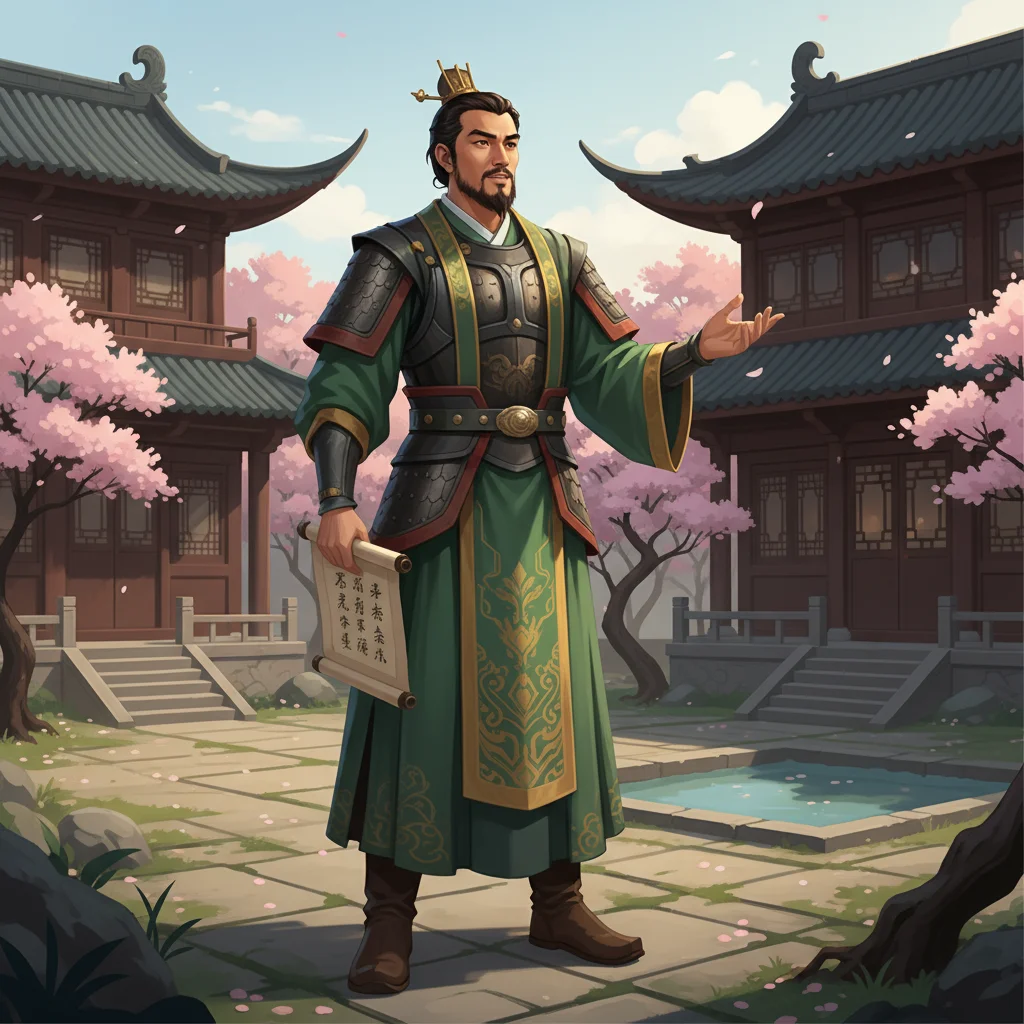
Cao Cao sent out a powerful message, a forged edict denouncing Dong Zhuo’s many crimes. He called upon all honorable lords to join him in a joint campaign, imagining a world where justice would prevail.
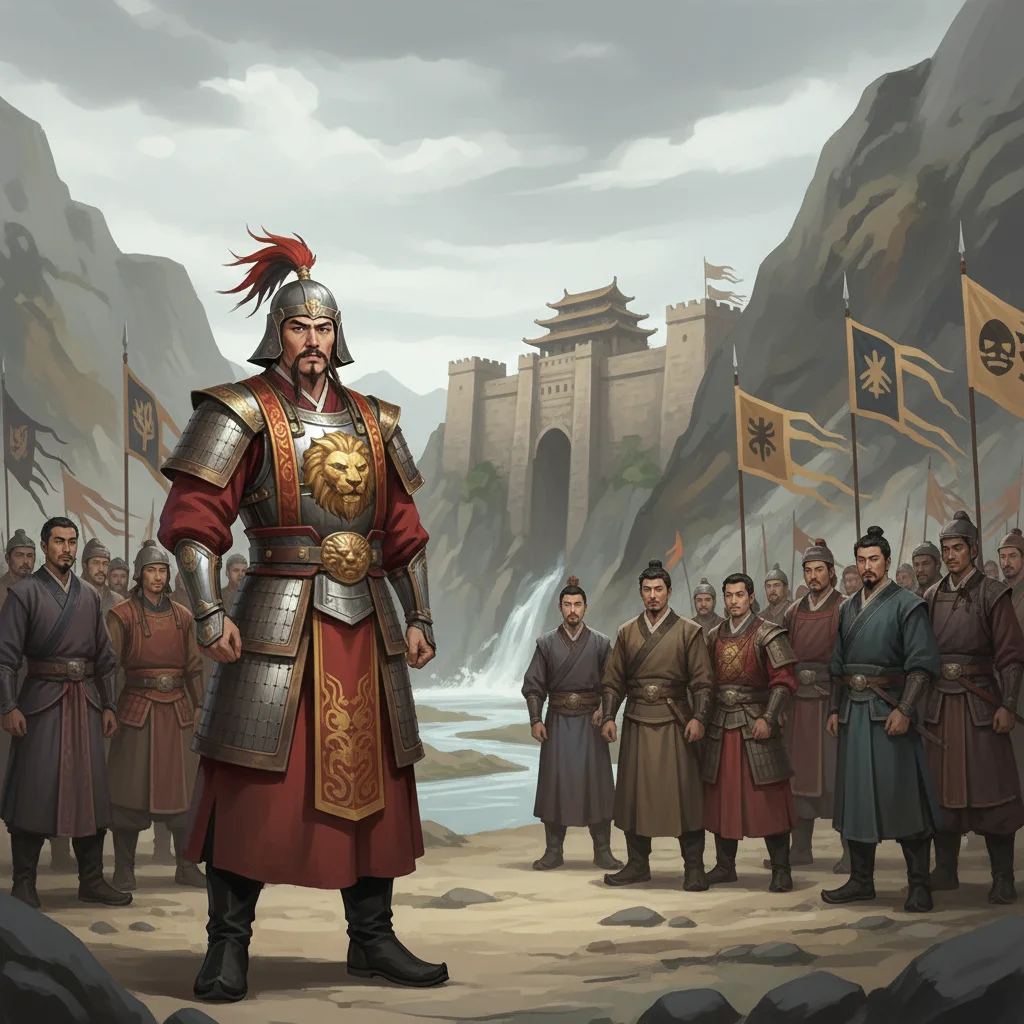
Many great lords and their armies answered Cao Cao's call. They gathered their forces, ready to fight for what was right.
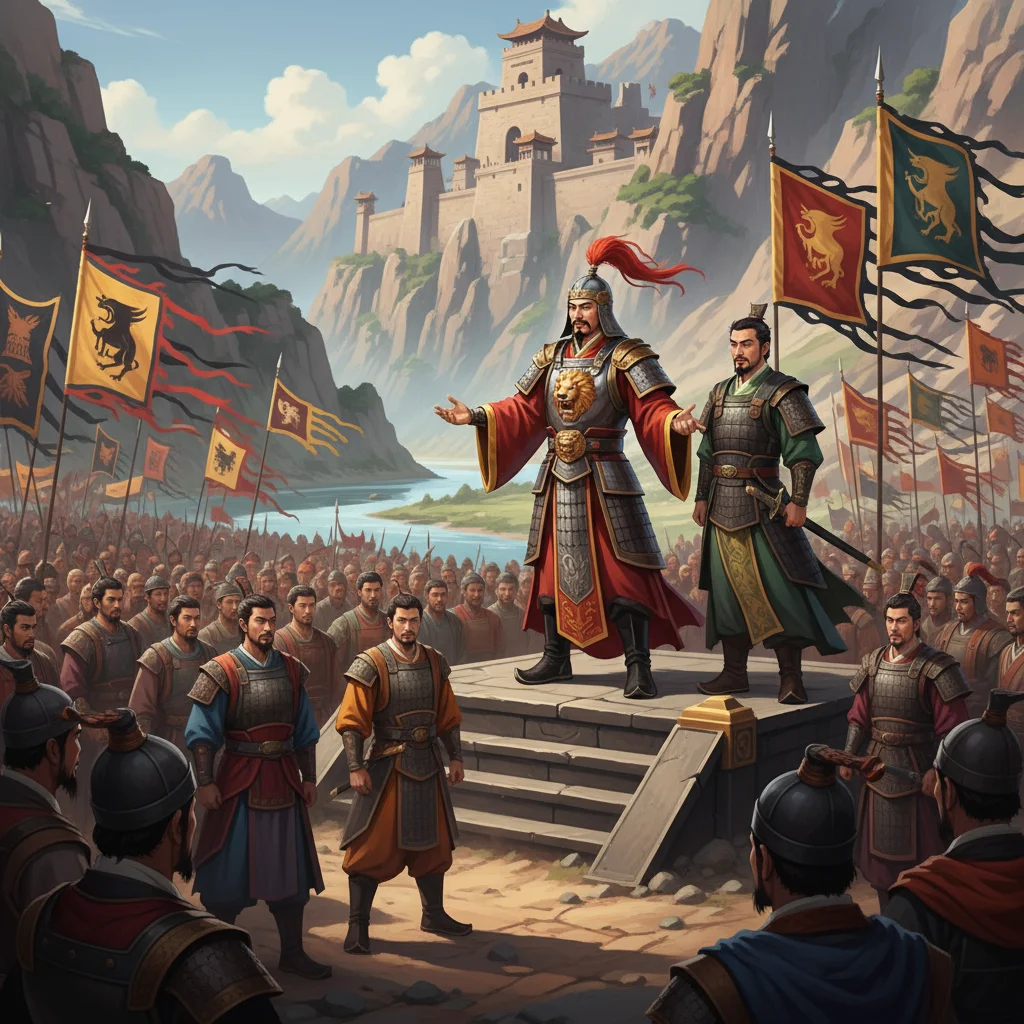
Eighteen provincial armies came together, forming a mighty group known as the East-of-the-Pass Allies. They rendezvoused outside the River Si Pass, east of Luoyang, and chose Yuan Shao as their commander-in-chief.
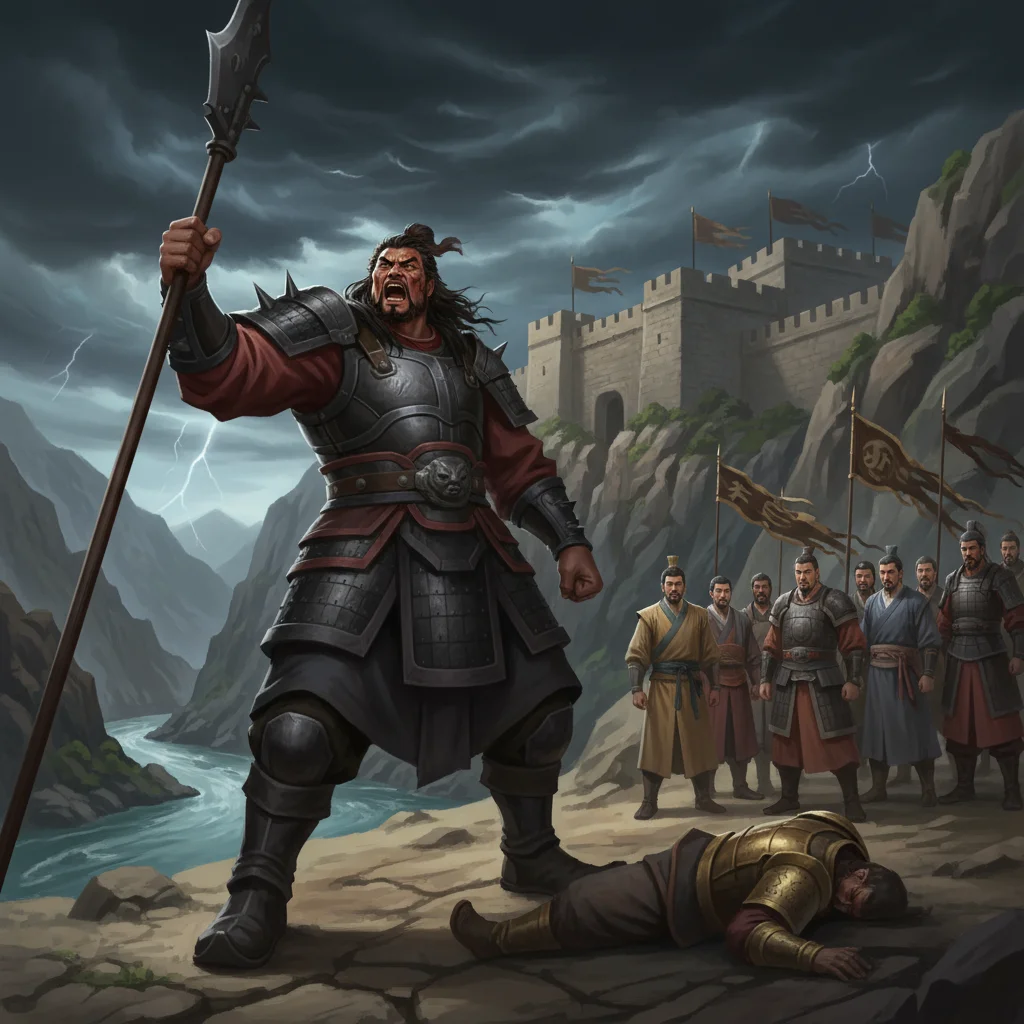
Dong Zhuo sent his champion, Hua Xiong, a warrior of terrible strength. He defeated many allied generals, making everyone feel worried and sad.
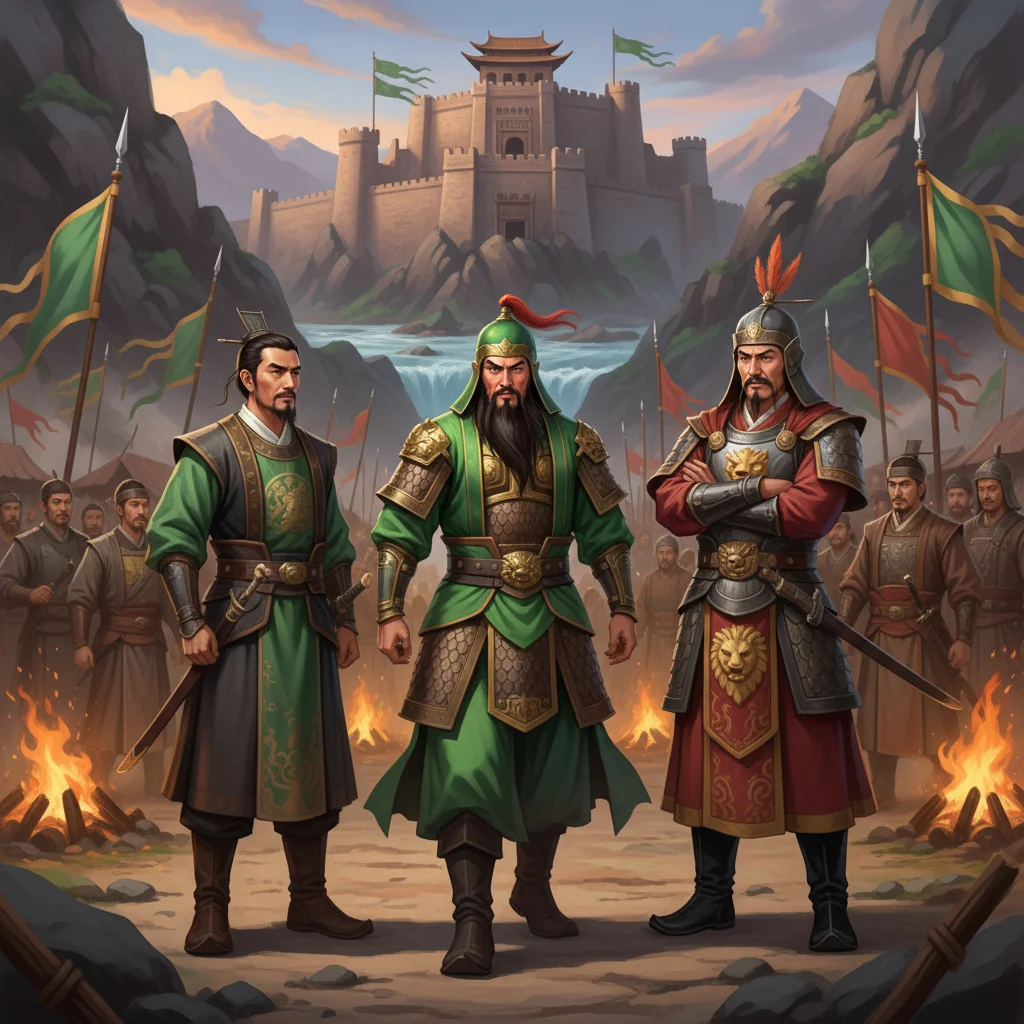
As the allies despaired, a brave warrior named Guan Yu stepped forward. He was only a mounted archer, but he volunteered to face Hua Xiong.
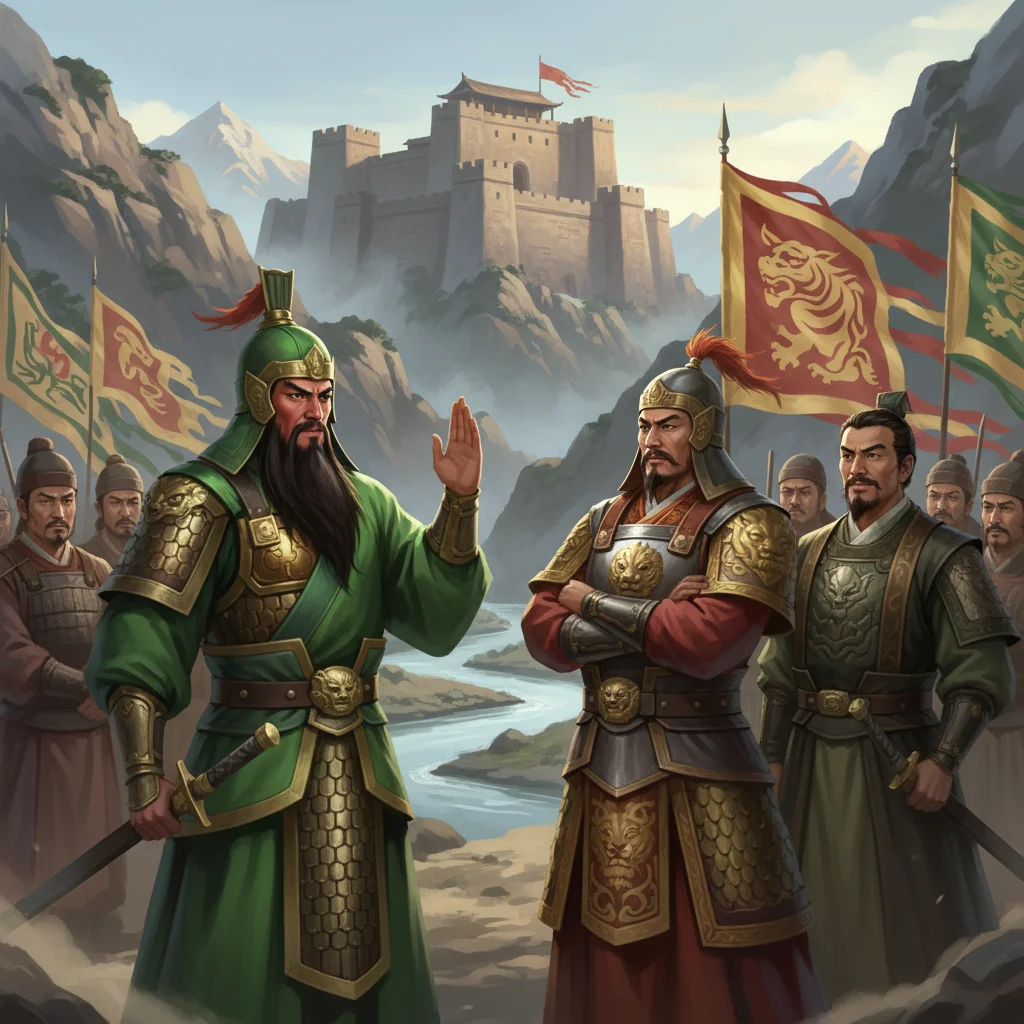
Everyone scoffed at the idea, but to silence their doubts, Guan Yu made a brave promise and signed a written pledge: 'If I fail, you may take my head!' Only Cao Cao believed in him.
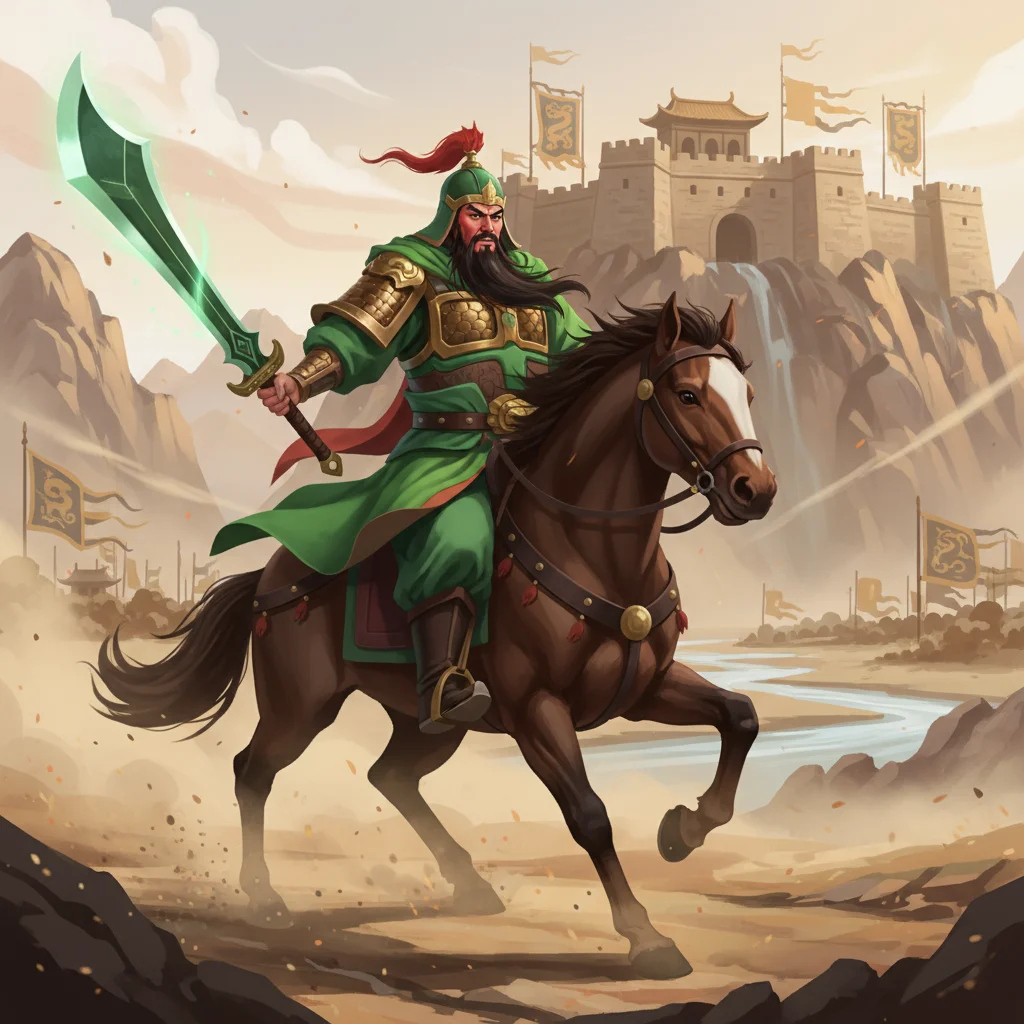
With his mighty Green-Dragon Crescent-Moon Blade, Guan Yu rode out to face Hua Xiong. The allies watched with bated breath.
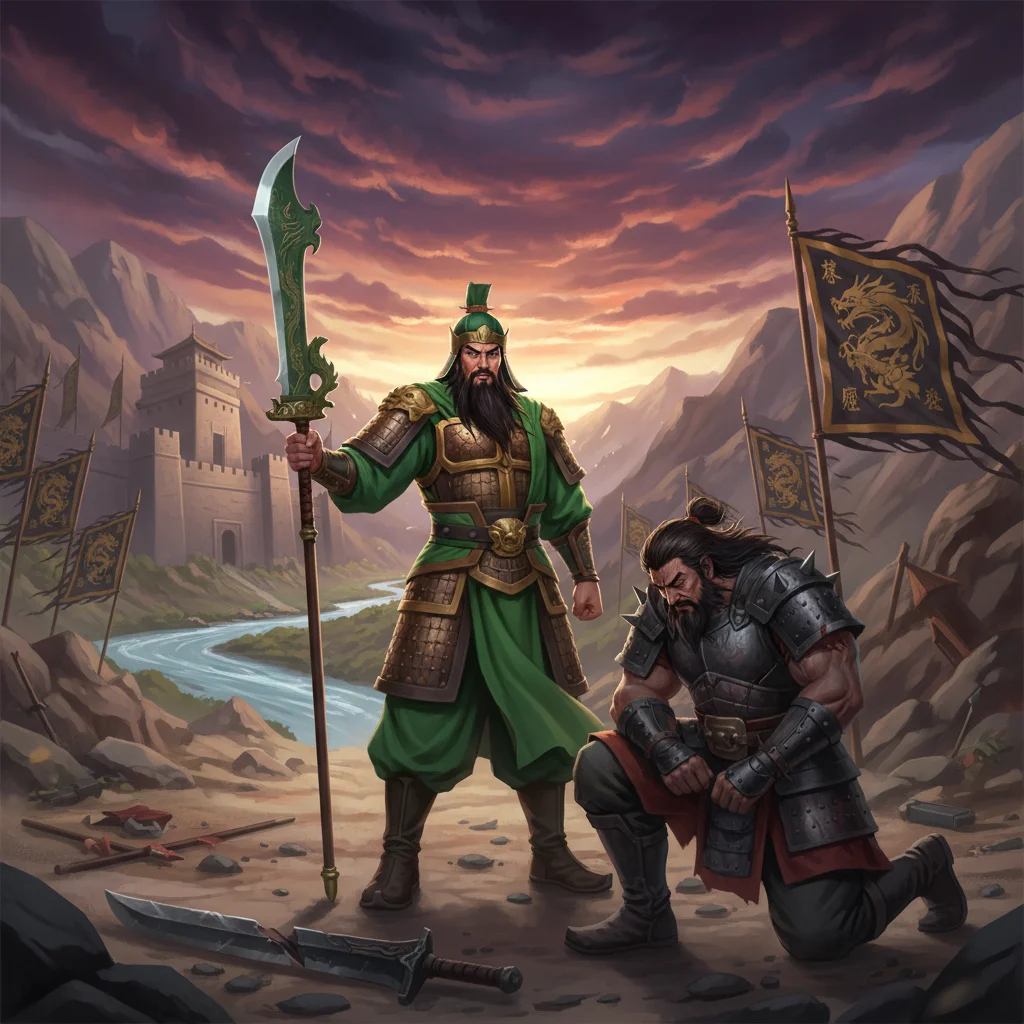
In a display of incredible skill and unmatched bravery, Guan Yu quickly overcame Hua Xiong. The duel was swift and decisive, ending with Hua Xiong's defeat.
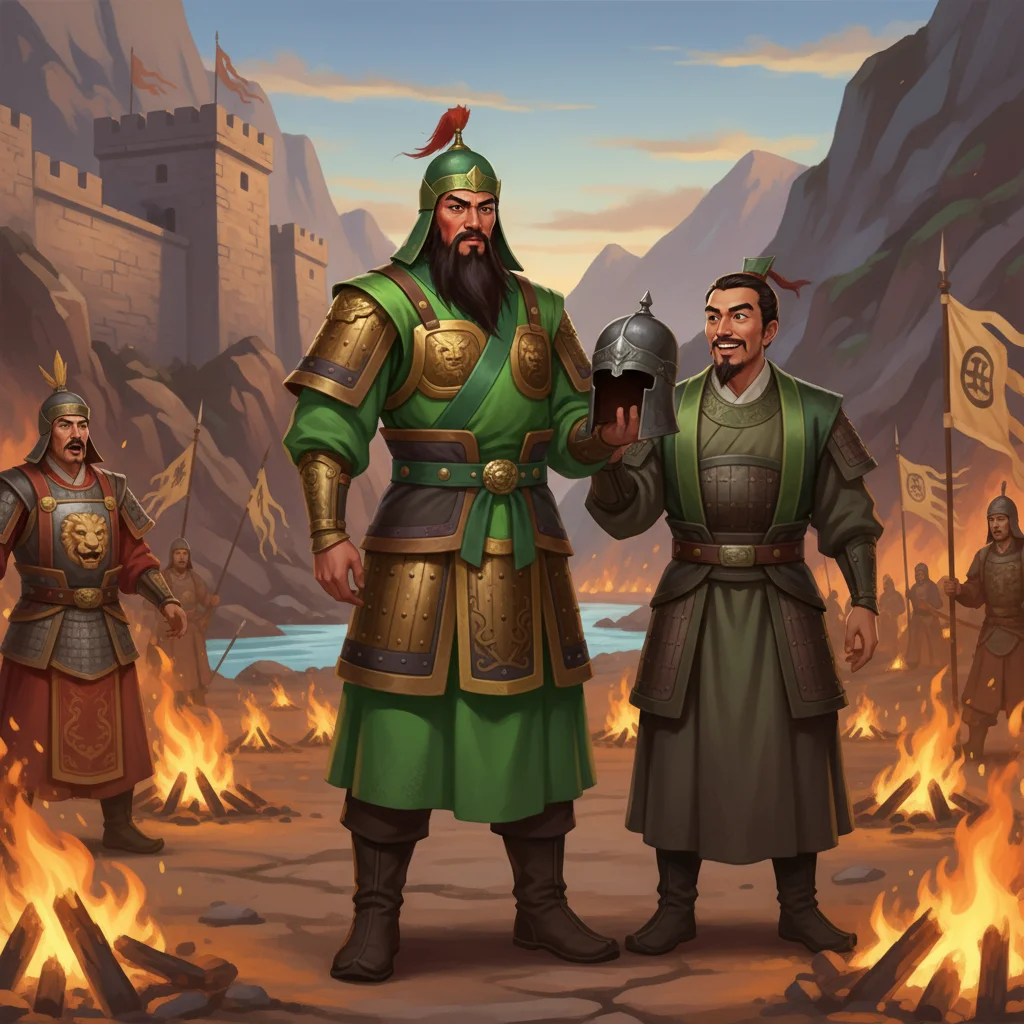
In the time it took to warm a cup of wine, Guan Yu returned triumphantly. From his saddle hung Hua Xiong's head, a gruesome trophy of his courage and skill.
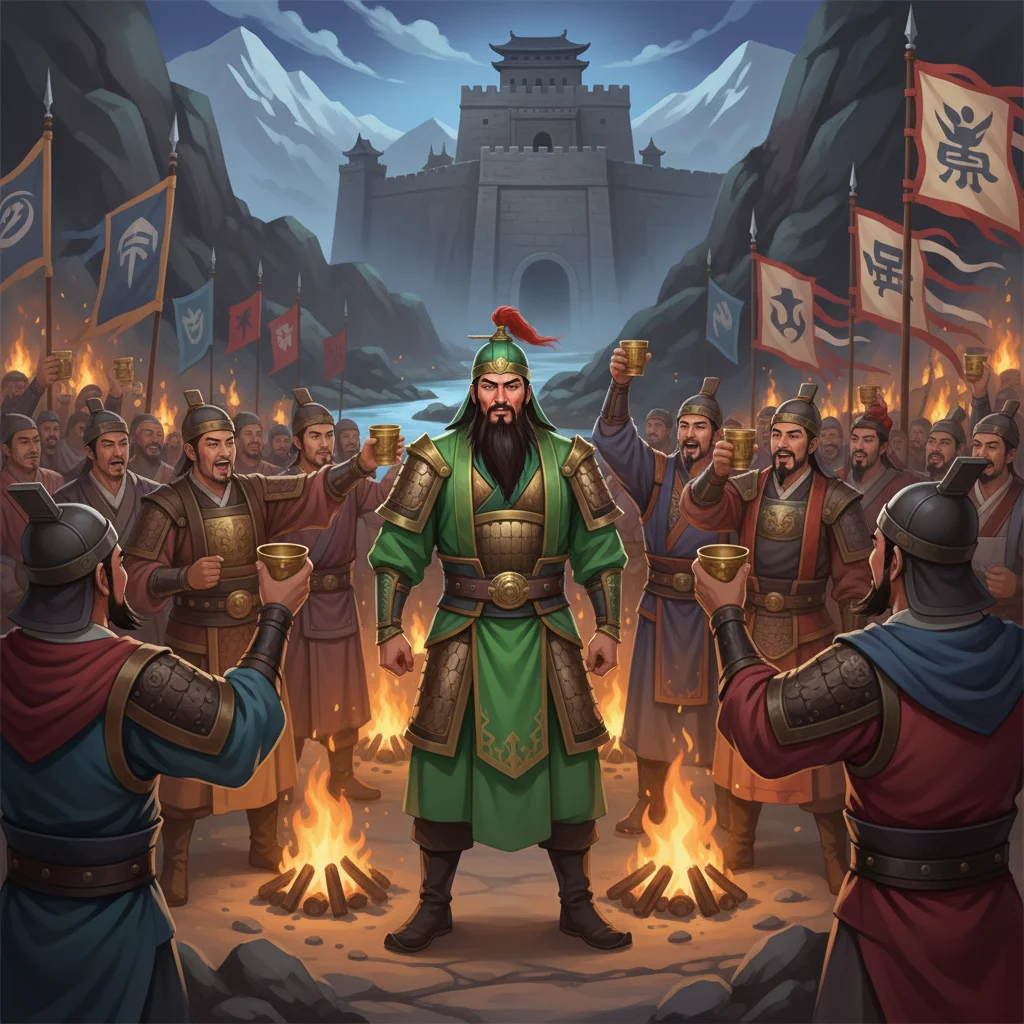
From that day, Guan Yu's amazing feat became known as the 'Warm-wine beheading of Hua Xiong.' His fame spread far and wide.
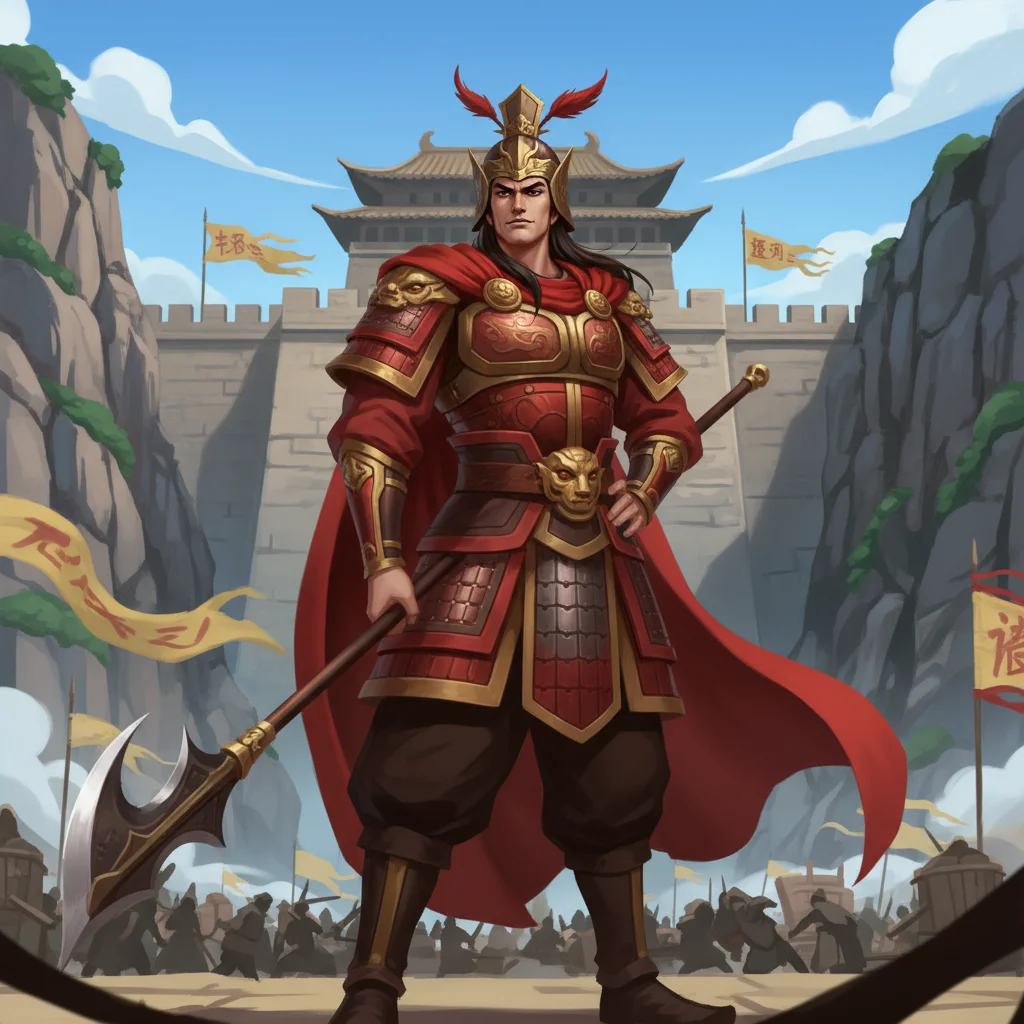
The allies pressed on to Tiger-Trap Pass, where Dong Zhuo sent his mightiest warrior, Lü Bu. Lü Bu was known for his unmatched strength and his swift red horse.
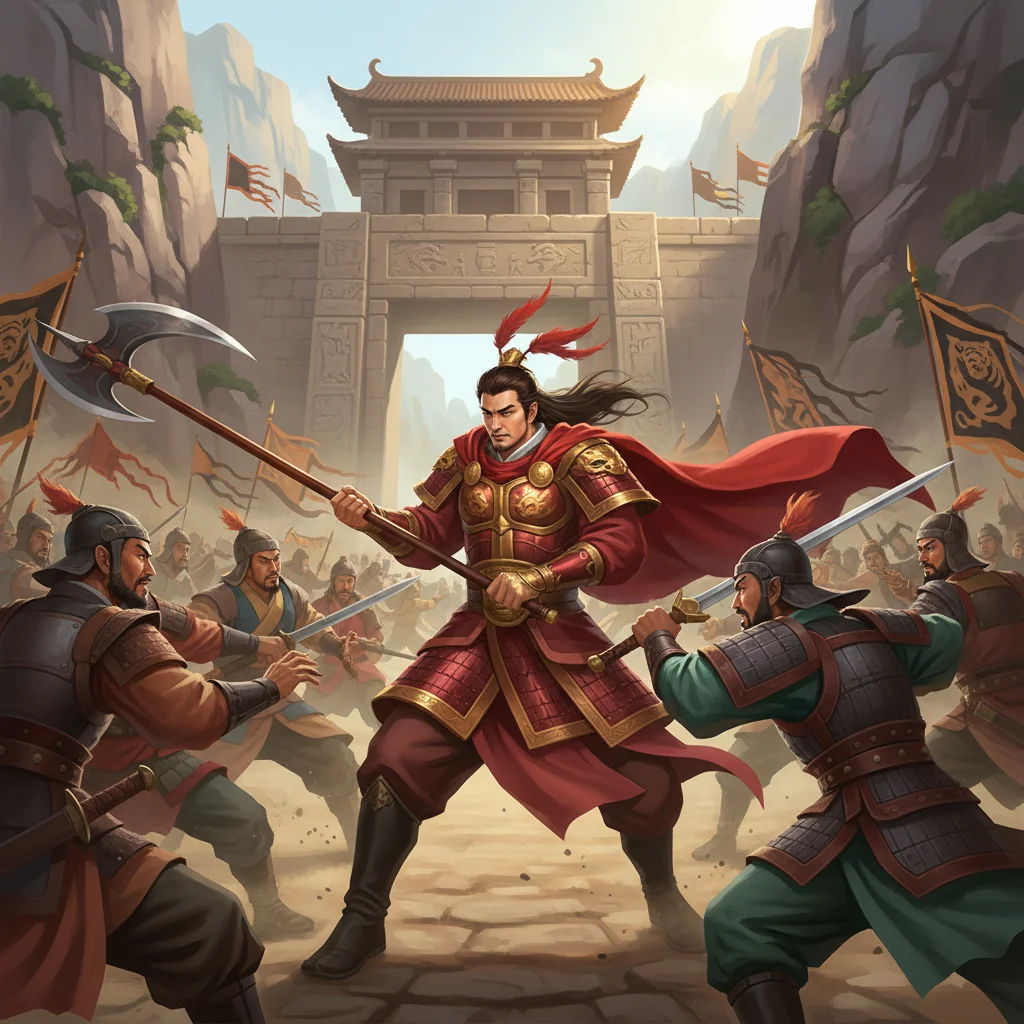
Lü Bu proved to be an incredibly fierce opponent. One by one, he defeated every champion the allies sent against him.
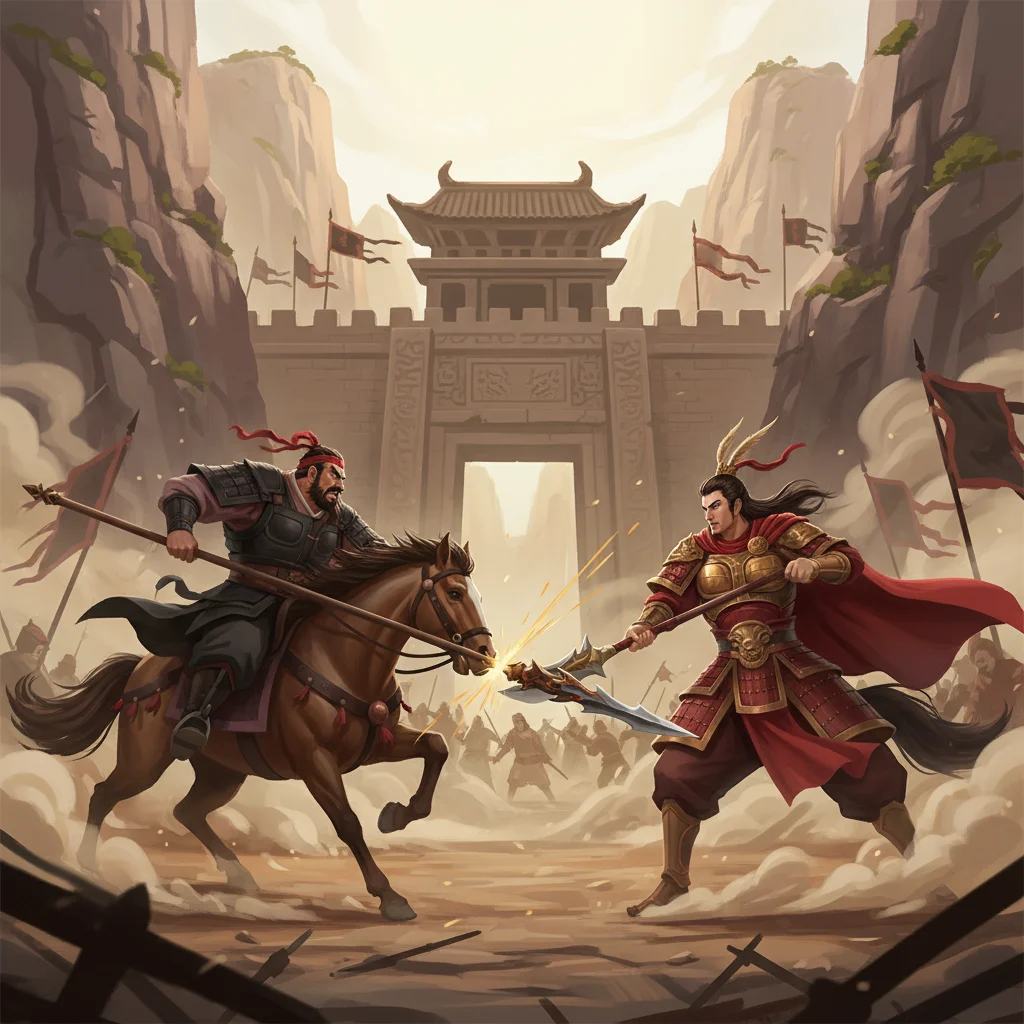
Just as the allied line began to falter, Zhang Fei galloped forward, a fiery warrior who boldly challenged Lü Bu to a duel. They fought for fifty bouts with neither gaining an advantage.
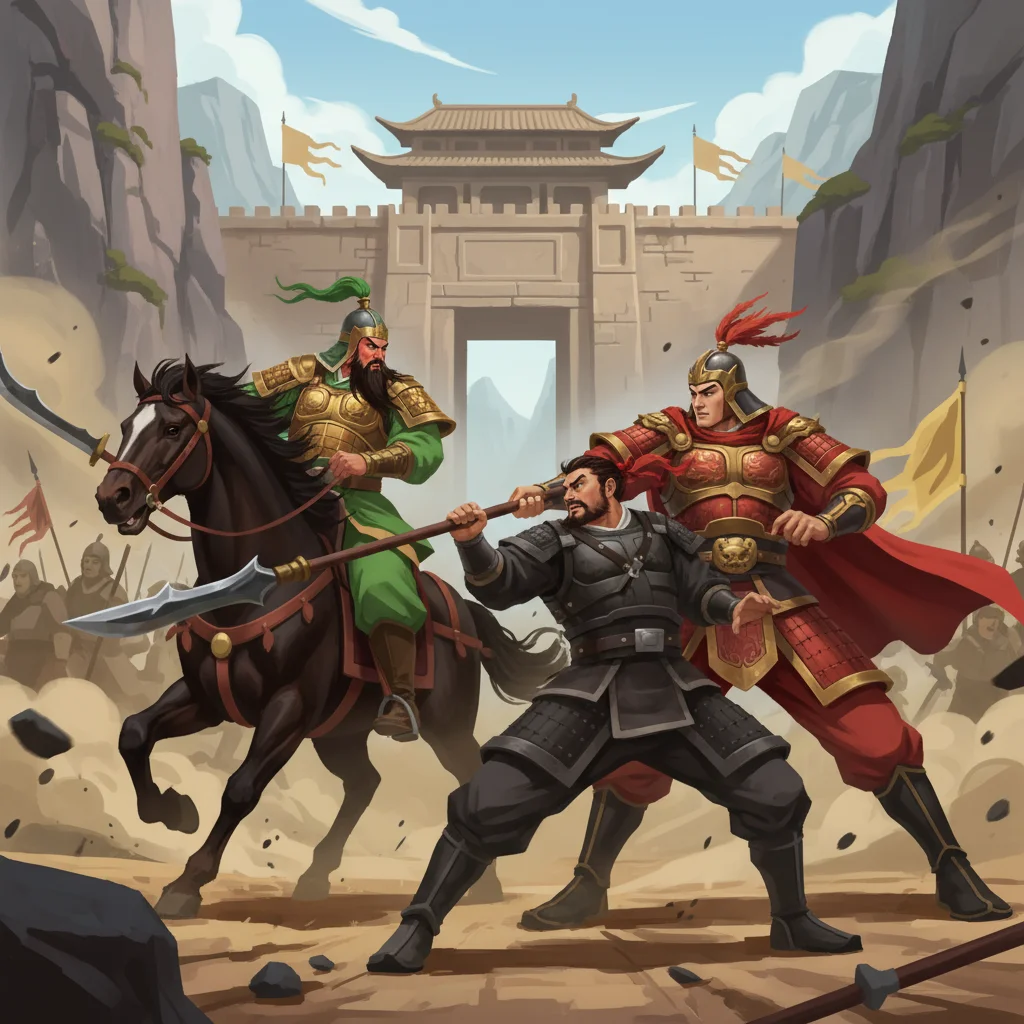
Zhang Fei fought Lü Bu fiercely for many bouts, with neither gaining an advantage. Then, Guan Yu, Zhang Fei's sworn brother, joined the fight, flanking Lü Bu.
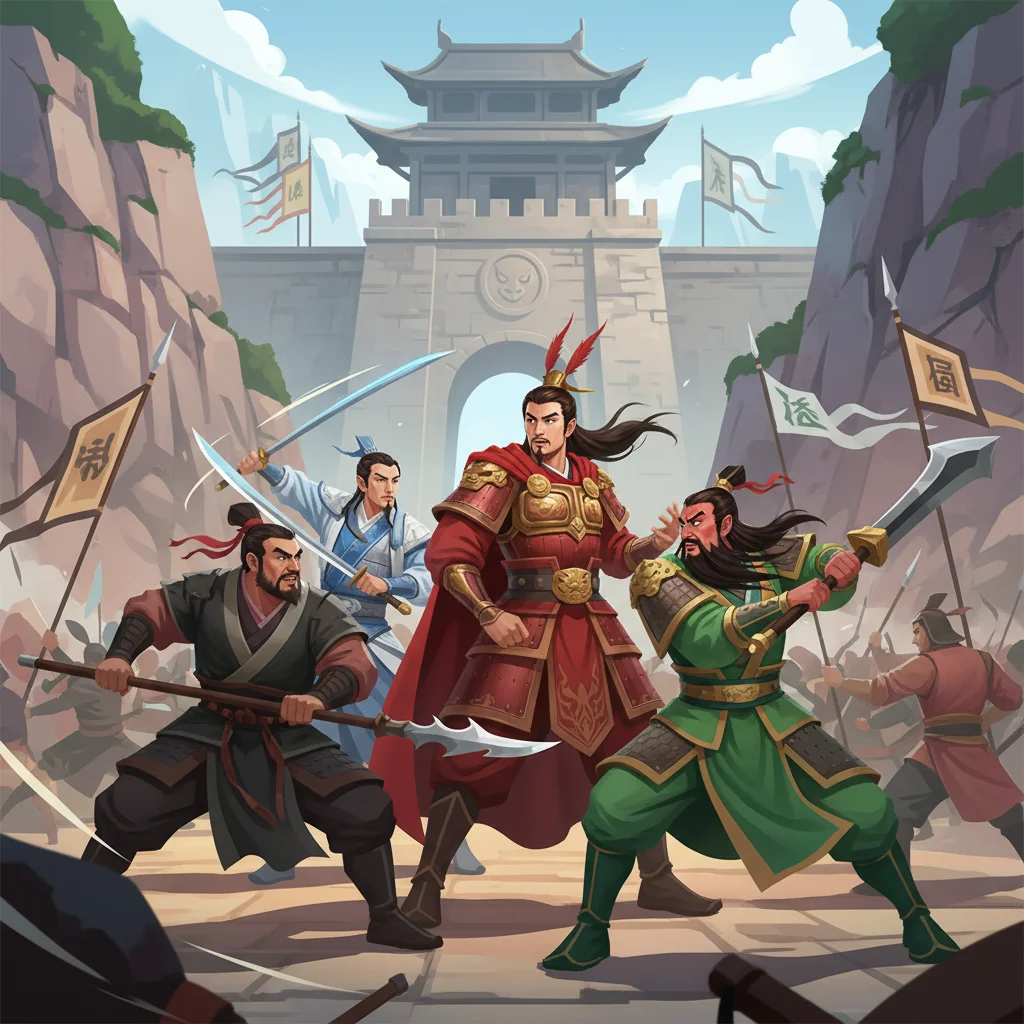
Even with two heroes fighting him, Lü Bu held firm. Finally, Liu Bei, with his twin swords flashing, joined his sworn brothers, completing the encirclement of Lü Bu.
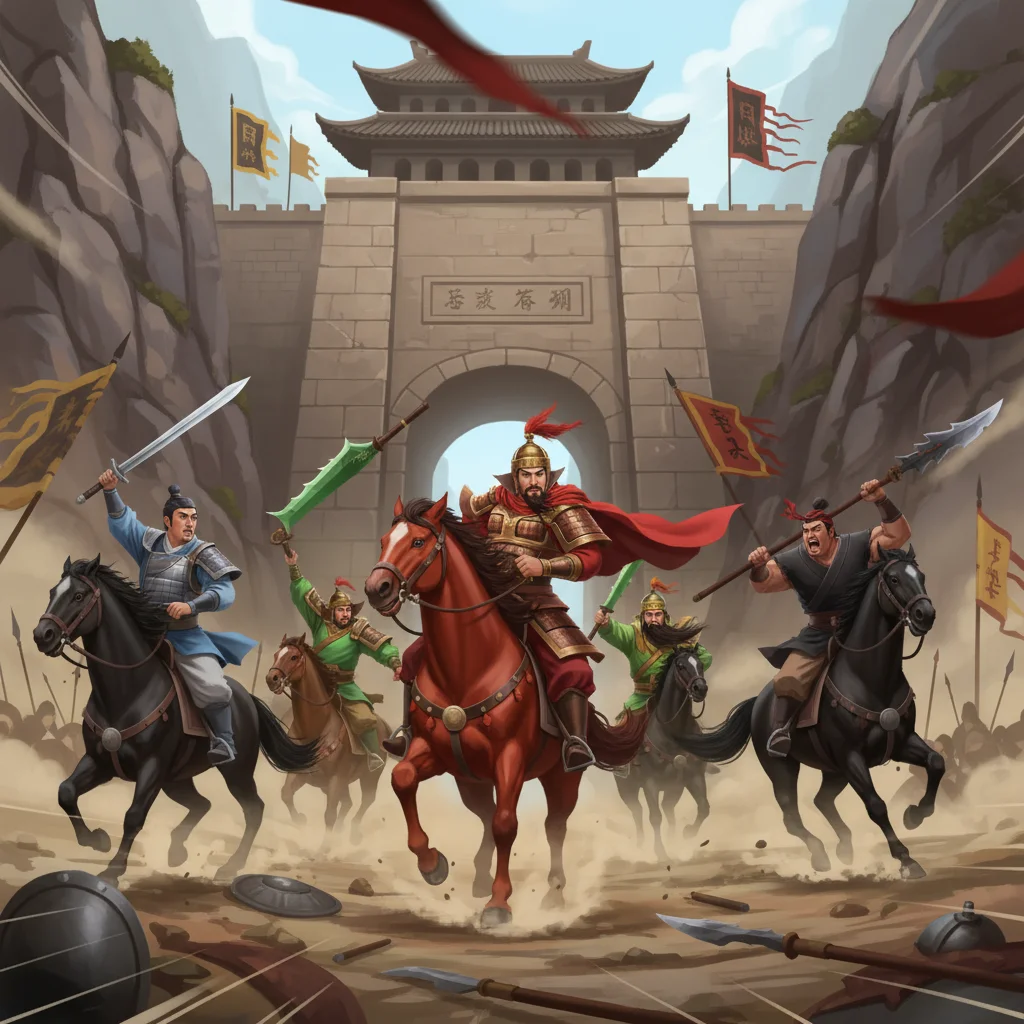
Surrounded by the three brave brothers, Lü Bu made a clever feint. He then swiftly turned his horse and fled back inside the pass.
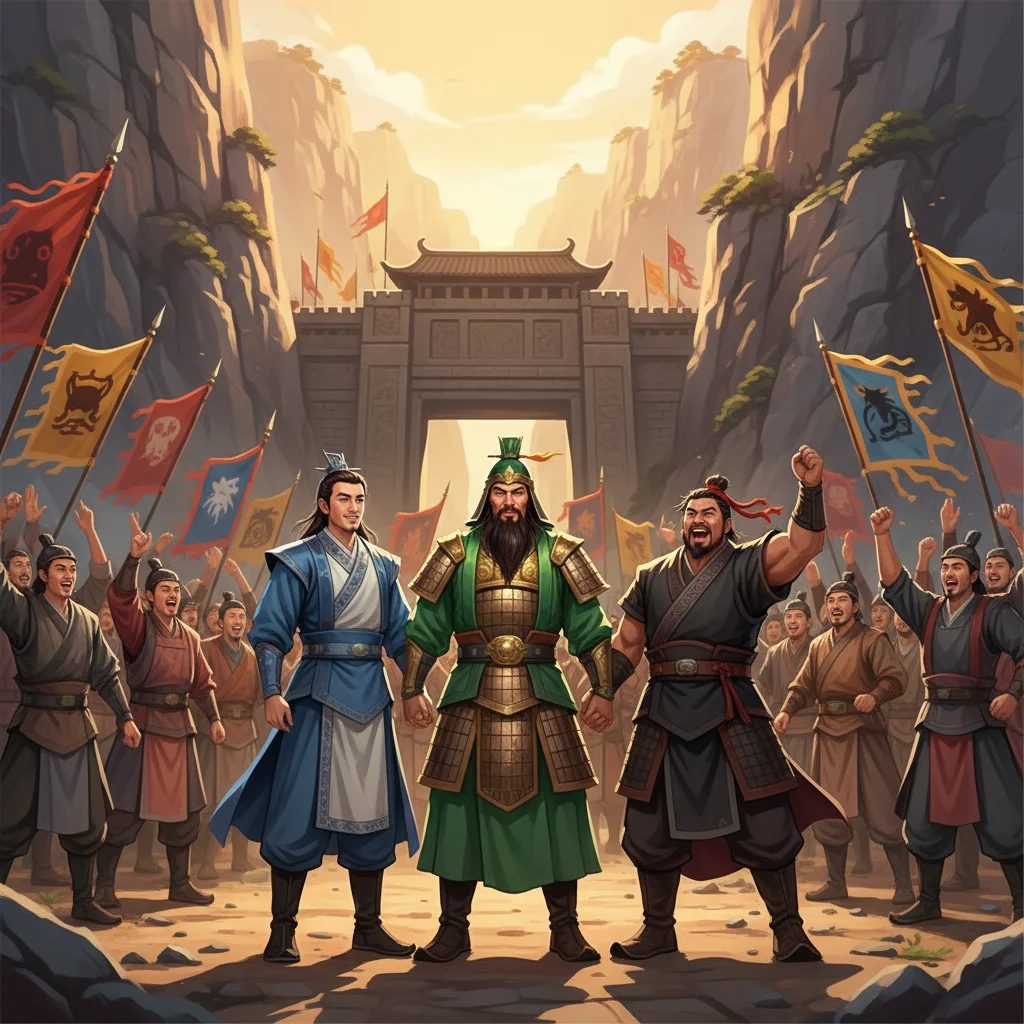
The incredible battle of the 'Three Heroes versus Lü Bu' became a legend, and the allies' morale soared. Everyone cheered for the brave brothers.
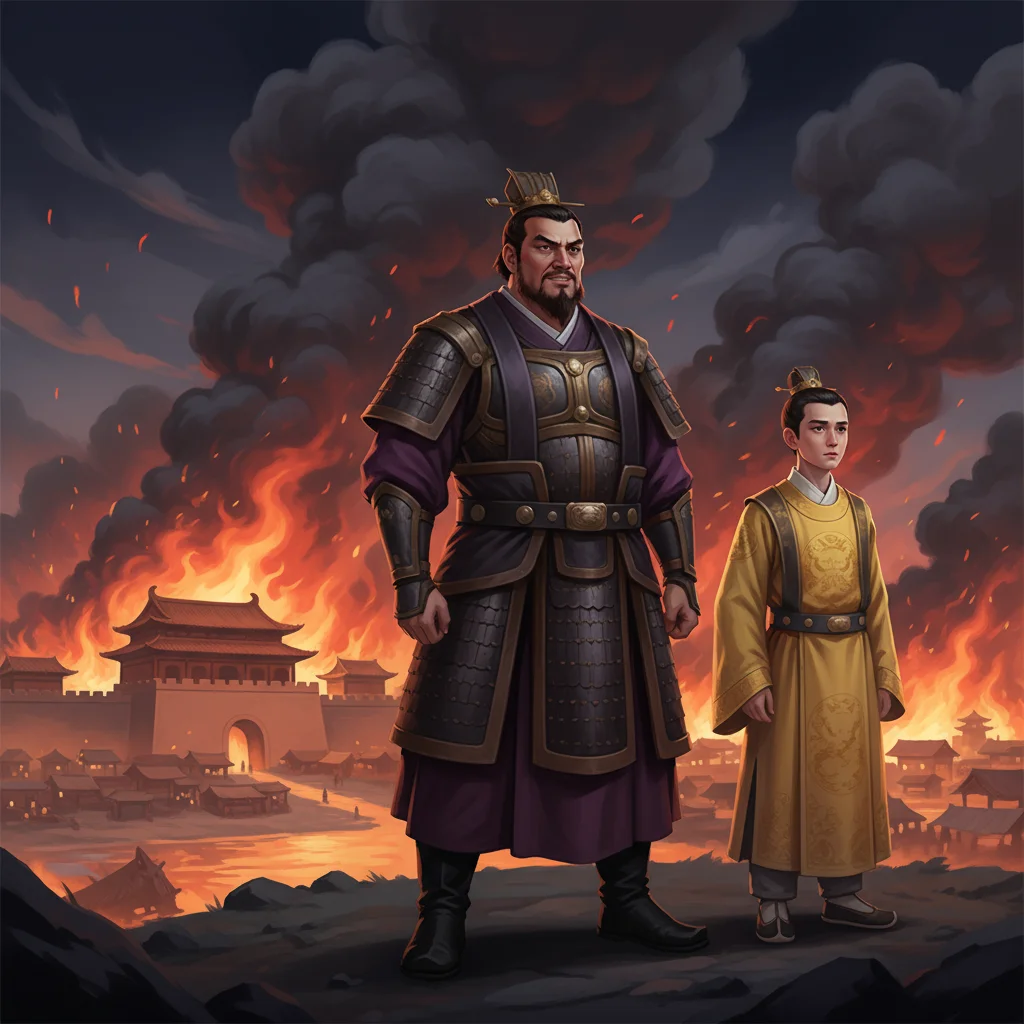
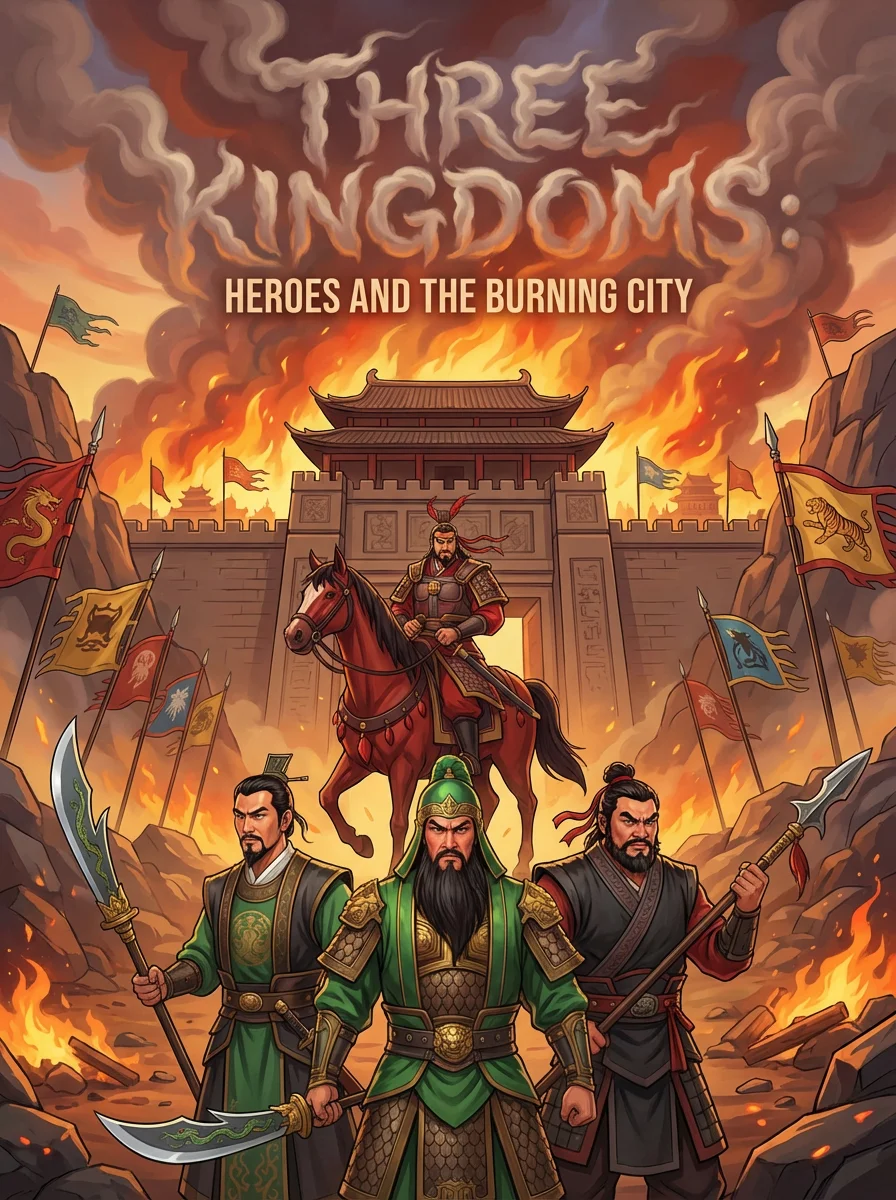
Realizing the tide had turned, Dong Zhuo followed Li Ru’s counsel and decided to abandon the capital city of Luoyang. He forced the young Emperor to move to Chang'an, and then set the entire city ablaze, burning palaces, temples, and every dwelling.
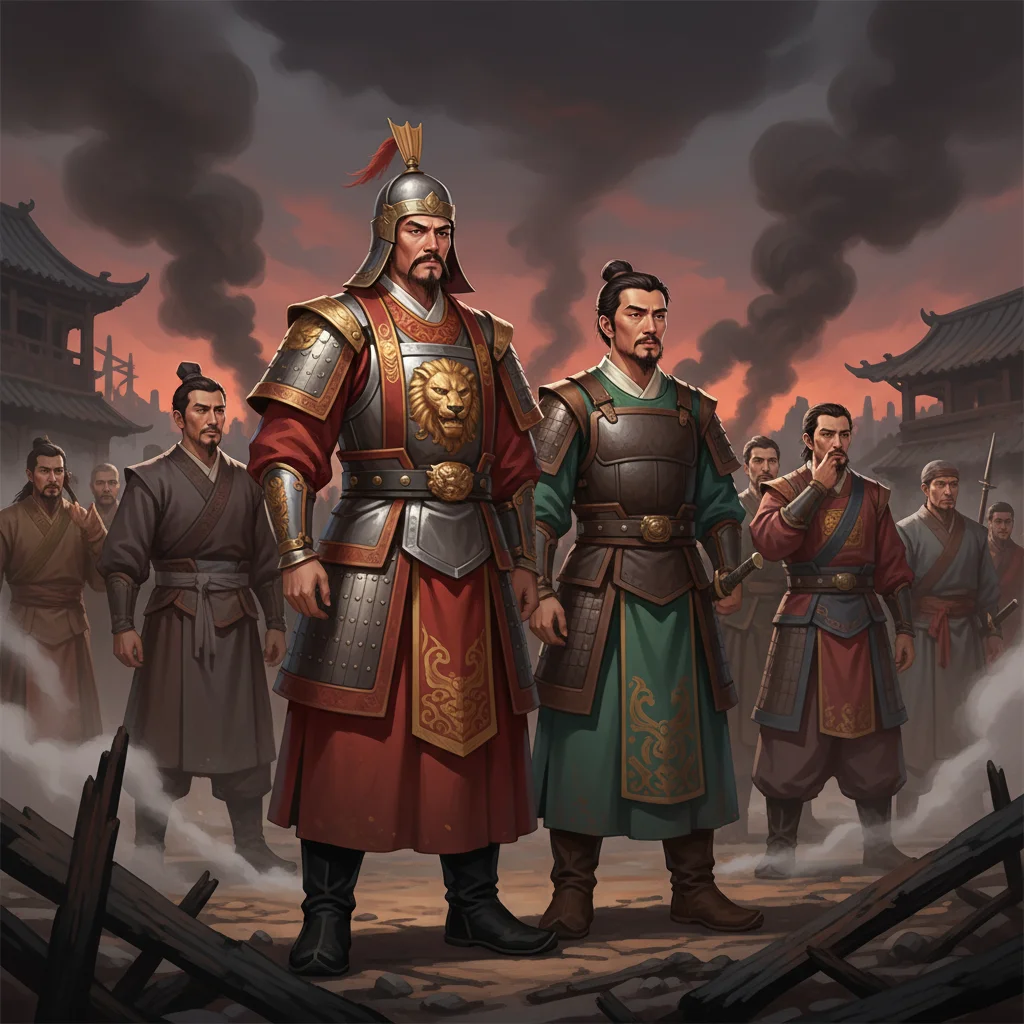
The allies arrived to find Luoyang a city of ash and rubble. They mourned the destruction of such a beautiful place.
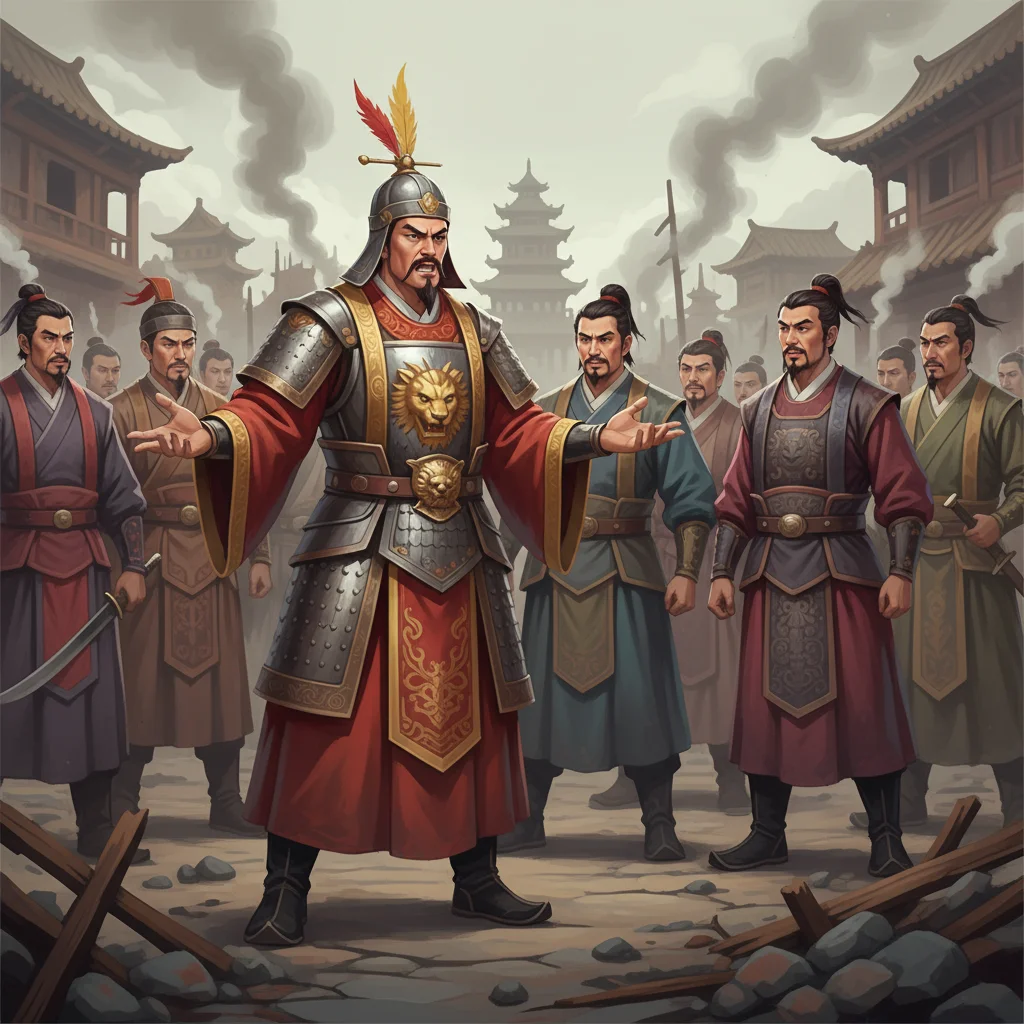
Instead of chasing Dong Zhuo, the allied lords began to argue over treasures and their next steps. Their unity began to weaken.
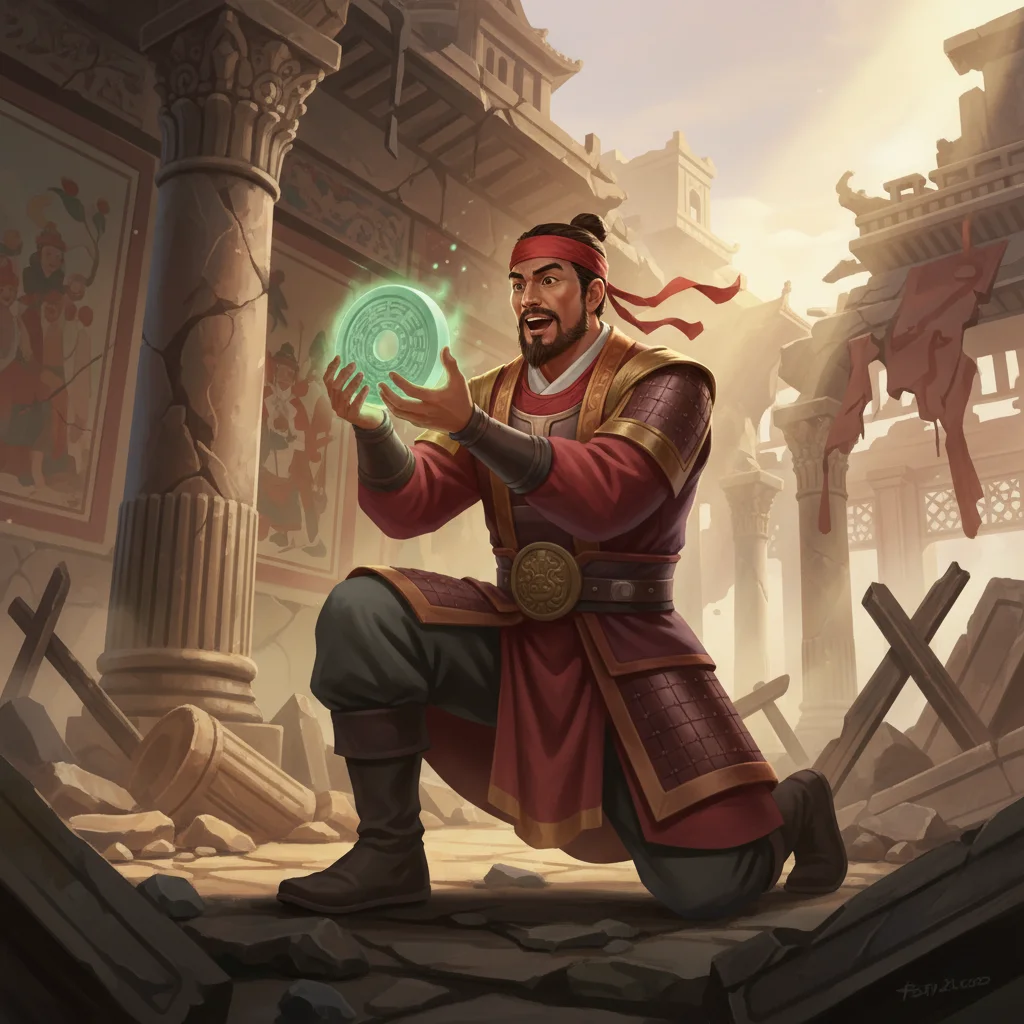
While clearing a palace, the resourceful general Sun Jian stumbled upon the priceless Imperial Hereditary Seal. It was the jade seal forged by the First Emperor, a glowing symbol of supreme legitimacy and ancient power.
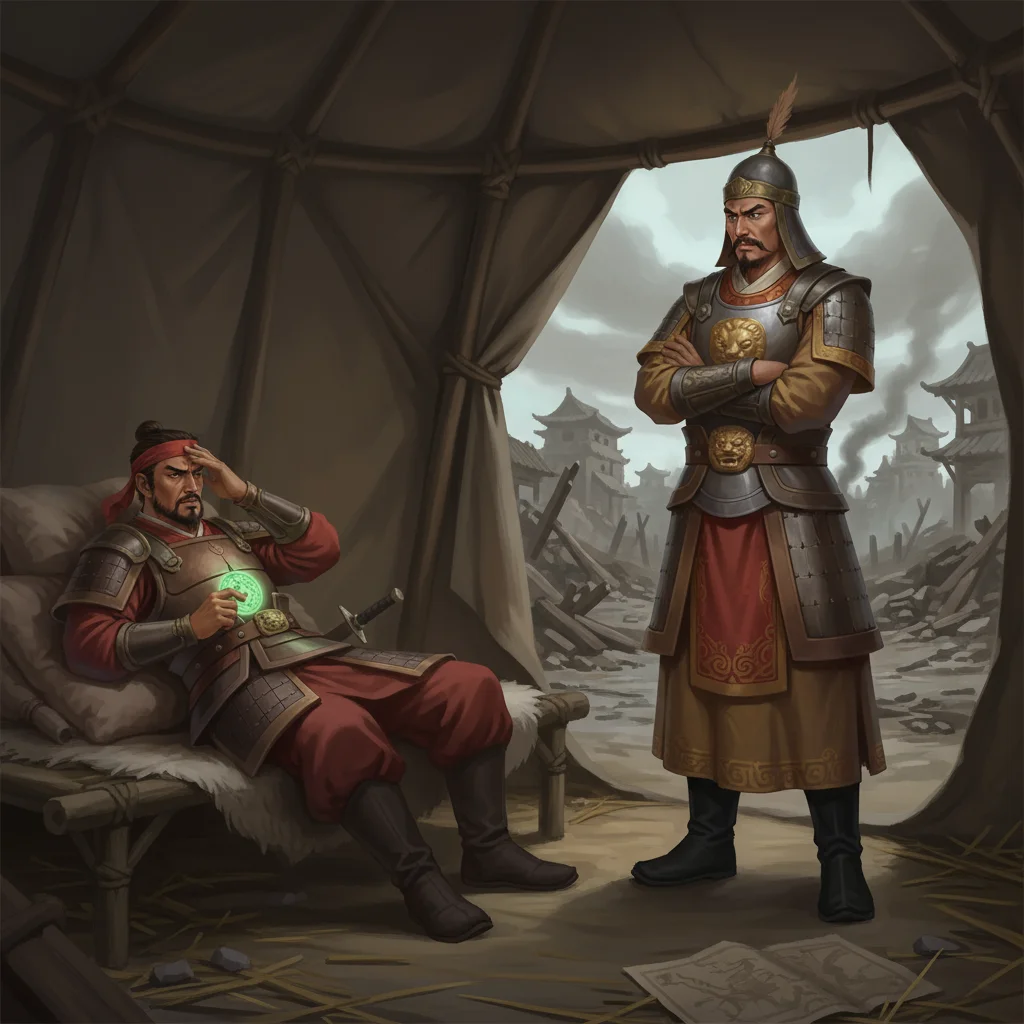
Recognizing its importance, Sun Jian secretly hid the seal. He then pretended to be ill, planning to leave the alliance and return home with his treasure.
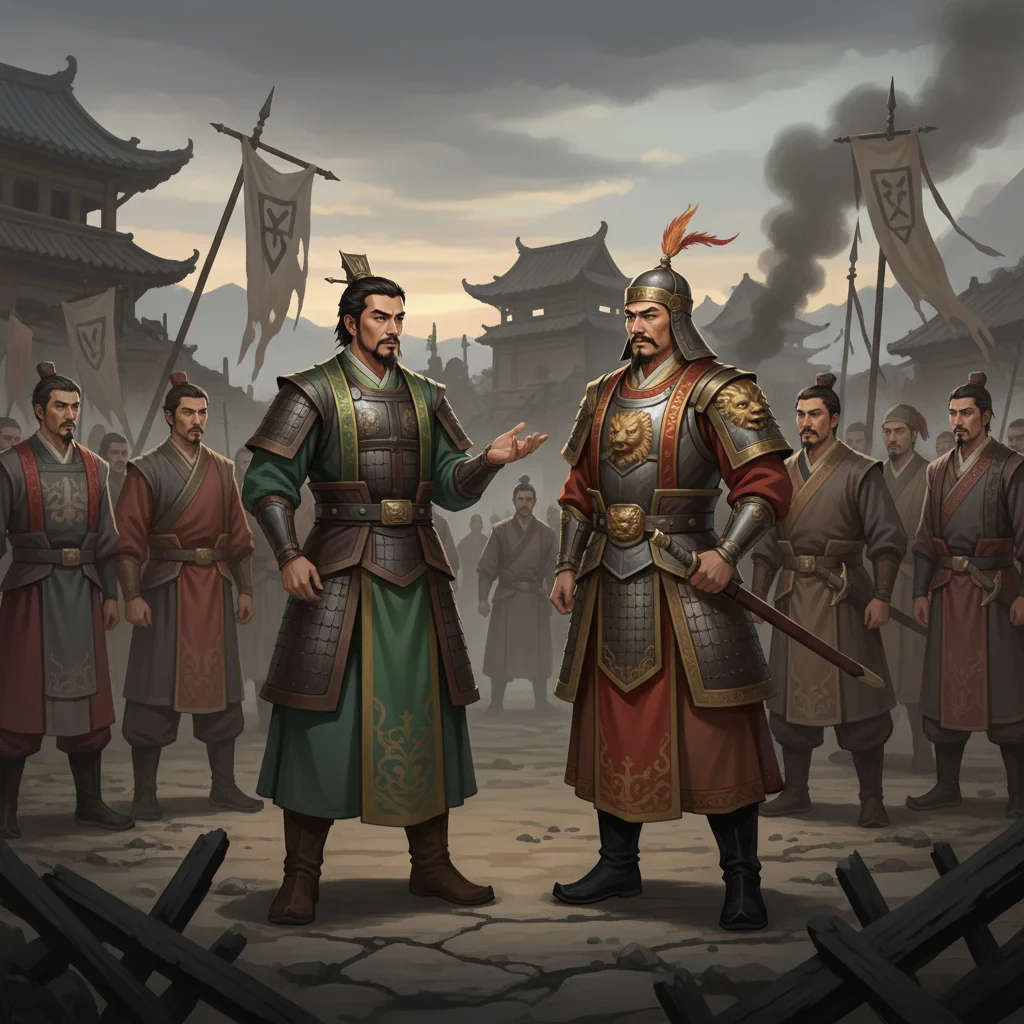
The arguments grew worse, and the grand alliance began to fall apart. Disputes over booty and whether to advance or rest fractured the league, with Yuan Shao and Gongsun Zang quarreling over boundaries. At last, on Cao Cao’s advice, the eighteen armies broke camp and went each its own way.
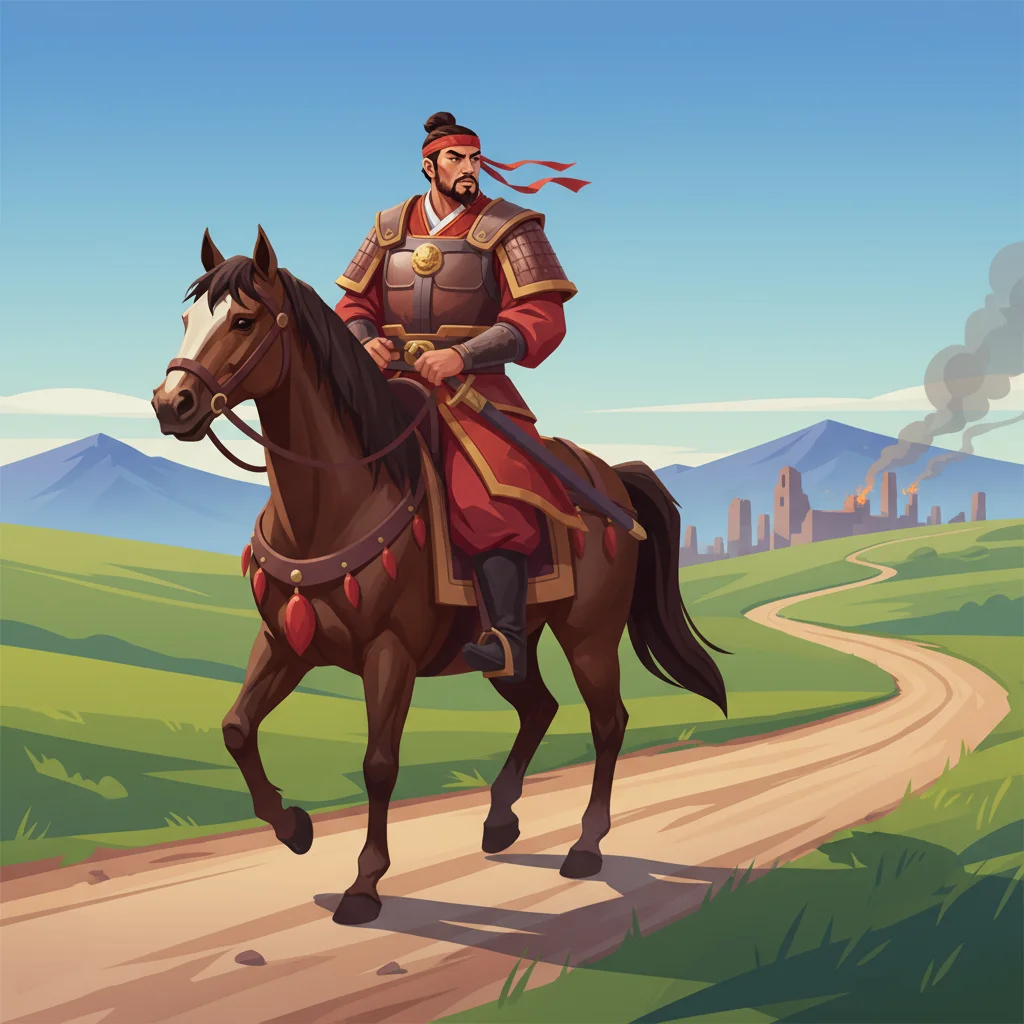
The eighteen armies went their separate ways, leaving behind the burned city. On the road home, Sun Jian, with the secret seal, was waylaid by Yuan Shu, who also demanded the jade seal. Sun Jian denied it, swore a great oath, and finally escaped. His secret possession of the seal, coupled with the dispersal of the armies, planted the seeds for future wars and marked the Han dynasty's slide into an age of contending warlords.